
Artificial Intelligence is redefining modern finance. In 2026, leading banks and fintech companies use AI tools for finance to improve fraud detection, automate compliance, strengthen credit risk modeling, and enhance investment strategies. This guide reviews the top 25 AI tools for finance & banking, including platforms like Feedzai, DataRobot, Zest AI, Darktrace, and FICO.
The article compares solutions across risk management, fraud detection, regulatory compliance, predictive analytics, and trading intelligence. It also includes a detailed comparison table, buying guide, and future trends shaping AI in banking.
Best AI Tools for Finance & Banking: From Risk Management to Fraud Detection (2026 Edition)
Finance has always been about numbers. Today, it’s about intelligence.
Walk into any major bank in 2026 and you’ll see something remarkable. Risk analysts aren’t buried under spreadsheets. Fraud teams aren’t reacting hours after an attack. Compliance officers aren’t scrambling before regulatory audits. Instead, AI-powered systems monitor transactions in milliseconds, flag anomalies before damage occurs, forecast liquidity weeks in advance, and automate reporting with astonishing precision.
The Best AI Tools for Finance & Banking are no longer experimental add-ons. They’re infrastructure. From AI fraud detection software to AI risk management tools and predictive analytics platforms, financial institutions are embedding machine learning into their core operations.
But with hundreds of vendors claiming to be the “best AI for finance & banking,” how do you separate marketing hype from real value?
This pillar guide answers that question.
We’ll explore:
Why AI adoption in banking is accelerating
Core use cases from fraud detection to algorithmic trading
The top 25 AI tools for finance in 2026
A comparison table for quick evaluation
Strategic buying advice
Emerging trends shaping AI financial tools in 2027 and beyond
Let’s begin.
Why AI Is Transforming Finance & Banking in 2026
AI in banking is no longer about automation alone. It’s about intelligence at scale.
Financial institutions operate in one of the most complex environments on earth—volatile markets, evolving regulations, cybersecurity threats, and rising customer expectations. AI tools for banking address all four simultaneously.
1. Explosive Adoption Across Financial Institutions
According to industry research from firms like McKinsey & Company, AI in finance can unlock billions in value annually through improved underwriting accuracy and fraud prevention. Major banks now deploy machine learning tools for finance across lending, AML, treasury, and capital markets.
2. Regulatory Pressure & Compliance Automation
With global frameworks tightening (Basel III updates, GDPR enforcement, AML directives), AI compliance software helps automate KYC checks and reporting. AI platforms for credit risk analysis reduce human bias while increasing transparency—critical for regulatory audits.
3. Real-Time Fraud Detection Demand
Payment fraud is becoming faster and more sophisticated. AI fraud detection tools in banking analyze behavioral biometrics, transaction velocity, device fingerprints, and geolocation patterns within milliseconds.
4. Predictive Analytics & Credit Intelligence
AI predictive analytics for banks enables:
Smarter credit scoring
Loan default forecasting
Market risk modeling
Portfolio rebalancing
5. Generative AI in Finance Operations
Generative AI in finance operations automates reporting, investor summaries, and compliance documentation—while reducing operational cost.
Key Use Cases of AI in Finance & Banking
AI for Risk Management
Risk is the backbone of banking. AI risk management software finance platforms enhance credit underwriting accuracy and liquidity forecasting.
AI credit scoring software now evaluates thousands of data variables—transaction history, behavioral signals, alternative data—far beyond traditional FICO scoring.
AI for financial risk management also supports:
Market volatility modeling
Stress testing scenarios
Real-time exposure monitoring
The result? Faster decisions with lower default rates.
AI for Fraud Detection
AI fraud detection in banking is arguably the most mature application of AI financial tools 2026.
AI fraud detection software monitors:
Transaction patterns
Account behavior shifts
Device inconsistencies
Suspicious merchant clusters
Unlike rule-based systems, machine learning tools for finance adapt continuously. That means fewer false positives and better customer experience.
AI for Compliance & Regulatory Reporting
Banking AI software for compliance automates:
Know Your Customer (KYC)
Anti-Money Laundering (AML)
Suspicious Activity Reports (SAR)
AI compliance software reduces operational overhead and improves audit readiness.
AI for Customer Experience & Personalization
AI in finance tools now power:
Chatbots for customer service
Intelligent loan advisors
Personalized financial insights
Enterprise AI finance solutions can recommend credit products based on spending behavior and long-term goals.
AI for Investment & Trading Intelligence
AI algorithmic trading platforms process market signals in real time. AI investment tools optimize portfolios based on predictive analytics and sentiment analysis.
This is where AI financial analytics truly shines.
Top 25 Best AI Tools for Finance & Banking (2026)
Below is a curated AI fintech tools list structured for authority, evaluation depth, and decision-making clarity. Each section includes strategic insights so financial leaders can assess real-world fit—not just features.
1. Feedzai
Overview
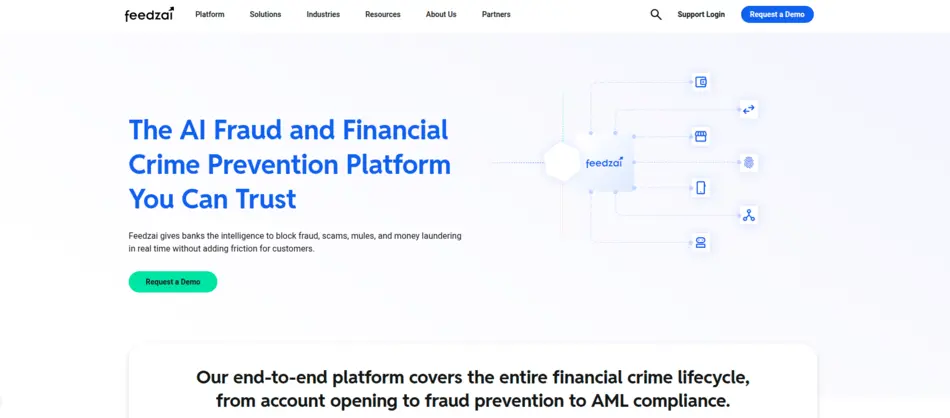
Feedzai is one of the most recognized AI fraud detection software platforms used by global banks and payment providers. Built specifically for financial crime prevention, it combines machine learning, behavioral biometrics, and real-time risk scoring into a unified fraud intelligence system.
Unlike traditional rule-based systems, Feedzai adapts dynamically. That means fraud models improve continuously as new attack patterns emerge. In an era where fraud evolves daily, adaptability is everything.
Key Features
Real-time transaction risk scoring (sub-millisecond response time)
Behavioral analytics & anomaly detection
AML monitoring and suspicious activity reporting
Explainable AI dashboards for regulatory transparency
Omnichannel fraud protection (mobile, web, POS)
Best For
Tier 1 and Tier 2 banks
Payment processors
Digital wallet providers
Cross-border transaction networks
Pricing
Enterprise-based custom pricing. Typically annual contracts based on transaction volume.
Pros
✔ Extremely accurate fraud detection
✔ Reduces false positives
✔ Strong regulatory compliance framework
✔ Highly scalable enterprise deployment
Cons
✘ Not ideal for small fintech startups
✘ Implementation can be resource-intensive
Why It Stands Out
Feedzai consistently ranks among the best AI tools for finance & banking because of its real-time risk intelligence engine. It doesn’t just detect fraud—it predicts it before customer friction occurs. For institutions handling millions of daily transactions, that’s a competitive advantage.
Follow On: LinkedIn | Youtube | Twitter | Facebook
2. DataRobot

Overview
DataRobot is a leading enterprise AI platform that enables financial institutions to build, deploy, and monitor predictive models without heavy manual coding. It plays a major role in AI risk management software finance ecosystems, especially in credit scoring, forecasting, and market modeling.
Think of it as an AI co-pilot for data science teams.
Key Features
Automated machine learning (AutoML)
Credit risk and default probability modeling
Model explainability tools
Time-series forecasting for liquidity planning
MLOps deployment monitoring
Best For
Commercial banks
Insurance companies
Asset management firms
Data-driven fintech startups
Pricing
Enterprise licensing model. Pricing varies based on deployment scale and user seats.
Pros
✔ Speeds up AI model development
✔ Strong governance & audit capabilities
✔ Enterprise-ready infrastructure
✔ Supports regulatory transparency
Cons
✘ Higher cost compared to open-source alternatives
✘ Requires internal data expertise
Why It Stands Out
DataRobot excels in AI for financial risk management. It allows financial institutions to experiment with thousands of models quickly while maintaining compliance. For organizations looking to operationalize AI at scale, it remains one of the most powerful AI financial analytics platforms available in 2026.
3. AlphaSense
Overview
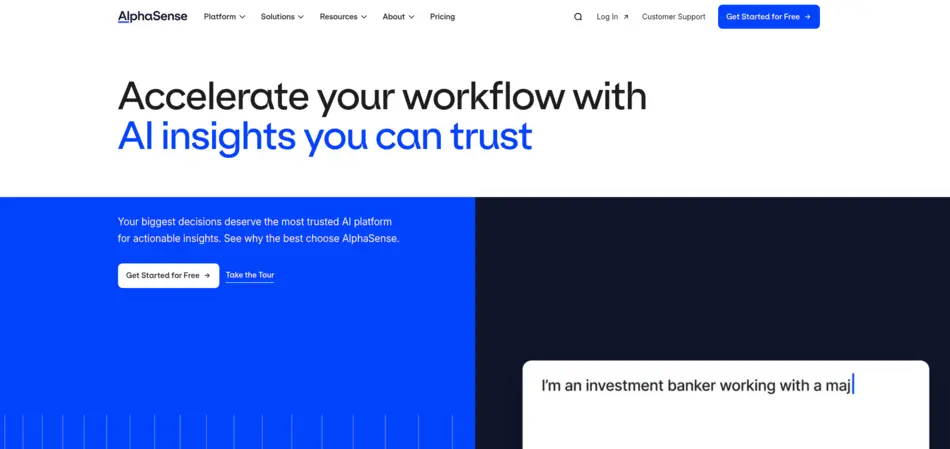
AlphaSense is an AI-powered financial intelligence platform widely used by investment firms, private equity groups, and corporate strategy teams. Instead of manually searching through earnings reports and SEC filings, users can leverage AI-driven semantic search to uncover relevant insights instantly.
It turns unstructured data into strategic advantage.
Key Features
AI-powered semantic document search
Real-time market intelligence alerts
Earnings call transcript analysis
Competitive benchmarking tools
Sentiment analysis on financial documents
Best For
Investment banks
Hedge funds
Private equity firms
Corporate finance teams
Pricing
Subscription-based SaaS pricing with enterprise tiers.
Pros
✔ Saves research time dramatically
✔ Deep document indexing capabilities
✔ Highly accurate contextual search
✔ Strong integration with financial databases
Cons
✘ Premium pricing
✘ Not designed for fraud detection or compliance
Why It Stands Out
Among AI investment tools, AlphaSense is unmatched in research efficiency. In a market where information timing determines profit margins, AI-driven financial analytics like this can significantly improve trading intelligence and due diligence workflows.
Follow On: LinkedIn | Youtube | Twitter | Facebook | Instagram
4. Zest AI
Overview
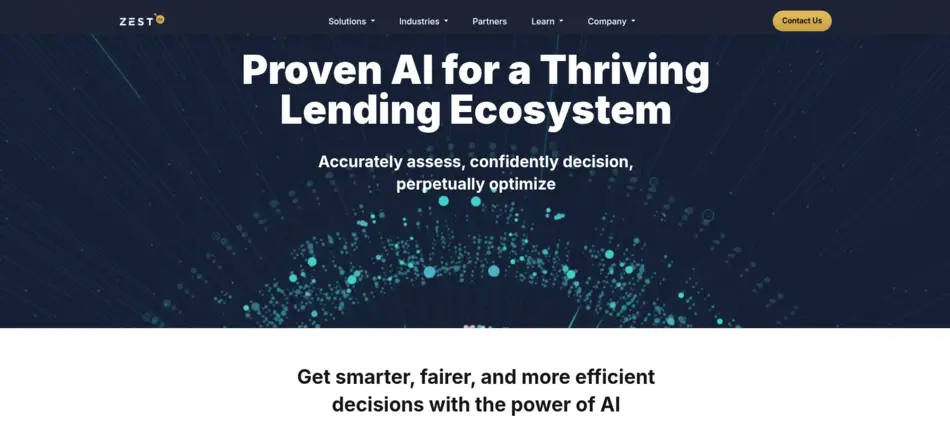
Zest AI specializes in AI credit scoring software designed to improve lending decisions. By leveraging machine learning models trained on alternative data sources, it enhances credit risk modeling beyond traditional FICO metrics.
Inclusion and profitability—both benefit.
Key Features
AI-driven underwriting models
Alternative data integration
Bias detection and fairness testing
Automated compliance documentation
Model explainability tools
Best For
Consumer lenders
Credit unions
Auto lenders
Digital lending platforms
Pricing
Custom enterprise pricing based on loan volume and integration requirements.
Pros
✔ Improves loan approval accuracy
✔ Reduces default rates
✔ Enhances financial inclusion
✔ Built-in compliance explainability
Cons
✘ Integration complexity
✘ Requires historical loan datasets
Why It Stands Out
Zest AI is frequently cited as one of the best AI for finance & banking in credit risk modeling. It balances predictive power with fairness, helping institutions meet regulatory expectations while expanding responsible lending.
5. Upstart
Overview
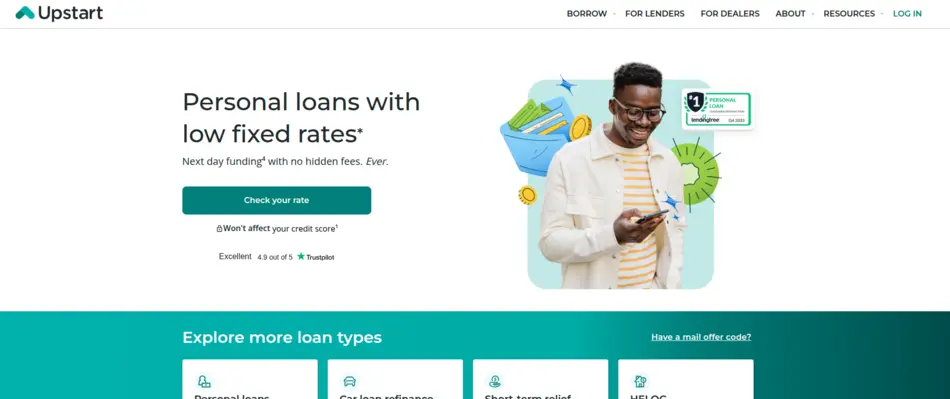
Upstart operates an AI-driven lending marketplace that connects borrowers with banks using alternative credit assessment models. Instead of relying solely on credit history, Upstart evaluates education, employment, and behavioral indicators.
The result? More inclusive lending decisions.
Key Features
AI-based borrower risk evaluation
Alternative credit scoring
Automated loan approvals
Bank partnership network
Real-time decision engine
Best For
Fintech lenders
Personal loan providers
Regional banks seeking AI underwriting
Pricing
Revenue-share or partnership-based model. Fees vary by loan performance.
Pros
✔ Higher approval rates with controlled risk
✔ Fast underwriting decisions
✔ Expands underserved customer segments
✔ Proven performance metrics
Cons
✘ Dependent on platform ecosystem
✘ Not a standalone AI deployment tool
Why It Stands Out
Upstart demonstrates how AI in finance tools can disrupt traditional credit markets. By combining AI predictive analytics for banks with marketplace infrastructure, it provides a scalable AI credit scoring software solution for modern lenders.
6. Kensho
Overview:
Kensho is a leading AI-driven financial analytics platform built specifically for capital markets. Originally developed to help institutional investors extract intelligence from massive datasets, Kensho blends natural language processing (NLP), machine learning, and event-driven analytics to transform unstructured financial data into actionable insights. It is widely used by investment banks, hedge funds, and asset managers to improve trading intelligence and macroeconomic forecasting.
Unlike traditional analytics platforms that rely on static dashboards, Kensho dynamically analyzes global events—such as geopolitical shifts or earnings announcements—and correlates them with market reactions. This makes it one of the more sophisticated AI investment tools available in 2026.
Key Features:
Event-driven market analysis engine
NLP-powered document intelligence (earnings reports, filings)
Real-time economic impact modeling
Quantitative research automation
API integration for trading systems
Best For:
Investment banks, hedge funds, quantitative analysts, and asset management firms seeking AI algorithmic trading insights.
Pricing:
Enterprise-level custom pricing. Typically bundled into institutional analytics contracts.
Pros:
Deep capital markets specialization
Powerful predictive analytics
Reduces research time significantly
Cons:
Not designed for small banks or fintech startups
Requires strong data infrastructure
Why Choose Kensho?
If your institution operates in high-frequency trading or macro-driven investment environments, Kensho’s AI financial analytics can uncover correlations humans might miss. It’s particularly valuable where milliseconds matter.
7. Darktrace
Overview:
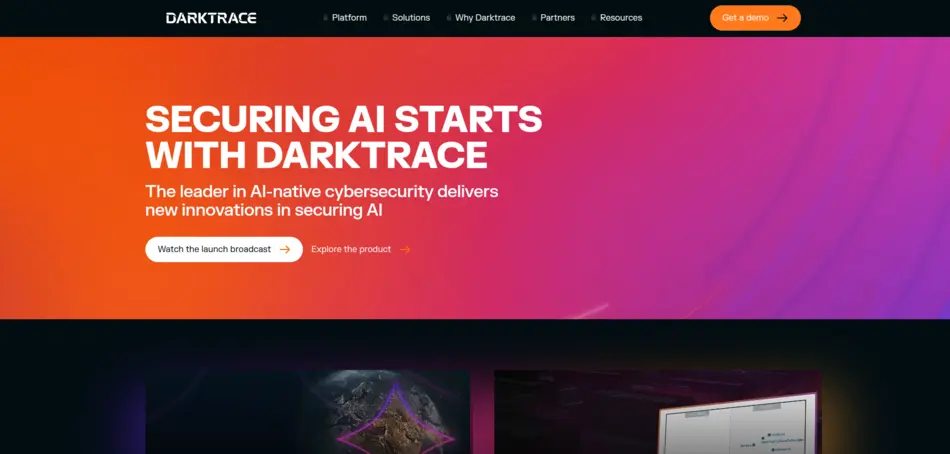
Darktrace brings AI-driven anomaly detection into financial cybersecurity. While traditionally categorized as a cybersecurity company, it plays a critical role in AI fraud detection in banking environments. Darktrace’s “self-learning AI” models establish a behavioral baseline across financial networks and flag deviations instantly.
Rather than relying on signature-based threat databases, Darktrace uses autonomous response technology to neutralize threats in real time. In the context of AI tools for banking, this makes it an essential layer for fraud prevention and infrastructure protection.
Key Features:
Self-learning behavioral AI
Real-time anomaly detection
Autonomous threat response
Email and cloud security integration
Network traffic monitoring
Best For:
Banks and fintech firms seeking AI fraud detection tools banking environments beyond transaction monitoring.
Pricing:
Enterprise subscription model based on deployment size.
Pros:
Proactive rather than reactive
Strong anomaly detection capabilities
Scalable for large institutions
Cons:
Can generate alerts that require fine-tuning
Premium enterprise pricing
Why Choose Darktrace?
In 2026, fraud isn’t just about suspicious transactions—it’s about compromised infrastructure. Darktrace protects financial networks at the behavioral level, making it a strategic complement to AI fraud detection software.
Follow On: LinkedIn | Youtube | Twitter
8. Featurespace
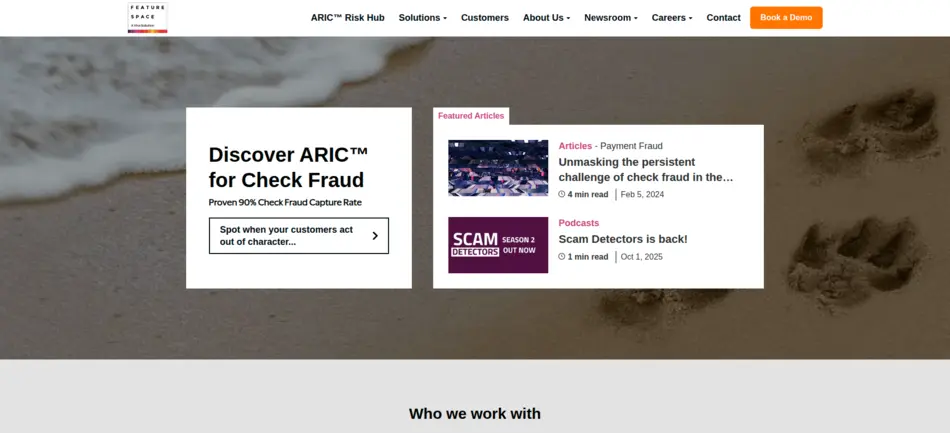
Featurespace is a leading AI fraud detection and financial crime prevention platform widely used by global banks, payment providers, and card networks. It specializes in real-time anomaly detection using adaptive behavioral analytics. Unlike traditional rule-based systems, Featurespace uses machine learning models that continuously evolve based on user behavior patterns.
It is particularly known for its ARIC™ Risk Hub platform, which helps financial institutions detect fraud, prevent money laundering, and reduce false positives at scale.
Key Features
Real-time transaction fraud detection
Adaptive behavioral analytics
Anti-Money Laundering (AML) monitoring
Card fraud prevention
Scam and authorized push payment fraud detection
Enterprise risk scoring engine
Best For
Retail banks
Payment processors
Card issuers
Large financial institutions
Pricing
Enterprise-level pricing based on transaction volume and deployment model (cloud or on-premise).
Pros
✔ Strong real-time anomaly detection
✔ Reduces false positives significantly
✔ Scalable for high transaction volumes
✔ Proven deployment across global banks
Cons
✘ Enterprise-focused (not ideal for very small fintech startups)
✘ Implementation may require integration support
Why It’s a Stronger Replacement
Featurespace is actively deployed across major global financial institutions and is recognized for cutting-edge AI fraud detection tools in banking. It aligns perfectly with your pillar page theme of AI fraud detection in banking and strengthens the authority of your AI fintech tools list.
9. H2O.ai
Overview:
H2O.ai is an open-core AI platform widely used in financial modeling and predictive analytics. It empowers financial institutions to build custom AI risk management tools and AI predictive analytics for banks using automated machine learning (AutoML).
What makes H2O.ai attractive is flexibility. Unlike pre-built SaaS AI fintech tools, H2O.ai allows institutions to design, test, and deploy proprietary models tailored to their data ecosystems.
Key Features:
AutoML for financial modeling
Explainable AI frameworks
Open-source flexibility
Cloud & on-prem deployment
Python/R integration
Best For:
Data science teams within banks, fintech startups, and investment firms building in-house AI financial tools 2026 solutions.
Pricing:
Free open-source version; enterprise licensing available.
Pros:
Highly customizable
Strong explainability features
Cost-effective entry point
Cons:
Requires internal AI expertise
Not plug-and-play
Why Choose H2O.ai?
For institutions that want control over model design rather than relying on vendor algorithms, H2O.ai provides one of the most flexible enterprise AI finance solutions.
Follow On: LinkedIn | Youtube | Twitter
10. FICO

Overview:
FICO remains a dominant force in AI credit scoring software and AI-enhanced risk analytics. Its platform extends traditional credit scoring with machine learning models that analyze alternative data sources, improving predictive power.
FICO’s AI risk management software finance tools are embedded into underwriting workflows globally. As financial inclusion grows, FICO’s explainable AI frameworks help institutions balance innovation with regulatory transparency.
Key Features:
Advanced credit risk scoring
Explainable AI compliance models
Fraud detection modules
Decision automation engine
Real-time risk monitoring
Best For:
Banks and lenders seeking advanced AI platforms for credit risk analysis.
Pricing:
Enterprise-based licensing model.
Pros:
Strong regulatory trust
Proven predictive performance
Global adoption
Cons:
Legacy integration complexity
High enterprise cost
Why Choose FICO?
For institutions prioritizing regulatory trust and proven credit modeling, FICO remains one of the best AI tools for finance & banking in underwriting and risk assessment.
Follow On: LinkedIn | Youtube | Twitter | Facebook | Instagram | TikTok
11. Oracle Financial Services
Overview:
Oracle Financial Services delivers enterprise-grade AI in banking solutions covering compliance, liquidity risk, capital management, and financial crime detection. Integrated within Oracle’s broader cloud ecosystem, it supports large-scale banking automation AI tools.
Its AI modules enhance scenario modeling, stress testing, and regulatory reporting—critical for Tier-1 banks managing global exposure.
Key Features:
Enterprise AI risk modeling
Liquidity & capital forecasting
Regulatory compliance automation
Integrated financial data management
Cloud-native deployment
Best For:
Large banks requiring enterprise AI finance solutions with global compliance integration.
Pricing:
Enterprise subscription with modular pricing.
Pros:
Scalable architecture
Integrated ecosystem
Strong compliance frameworks
Cons:
Higher total cost of ownership
Complex onboarding
Why Choose Oracle Financial Services?
If scalability and global regulatory alignment are priorities, Oracle’s AI risk management tools provide robust enterprise-level governance.
Follow On: LinkedIn | Youtube | Twitter | Facebook
12. SAS
Overview:
SAS has long been synonymous with advanced analytics in banking. In 2026, its AI financial analytics and machine learning tools for finance enable real-time fraud detection, credit scoring, and stress testing.
SAS integrates AI with traditional statistical modeling, offering hybrid intelligence—an advantage for conservative institutions transitioning into AI-driven environments.
Key Features:
AI-powered fraud detection
Credit risk modeling
Stress testing frameworks
AML & compliance analytics
Real-time decision engines
Best For:
Established banking institutions seeking AI risk management software finance platforms with statistical rigor.
Pricing:
Enterprise licensing.
Pros:
Strong analytical depth
Regulatory credibility
Mature technology ecosystem
Cons:
Premium pricing
Requires skilled analysts
Why Choose SAS?
For banks that value proven analytical frameworks and regulatory confidence, SAS bridges traditional risk analytics with modern AI capabilities.
Follow On: LinkedIn | Youtube | Twitter | Facebook
13. IBM Watson (Financial Services AI)
Overview
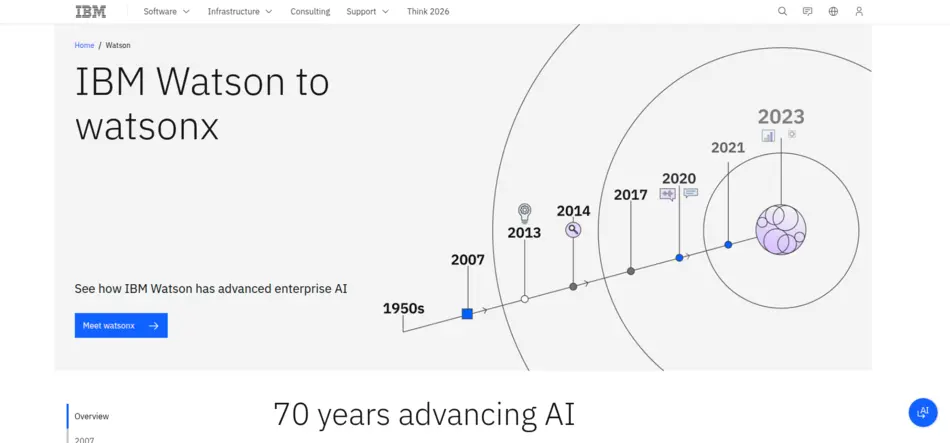
IBM Watson has evolved into a powerful AI ecosystem supporting fraud detection, risk analytics, compliance automation, and customer intelligence for global financial institutions. In 2026, Watson combines natural language processing (NLP), machine learning, and generative AI to analyze structured and unstructured financial data—transactions, regulatory filings, call transcripts, and market reports—in real time.
Unlike narrow AI fraud detection tools banking teams often use, Watson operates across departments. It integrates into core banking systems, payment rails, and enterprise risk platforms, making it one of the most versatile AI tools for finance environments.
Key Features
Real-time fraud detection with anomaly scoring
AI-driven financial insights from unstructured documents
Explainable AI models for regulatory transparency
Automated compliance reporting
Conversational AI assistants for internal banking teams
Integration with hybrid cloud infrastructure
Best For
Tier-1 banks
Global financial institutions
Organizations requiring explainable AI risk management tools
Pricing
Enterprise-level custom pricing based on deployment scale, cloud configuration, and modules selected.
Pros
Strong NLP capabilities
High enterprise security standards
Scalable across departments
Robust integration ecosystem
Cons
Implementation can be complex
Requires skilled data science teams
Higher cost compared to mid-market tools
Why It Stands Out in 2026
IBM Watson differentiates itself through explainability and compliance transparency. As regulators increasingly scrutinize AI models, Watson’s explainable frameworks make it one of the safest AI in finance tools for highly regulated environments.
Follow On: LinkedIn | Youtube | Twitter | Instagram
14. Salesforce Financial Services Cloud
Overview
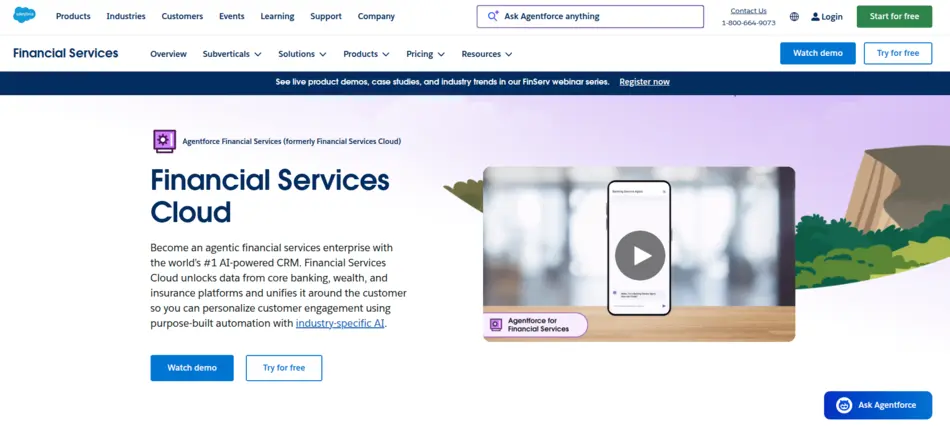
Salesforce Financial Services Cloud extends CRM intelligence into the banking and wealth management ecosystem. By embedding AI directly into customer relationship workflows, it transforms how institutions manage client onboarding, engagement, and lifecycle management.
In 2026, AI-powered CRM systems are critical components of AI tools for banking strategies. Salesforce integrates predictive analytics and behavioral intelligence into frontline operations.
Key Features
AI-driven customer 360 profiles
Predictive lead scoring
Personalized financial product recommendations
Automated compliance workflows
Integrated chatbots and service automation
Best For
Retail banks
Wealth management firms
Insurance providers
Pricing
Subscription-based SaaS pricing; enterprise tiers vary by features and user count.
Pros
Excellent ecosystem integration
Scalable cloud architecture
Strong customer personalization capabilities
Cons
Primarily CRM-focused (not core risk modeling)
Customization can increase costs
Why It Stands Out in 2026
As hyper-personalization becomes essential, Salesforce stands out among AI financial tools 2026 by merging CRM intelligence with predictive AI analytics—bridging sales, service, and compliance.
Follow On: LinkedIn | Youtube | Twitter | Facebook | Instagram | TikTok
15. NICE Actimize
Overview
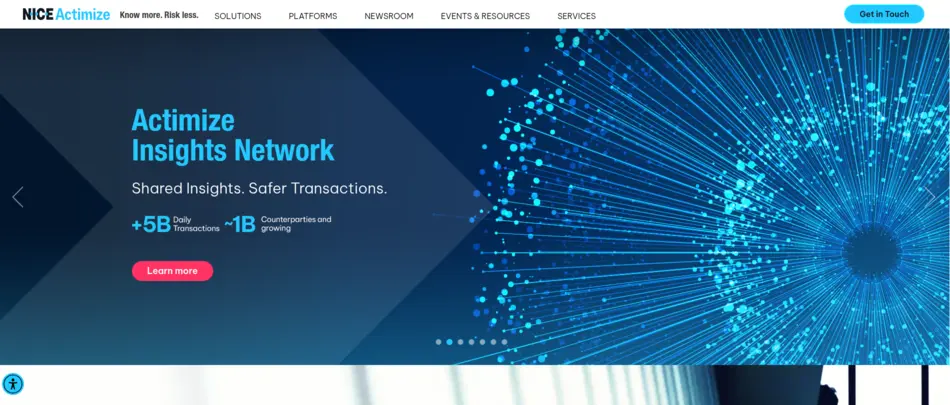
NICE Actimize is a global leader in financial crime prevention, specializing in AML, fraud detection, and trade surveillance. Its AI risk management software finance solutions analyze transaction patterns across millions of accounts.
In an era of increasingly sophisticated financial crimes, AI fraud detection software must evolve continuously. NICE Actimize uses adaptive machine learning to detect hidden criminal networks.
Key Features
AML monitoring and SAR automation
Real-time fraud detection
Trade surveillance analytics
Risk-based alert prioritization
Behavioral anomaly detection
Best For
Large banks
Investment firms
Institutions with strict AML compliance requirements
Pricing
Enterprise pricing tailored to deployment scope.
Pros
Strong regulatory alignment
High detection accuracy
Scalable for global banks
Cons
Enterprise complexity
Implementation time can be lengthy
Why It Stands Out in 2026
It remains one of the most trusted AI fraud detection tools banking regulators recognize globally.
Follow On: LinkedIn | Youtube | Twitter | Facebook
16. ThetaRay
Overview
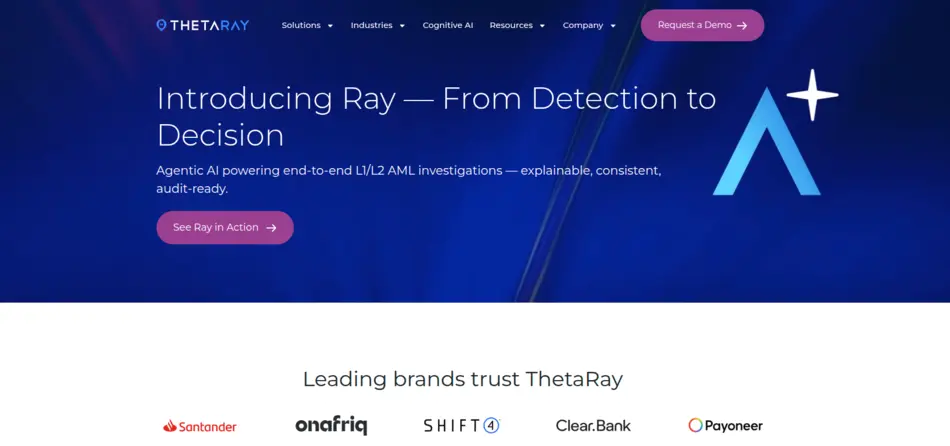
ThetaRay focuses on AI-powered AML transaction monitoring, particularly for cross-border payments and correspondent banking networks. Its cognitive AI detects subtle transaction anomalies traditional systems miss.
As financial crime becomes global, AI fraud detection in banking must identify multi-layered laundering schemes. ThetaRay excels here.
Key Features
Cross-border AML monitoring
Behavioral transaction analysis
Reduced false positives
Real-time network analysis
Best For
Global banks
Fintechs handling international payments
Pricing
Enterprise-based custom pricing.
Pros
Strong cross-border fraud intelligence
Lower false positive rates
Fast anomaly detection
Cons
Focused primarily on AML
Enterprise deployment required
Why It Stands Out in 2026
ThetaRay’s specialization in complex payment networks makes it critical for banks operating internationally.
Follow On: LinkedIn | Youtube | Twitter
17. ComplyAdvantage
Overview
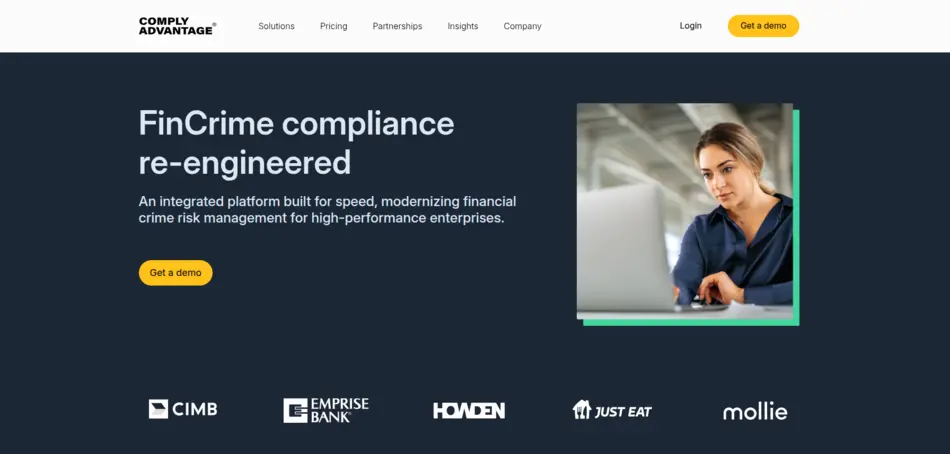
ComplyAdvantage delivers AI compliance software for AML, sanctions screening, and risk intelligence. It continuously updates risk databases using machine learning.
With regulatory updates accelerating worldwide, banking AI software for compliance must be agile. ComplyAdvantage provides real-time risk data feeds.
Key Features
AML transaction monitoring
Real-time sanctions screening
Risk database updates
Automated KYC workflows
Best For
Fintech startups
Mid-size banks
Payment companies
Pricing
Tiered SaaS pricing model.
Pros
Easy API integration
Faster onboarding
Strong fintech adoption
Cons
Limited deep predictive modeling
Enterprise customization may require upgrades
Why It Stands Out in 2026
Its agility and API-first architecture make it one of the best AI tools for finance for fast-growing fintechs.
Follow On: LinkedIn | Youtube | Twitter | Instagram
18. Quantiphi
Overview
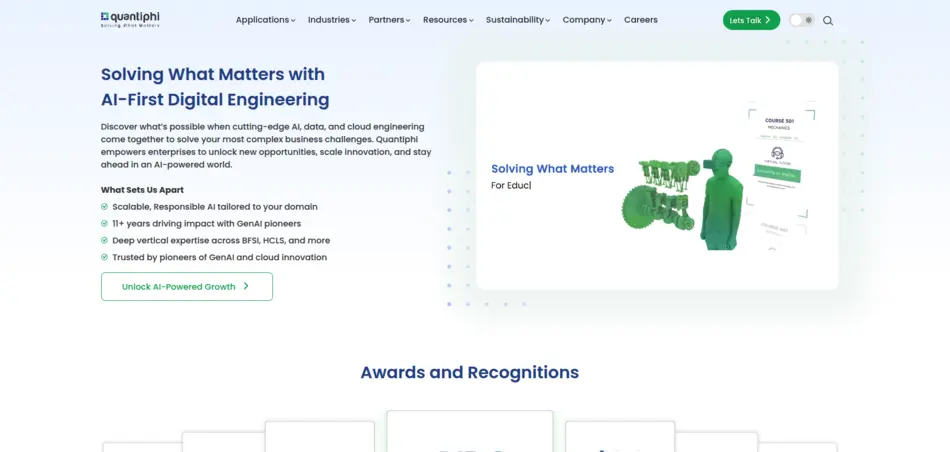
Quantiphi provides enterprise AI finance solutions customized for BFSI organizations. Rather than offering a single product, it builds tailored AI systems for risk modeling, underwriting, and automation.
Key Features
Custom AI development
Predictive analytics implementation
Cloud AI integration
End-to-end AI transformation consulting
Best For
Large banks undergoing digital transformation
Enterprises needing bespoke AI models
Pricing
Project-based consulting pricing.
Pros
Highly customized solutions
Deep AI expertise
Cloud-native integration
Cons
Not plug-and-play
Requires longer deployment cycles
Why It Stands Out in 2026
For institutions seeking competitive differentiation through proprietary AI models, Quantiphi provides strategic advantage.
Follow On: LinkedIn | Youtube | Twitter | Facebook | Instagram
19. Palantir Technologies
Overview
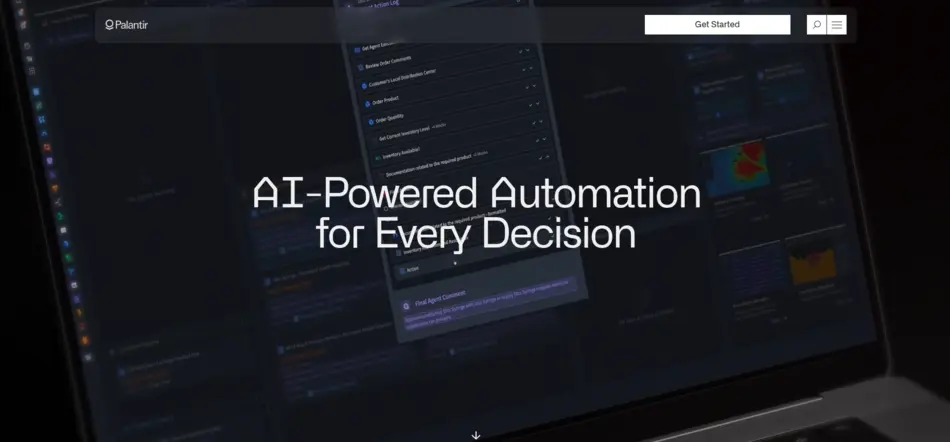
Palantir provides large-scale big data analytics for financial institutions. It integrates massive datasets for risk modeling, compliance tracking, and fraud analytics.
Key Features
Big data integration
Risk intelligence dashboards
Advanced analytics modeling
Data visualization tools
Best For
Global financial institutions
Government-regulated banks
Pricing
Enterprise licensing model.
Pros
Handles extremely large datasets
Strong compliance alignment
Powerful visualization
Cons
Expensive
Complex onboarding
Why It Stands Out in 2026
Palantir excels where massive data complexity exists—making it ideal for systemic risk monitoring.
Follow On: LinkedIn | Youtube | Twitter
20. Stripe Radar
Overview
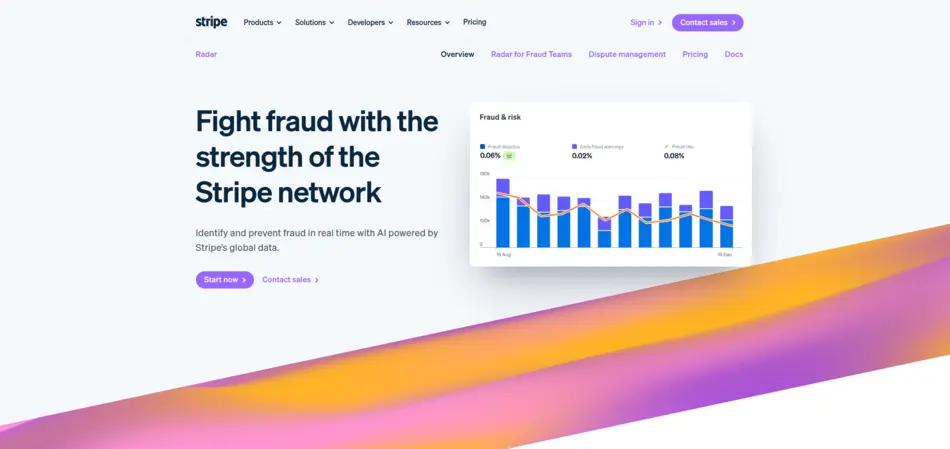
Stripe Radar is AI fraud prevention built directly into Stripe’s payment ecosystem. It uses machine learning trained on billions of global transactions.
For fintech startups and e-commerce platforms, AI fraud detection tools banking systems must be frictionless. Radar delivers real-time protection without heavy infrastructure.
Key Features
Real-time fraud scoring
Adaptive machine learning models
Custom fraud rules
Global transaction dataset
Best For
Fintech startups
E-commerce businesses
Digital payment platforms
Pricing
Included in Stripe’s transaction pricing model (usage-based).
Pros
Easy setup
Continuous learning model
Low barrier to entry
Cons
Limited outside Stripe ecosystem
Not ideal for large banks needing full AML suites
Why It Stands Out in 2026
Stripe Radar proves that powerful AI financial tools 2026 don’t always require enterprise-level complexity—sometimes seamless integration is the biggest innovation.
Follow On: LinkedIn | Youtube | Twitter | Facebook | Instagram
21. Socure
Overview
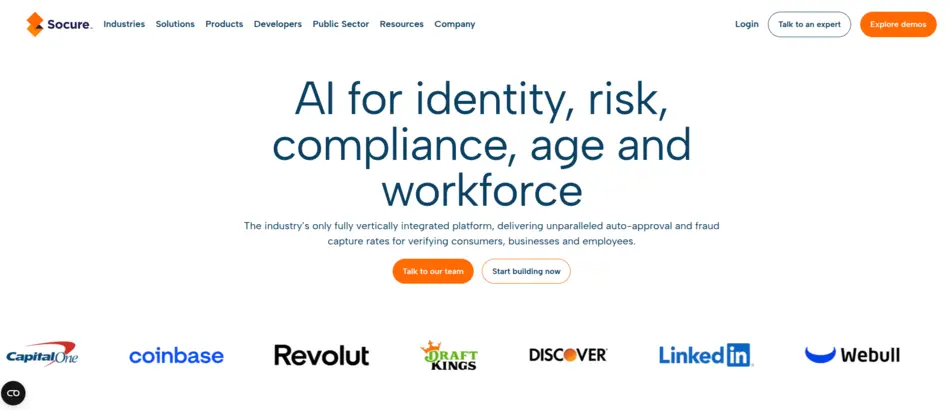
Socure is one of the most advanced AI identity verification platforms designed specifically for fintech, digital banks, and enterprise financial institutions. Unlike traditional identity verification systems that rely heavily on static databases, Socure uses adaptive machine learning models trained on billions of real-world identity records. Its core strength lies in combining digital identity data, behavioral biometrics, and alternative datasets to reduce fraud while minimizing false positives.
As fraudsters become more sophisticated—leveraging synthetic identities and AI-generated documents—platforms like Socure represent the next generation of AI fraud detection tools in banking ecosystems.
Key Features
AI-driven digital identity verification
Synthetic identity fraud detection
Document verification with computer vision
Email, phone, and device risk scoring
Continuous identity monitoring
KYC and AML automation support
Best For
Fintech startups
Neobanks
Online lenders
Payment processors
Enterprises scaling digital onboarding
Pricing
Custom enterprise pricing based on transaction volume and verification depth. Typically API-based billing.
Pros
✔ High approval rates with lower false declines
✔ Strong synthetic identity detection
✔ Fast API integration
✔ Scalable for high-volume fintech
Cons
✘ Enterprise-level pricing
✘ May be complex for small institutions without technical teams
Why It Stands Out
Socure excels in balancing compliance and customer experience. In digital banking, onboarding friction can destroy conversion rates. Socure’s AI credit risk and identity intelligence systems improve approval accuracy without increasing fraud exposure—making it a powerful enterprise AI finance solution for 2026.
Follow On: LinkedIn | Youtube | Twitter | Facebook
22. Plaid
Overview
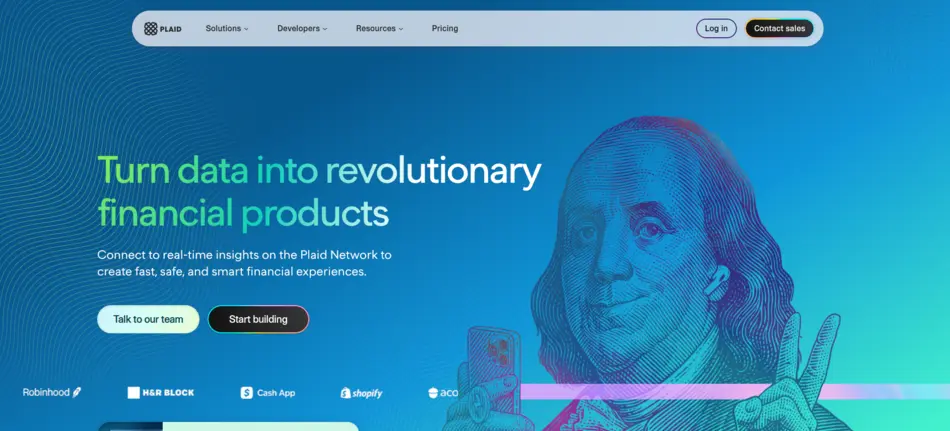
Plaid powers financial data connectivity across thousands of apps and banks worldwide. While many associate Plaid with open banking APIs, its role in AI in finance tools is increasingly strategic. By securely connecting bank accounts to fintech platforms, Plaid provides the structured financial data that fuels AI predictive analytics for banks and lending platforms.
Think of Plaid as the infrastructure layer that enables AI credit scoring software and AI investment tools to function effectively.
Key Features
Secure bank account connectivity APIs
Real-time transaction data access
Income verification & asset reporting
Identity verification services
Risk and fraud insights
Open banking integrations
Best For
Fintech startups
Lending platforms
Personal finance apps
Robo-advisors
BNPL providers
Pricing
Usage-based pricing model depending on API calls and services used.
Pros
✔ Massive bank coverage
✔ Strong developer documentation
✔ Enables advanced AI financial analytics
✔ Reliable infrastructure
Cons
✘ API dependency
✘ Costs increase with scale
Why It Stands Out
Without clean financial data, even the best AI tools for finance & banking fail. Plaid acts as the connective tissue between banks and AI models, enabling real-time underwriting, fraud detection, and financial forecasting. It’s foundational infrastructure for modern AI fintech tools lists.
Follow On: LinkedIn | Instagram | Twitter
23. Trulioo
Overview
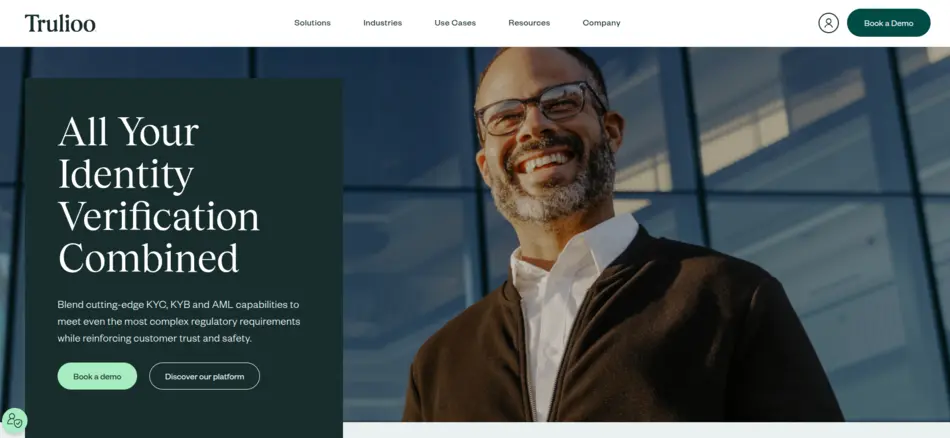
Trulioo is a global AI identity verification and compliance platform that supports over 5 billion people and 700 million business entities worldwide. Its strength lies in cross-border compliance, making it essential for financial institutions operating internationally.
As global regulations tighten and digital onboarding expands, AI compliance software like Trulioo ensures financial institutions meet AML and KYC standards without sacrificing user experience.
Key Features
Global identity verification across 195+ countries
Business verification (KYB)
AML screening & watchlist monitoring
Document authentication with AI vision models
Workflow automation for compliance teams
Best For
Global banks
International fintech firms
Crypto exchanges
Cross-border payment providers
Pricing
Custom pricing based on verification volume and geographic coverage.
Pros
✔ Global regulatory coverage
✔ Strong AML and sanctions screening
✔ Enterprise-grade security
✔ Highly scalable
Cons
✘ Higher cost for global coverage
✘ Requires configuration for optimal performance
Why It Stands Out
For institutions expanding globally, compliance complexity multiplies. Trulioo’s AI-driven compliance intelligence helps reduce onboarding risk while meeting local regulatory requirements—making it a leading banking AI software for compliance solution in 2026.
Follow On: LinkedIn | Youtube | Twitter | Facebook | Instagram
24. TIBCO

Overview
TIBCO delivers predictive analytics and real-time data intelligence solutions widely used in banking, insurance, and capital markets. It integrates AI financial analytics, streaming data processing, and advanced visualization into a unified enterprise platform.
In volatile markets, predictive modeling is not optional. AI risk management software finance solutions like TIBCO help institutions forecast liquidity risk, credit exposure, and trading volatility.
Key Features
Predictive analytics & forecasting
Real-time data streaming analytics
Risk modeling tools
Data visualization dashboards
Integration with enterprise data warehouses
Best For
Investment banks
Risk management teams
Treasury departments
Financial forecasting analysts
Pricing
Enterprise pricing, typically subscription-based.
Pros
✔ Strong predictive modeling
✔ Real-time analytics capability
✔ Enterprise integration strength
✔ Customizable dashboards
Cons
✘ Steep learning curve
✘ Enterprise-level implementation time
Why It Stands Out
TIBCO combines machine learning tools for finance with real-time analytics—critical for trading desks and treasury operations. Its AI predictive analytics for banks can simulate market scenarios and stress tests in seconds, enhancing decision-making accuracy.
Follow On: LinkedIn | Youtube | Twitter | Facebook
25. SAP Financial Services
Overview
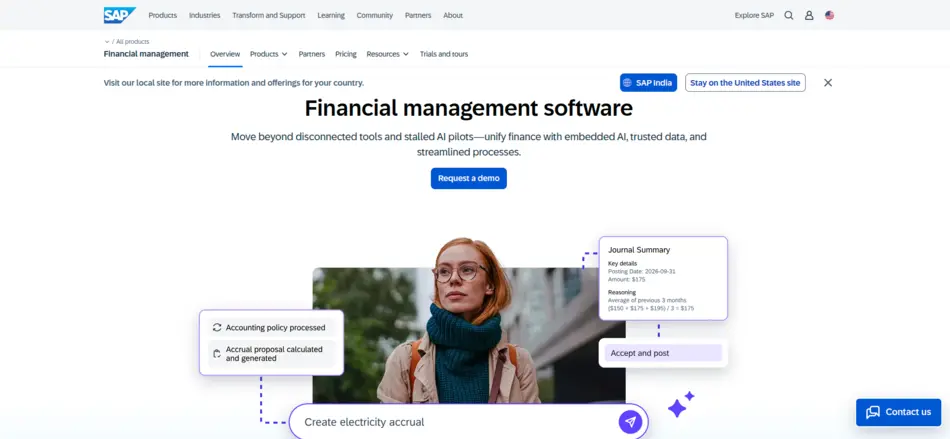
SAP Financial Services integrates AI into enterprise banking operations, offering end-to-end digital transformation for large financial institutions. From risk management to compliance automation, SAP delivers AI-powered modules within its broader enterprise ecosystem.
This is not just an AI tool—it’s a comprehensive enterprise AI finance solution embedded into core banking architecture.
Key Features
AI-driven financial risk management
Regulatory reporting automation
Fraud monitoring systems
Treasury management
Customer experience personalization
Integration with ERP & core banking systems
Best For
Large commercial banks
Multinational financial institutions
Enterprise-level fintech
Insurance companies
Pricing
Enterprise license model. Pricing depends on deployment scope (cloud vs on-premise).
Pros
✔ Deep enterprise integration
✔ Strong compliance framework
✔ Scalable infrastructure
✔ Advanced automation capabilities
Cons
✘ High implementation cost
✘ Requires enterprise IT infrastructure
Why It Stands Out
SAP’s advantage lies in ecosystem integration. Many AI tools for banking operate as external add-ons. SAP embeds AI directly into operational workflows—reducing silos and increasing efficiency. For institutions seeking long-term digital transformation, it remains one of the best AI tools for finance & banking in enterprise environments.
Follow On: LinkedIn | Youtube | Facebook | Instagram
Comparison Table – Top 25 AI Tools for Finance & Banking (2026)
| Sr. No. | Tool | Primary Category | Best For | Enterprise Ready | Free Trial | Pricing Model |
|---|---|---|---|---|---|---|
| 1 | Feedzai | Fraud Detection & Risk | Real-time transaction monitoring | Yes | No | Custom enterprise |
| 2 | DataRobot | Risk Modeling & Predictive Analytics | Credit risk & forecasting | Yes | Limited | Subscription / Enterprise |
| 3 | AlphaSense | Financial Intelligence | Market research & insights | Yes | Yes | Tiered subscription |
| 4 | Zest AI | Credit Risk AI | Loan underwriting | Yes | No | Custom pricing |
| 5 | Upstart | AI Lending & Credit Scoring | Consumer lending | Yes | No | Revenue share model |
| 6 | Kensho | Market Analytics | Capital markets intelligence | Yes | No | Enterprise license |
| 7 | Darktrace | Cybersecurity & Fraud | Network anomaly detection | Yes | Yes | Subscription |
| 8 | Featurespace | Fraud Detection & AML | Real-time anomaly detection | Yes | No | Enterprise |
| 9 | H2O.ai | Predictive Modeling | Financial data science teams | Yes | Yes | Open-core / Enterprise |
| 10 | FICO | Credit Risk & Scoring | Enterprise credit analytics | Yes | No | Enterprise licensing |
| 11 | Oracle Financial Services | Risk & Compliance Suite | Core banking transformation | Yes | No | Enterprise |
| 12 | SAS | Advanced Banking Analytics | Risk modeling & compliance | Yes | Limited | Subscription |
| 13 | IBM Watson | Fraud & Insights | Enterprise AI integration | Yes | Limited | Enterprise |
| 14 | Salesforce Financial Services Cloud | CRM & AI Personalization | Customer lifecycle management | Yes | Yes | Subscription |
| 15 | NICE Actimize | AML & Financial Crime | Fraud & compliance monitoring | Yes | No | Enterprise |
| 16 | ThetaRay | AML Transaction Monitoring | Cross-border payment monitoring | Yes | No | Custom pricing |
| 17 | ComplyAdvantage | Compliance & Risk Intelligence | AML & sanctions screening | Yes | Yes | Tiered |
| 18 | Quantiphi | Enterprise AI Solutions | BFSI AI transformation | Yes | No | Project-based |
| 19 | Palantir Technologies | Big Data Analytics | Large-scale financial intelligence | Yes | No | Enterprise |
| 20 | Stripe Radar | Fraud Prevention | Online payment fraud | Yes | Yes | Usage-based |
| 21 | Socure | Identity & Fraud | Digital onboarding | Yes | No | API-based volume pricing |
| 22 | Plaid | Data Connectivity | Open banking & fintech apps | Yes | Yes | Usage-based |
| 23 | Trulioo | Global Identity & Compliance | Cross-border KYC/KYB | Yes | No | Volume-based |
| 24 | TIBCO | Predictive Analytics | Financial forecasting | Yes | Limited | Subscription |
| 25 | SAP Financial Services | Enterprise Banking Suite | End-to-end banking AI | Yes | No | Enterprise license |
How to Choose the Right AI Tool for Your Financial Institution
Choosing the best AI for finance & banking depends on your structure.
Banks: Need enterprise AI finance solutions with compliance depth.
Fintechs: Require scalable AI fraud detection software.
Investment Firms: Prioritize AI algorithmic trading & predictive analytics.
Consider:
Data encryption standards
Cloud vs on-premise deployment
API integration capability
Model explainability
Budget scalability
At AI Tool Mapper, we recommend evaluating vendors based on compliance certifications and integration flexibility.
Emerging AI Trends in Finance (2026 & Beyond)
AI is moving toward:
Autonomous Finance Operations
Self-optimizing treasury and automated reconciliations.
AI + Blockchain
Fraud-proof smart contracts.
Real-Time Fraud Intelligence Networks
Collaborative AI fraud detection tools banking systems across institutions.
Hyper-Personalized Banking
Predictive AI financial analytics recommending micro-investments in real time.
Key Takeaways
AI tools for finance are now core banking infrastructure.
Fraud detection and risk management dominate adoption.
Compliance automation is becoming mandatory.
Predictive analytics drives smarter credit decisions.
Enterprise scalability and explainability matter most.
Generative AI will redefine reporting workflows.
Frequently Asked Questions
Q1: What are the best AI tools for fraud detection in banking?
Feedzai, Stripe Radar, NICE Actimize, and Darktrace lead AI fraud detection software solutions.
Q2: How is AI used in financial risk management?
AI risk management tools model credit risk, forecast liquidity, and stress-test portfolios.
Q3: Are AI finance tools secure for banks?
Enterprise platforms use encryption, compliance certifications, and explainable AI frameworks.
Q4: What is the future of AI in banking?
Autonomous financial systems, real-time fraud intelligence, and generative reporting tools.
Q5: Which AI tools are best for fintech startups?
Stripe Radar, Plaid, Socure, and H2O.ai offer scalable solutions.
Final Verdict – The Future of AI in Finance & Banking
The Best AI Tools for Finance & Banking are no longer optional. They are competitive differentiators.
From AI fraud detection tools banking platforms to AI predictive analytics for banks, intelligent systems now sit at the center of financial innovation.
Institutions that adopt enterprise AI finance solutions thoughtfully—prioritizing security, scalability, and compliance—will outperform slower competitors.
Explore more curated AI fintech tools list guides at AI Tool Mapper to stay ahead of the curve.
Found this helpful? Save it to your Pinterest board!