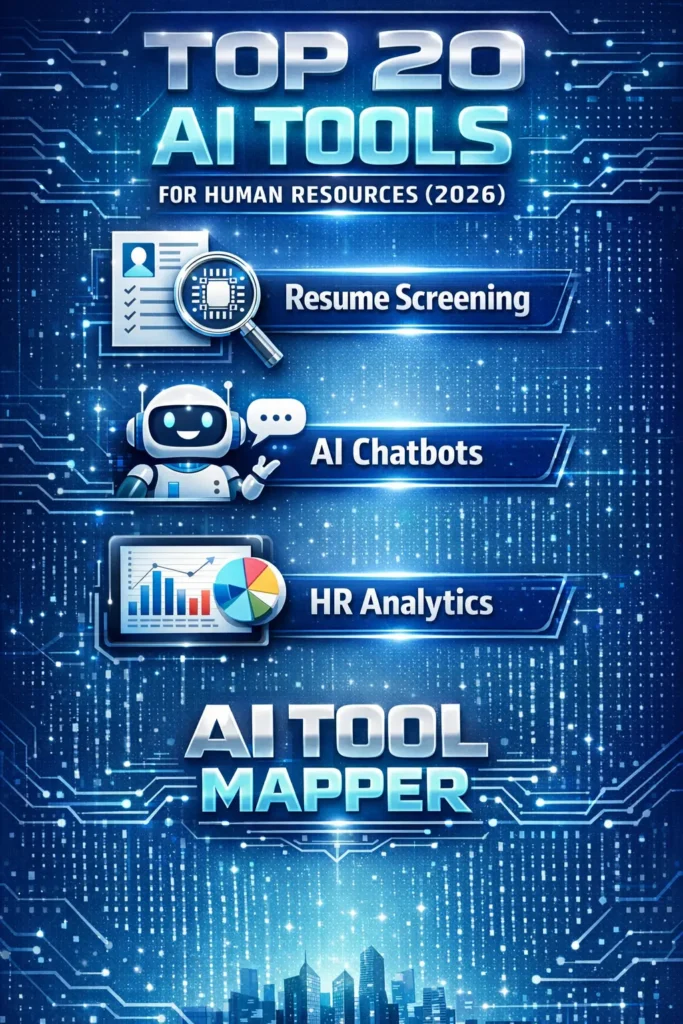
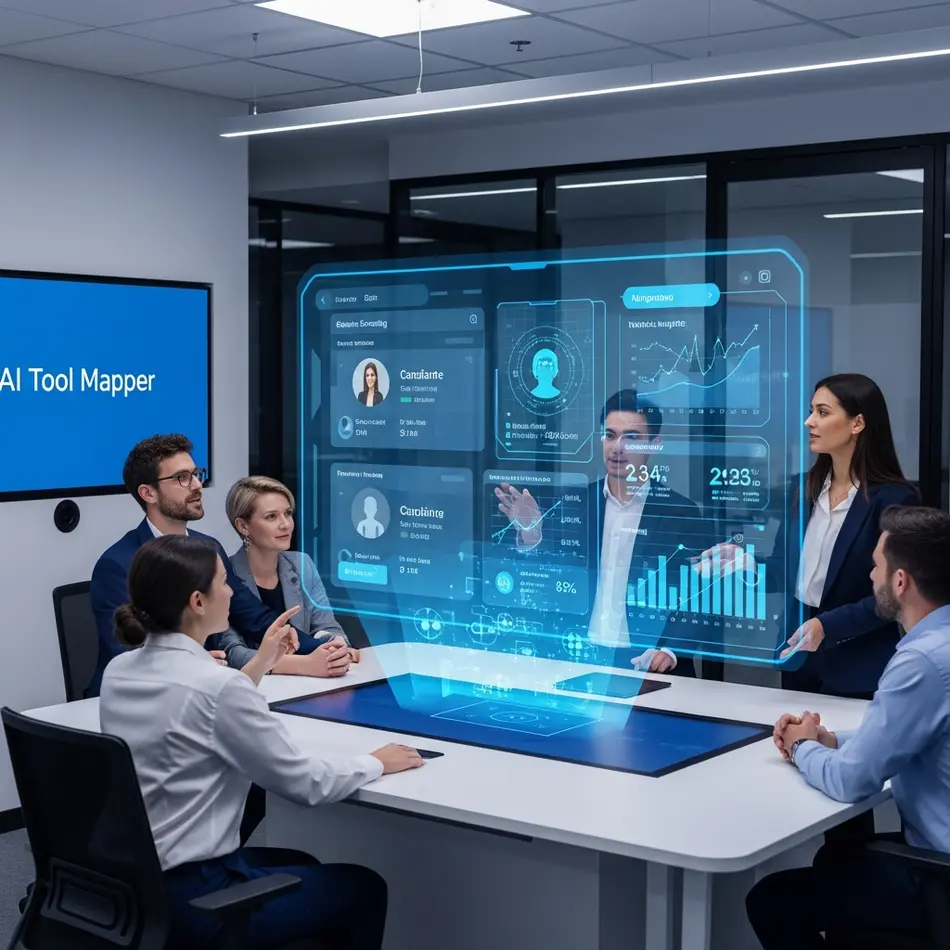
The best AI tools for human resources in 2026 combine AI resume screening, predictive analytics, recruiting chatbots, interview intelligence, and workforce analytics. Leading platforms like Workday, Greenhouse, Eightfold AI, HireVue, and Paradox help HR teams automate hiring, reduce bias, improve candidate experience, and make data-driven decisions.
Best For:
Startups → AI hiring tools with automation and lower pricing tiers
Enterprises → AI talent acquisition tools with workforce analytics
Remote teams → AI interview software and recruiting chatbots
Key Benefits: Faster hiring cycles, improved quality of hire, scalable recruitment, better compliance, and stronger employer branding.
The HR Revolution Is Already Here
Hiring in 2026 doesn’t look anything like it did five years ago. Talent shortages are more intense. Candidate expectations are higher. Remote hiring is standard. And HR teams are drowning in administrative tasks, compliance updates, and endless resume reviews.
Here’s the reality: traditional recruitment processes simply can’t keep up. Recruiters are expected to hire faster, reduce bias, improve candidate experience, and prove ROI — all at the same time. That’s where AI recruiting tools and advanced AI tools for HR come into play.
Artificial intelligence is no longer experimental in human capital management. It’s powering AI resume screening, automated hiring tools, AI interview software, recruiting chatbots, and AI workforce analytics that transform how companies attract and retain talent. From startups to global enterprises, organizations are adopting AI recruitment software to gain a competitive advantage.
In this complete guide, we break down the Best AI Tools for Human Resources & Recruiting in 2026, ranked across 20 leading platforms. You’ll learn:
How AI is transforming HR
How we evaluated each AI hiring platform
Detailed breakdowns of the top 20 tools
AI hiring trends for 2026
How to choose the right solution for your company
If you’re an HR manager, recruiter, startup founder, or talent acquisition leader, this guide will help you make smarter, data-driven decisions.
Why AI Is Transforming Human Resources in 2026
The Evolution of AI in HR & Recruiting
Human resources has evolved from paperwork and spreadsheets to intelligent talent systems. Early Applicant Tracking Systems (ATS) focused on storage and workflow. Today’s AI HR software predicts hiring success, detects skill gaps, and even forecasts employee turnover.
Machine learning models analyze thousands of data points across resumes, social profiles, and job descriptions. AI hiring tools identify patterns that humans often miss. Instead of manually filtering candidates, AI recruitment software ranks applicants based on skills, experience, and behavioral signals.
Companies like IBM and LinkedIn have demonstrated how AI-powered talent intelligence improves candidate matching. AI talent acquisition tools now suggest passive candidates, automate sourcing, and personalize outreach.
This is not about replacing recruiters. It’s about augmenting them. AI handles repetitive tasks. Humans focus on strategy and relationship-building.
Key Benefits of AI Recruiting Tools
1. Faster Hiring Cycles
AI resume screening drastically reduces time-to-hire. Instead of reviewing 500 resumes manually, AI hiring platforms filter the top 10–20 candidates instantly.
2. Reduced Bias
Modern AI HR compliance tools are designed with bias-detection frameworks. Ethical AI hiring ensures diversity metrics are tracked and optimized.
3. Better Candidate Experience
Recruiting chatbots provide 24/7 responses. AI interview software enables flexible scheduling and asynchronous interviews.
4. Data-Driven Decisions
AI workforce analytics and predictive hiring software analyze historical hiring data to improve quality of hire.
When implemented responsibly, AI recruiting software becomes a strategic growth engine.
How We Ranked the Top 20 AI HR Tools
Evaluation Criteria
To determine the Best AI Tools for Human Resources, we analyzed:
AI capabilities (resume screening, predictive analytics, automation)
Integration with ATS and HRMS systems
Scalability for startups to enterprises
User reviews and adoption trends
Pricing transparency
Compliance & explainability
We reviewed industry benchmarks, company case studies, and product documentation to ensure accuracy and trustworthiness.
Top 20 AI Tools for Human Resources & Recruiting (2026 Ranked)
Below is our ranked list of leading AI recruiting tools and HR automation software transforming talent acquisition in 2026. These platforms combine machine learning, automation, workforce analytics, and conversational AI to help HR teams hire faster and manage talent more effectively.
1. Workday

Workday is one of the most powerful enterprise-level AI HR software platforms used by global organizations to manage human capital, payroll, workforce planning, and recruiting. Its AI-driven insights help HR leaders make strategic hiring decisions based on predictive analytics and workforce intelligence. By analyzing employee skills, performance data, and labor trends, Workday enables companies to forecast talent needs before shortages occur.
Best For:
Large enterprises with complex workforce structures and global hiring needs.
Key AI Features:
AI-powered workforce planning and talent forecasting
Intelligent candidate matching and resume screening
Predictive retention analytics to identify turnover risks
AI-driven internal mobility recommendations
Automated job description optimization
Pros:
Deep workforce analytics and reporting capabilities
Strong compliance and security frameworks
Seamless integration with enterprise HR systems
Cons:
Premium pricing compared to SMB-focused tools
Implementation can require dedicated IT resources
Pricing:
Custom enterprise pricing
Ideal Company Size:
1000+ employees
Website: https://www.workday.com/
2. Greenhouse
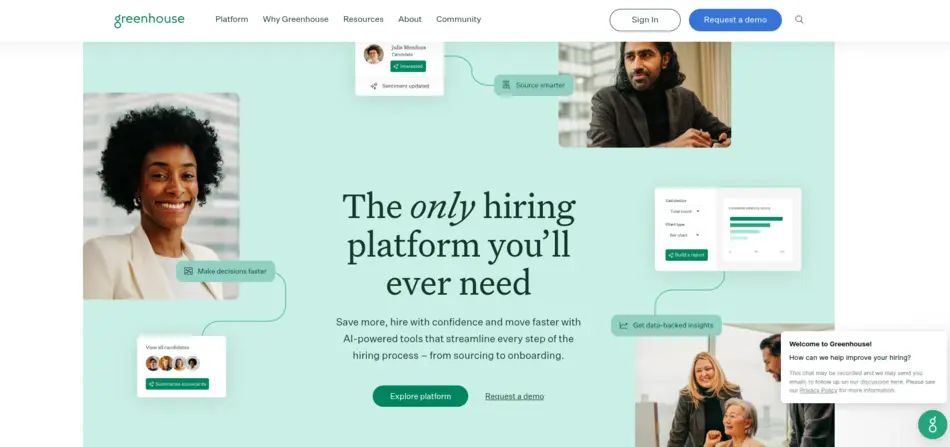
Greenhouse is a widely adopted AI recruitment software platform designed to bring structure and fairness into hiring processes. It emphasizes data-driven recruiting and helps organizations build consistent interview frameworks that reduce bias. The platform integrates AI-powered resume screening and candidate scoring to highlight top applicants quickly.
Greenhouse also offers robust collaboration tools, enabling recruiters, hiring managers, and interview panels to evaluate candidates using standardized scorecards.
Best For:
Growing companies looking to implement structured hiring practices.
Key AI Features:
AI resume screening and candidate ranking
Structured interview frameworks with scoring algorithms
Diversity and inclusion hiring insights
Automated interview scheduling and coordination
Advanced recruiting analytics dashboards
Pros:
Strong ecosystem of integrations
Excellent hiring workflow customization
Proven success with tech startups and mid-sized companies
Cons:
Learning curve for first-time users
Some advanced features require higher-tier plans
Pricing:
Custom pricing depending on hiring volume
Ideal Company Size:
100–2000 employees
Website: https://www.greenhouse.com/
3. Eightfold AI

Eightfold AI is one of the most advanced AI talent acquisition tools available today. It uses deep-learning algorithms trained on billions of career data points to match candidates with the most suitable roles. The platform goes beyond recruitment by enabling internal talent mobility, helping companies identify existing employees who may fit new roles.
Its AI models continuously learn from hiring patterns, skills data, and career trajectories to provide highly accurate candidate recommendations.
Best For:
Large enterprises focused on talent intelligence and workforce transformation.
Key AI Features:
Deep-learning candidate matching
AI-powered skills intelligence mapping
Internal mobility and career path recommendations
Predictive diversity hiring analytics
AI-based sourcing and engagement automation
Pros:
Extremely powerful talent intelligence engine
Helps companies retain talent through internal mobility
Scalable across global organizations
Cons:
Higher implementation complexity
Best suited for enterprises with large hiring datasets
Pricing:
Enterprise-level custom pricing
Ideal Company Size:
500+ employees
Website: https://eightfold.ai/
4. HireVue
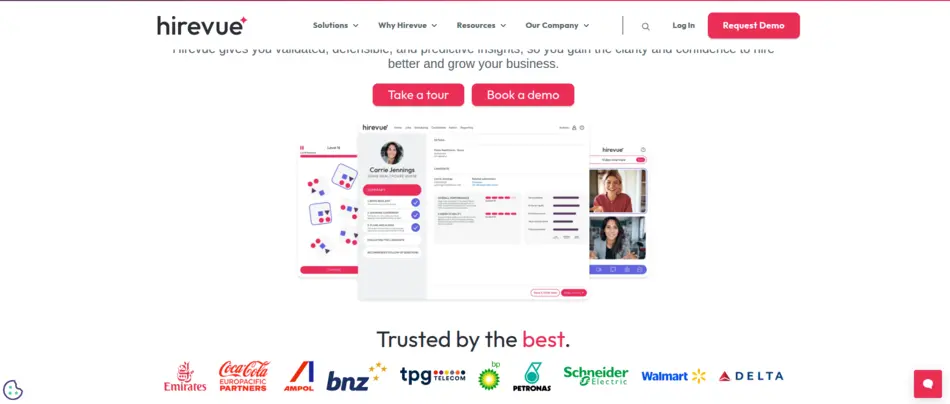
HireVue specializes in AI interview software that allows recruiters to evaluate candidates through video interviews and skill-based assessments. The platform uses AI to analyze responses, communication patterns, and behavioral signals, helping recruiters identify high-potential candidates quickly.
HireVue is particularly effective for companies hiring at scale, such as retail, finance, and customer support organizations.
Best For:
High-volume recruitment and remote hiring.
Key AI Features:
AI-powered video interview analysis
Automated interview scheduling
Candidate skill assessments and coding tests
Structured interview analytics
AI candidate recommendation engine
Pros:
Speeds up the screening process dramatically
Excellent for remote hiring workflows
Reduces recruiter workload during early screening stages
Cons:
Some candidates may feel uncomfortable with video analysis
Requires careful ethical AI implementation
Pricing:
Custom enterprise pricing
Ideal Company Size:
Medium to large organizations
Website: https://www.hirevue.com/
5. Paradox
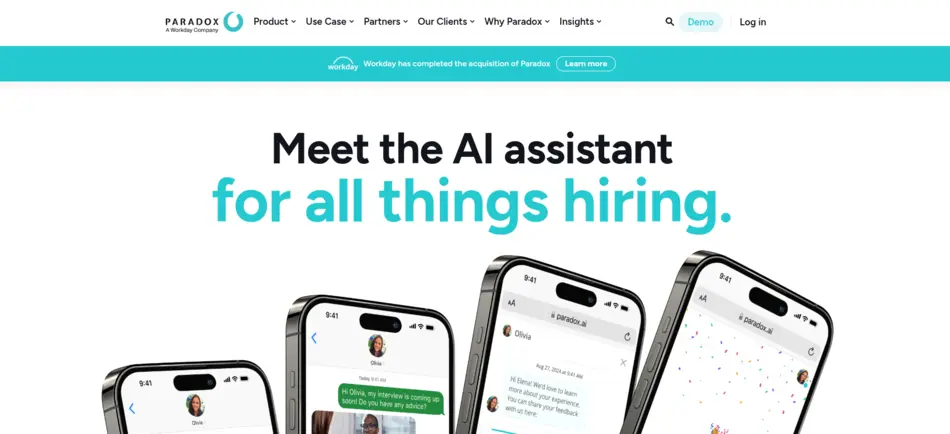
Paradox is known for its AI recruiting assistant Olivia, a conversational chatbot that automates many early-stage hiring tasks. The assistant can screen candidates, schedule interviews, answer applicant questions, and guide candidates through the application process.
By using conversational AI, Paradox improves the candidate experience and reduces recruiter workload.
Best For:
Companies seeking conversational AI and recruiting automation.
Key AI Features:
AI recruiting chatbot for candidate communication
Automated interview scheduling
Resume screening and candidate qualification
Candidate engagement automation
Integration with major ATS platforms
Pros:
Excellent candidate engagement experience
Reduces administrative workload for recruiters
Improves hiring response times
Cons:
Requires initial setup and chatbot training
Best results when integrated with an ATS
Pricing:
Custom pricing depending on hiring volume
Ideal Company Size:
Mid-size companies to large enterprises
Website: https://www.paradox.ai/
6. Lever
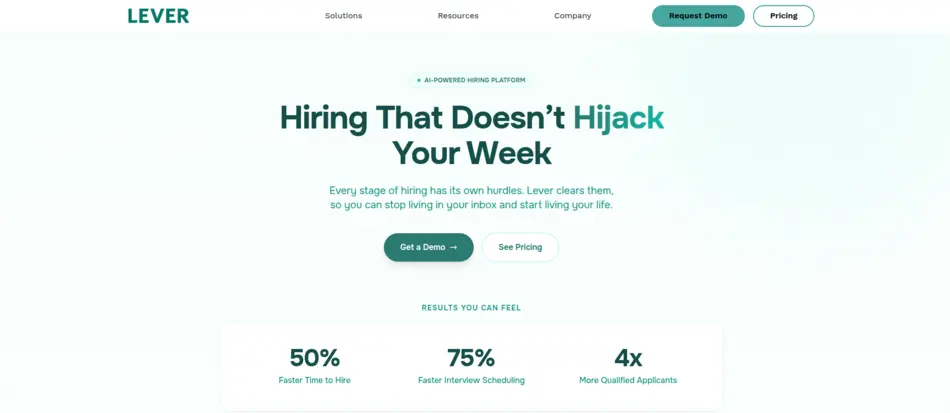
Lever combines a modern Applicant Tracking System (ATS) with AI-powered recruiting automation. The platform focuses heavily on collaboration between recruiters, hiring managers, and talent teams. Lever’s AI sourcing tools analyze candidate profiles and historical hiring data to recommend high-quality candidates for open roles. This helps organizations build stronger candidate pipelines while reducing manual sourcing effort.
Another major advantage of Lever is its integrated recruiting CRM. Recruiters can nurture relationships with passive candidates through automated communication campaigns and personalized outreach strategies.
Key AI Features:
AI candidate sourcing recommendations
Automated candidate nurturing campaigns
Interview scheduling automation
Recruiting pipeline analytics
Candidate relationship management (CRM)
Pros:
Excellent collaboration features for hiring teams
Powerful recruiting CRM with candidate nurturing tools
Strong integrations with HR and productivity platforms
Intuitive interface that improves recruiter productivity
Cons:
Pricing may be high for very small startups
Some advanced analytics features require additional configuration
Implementation may require training for larger teams
Best For:
Fast-growing companies that need a collaborative recruiting platform.
Website: https://www.lever.co/
7. BambooHR
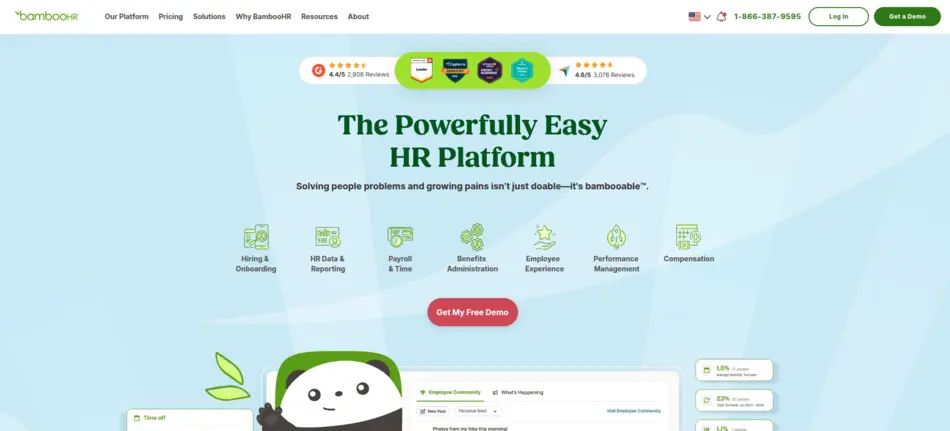
BambooHR is a widely used AI HR software platform designed specifically for small and medium-sized businesses. The system simplifies HR operations by centralizing employee data, automating onboarding processes, and providing performance management tools. Its AI-driven insights help HR managers track employee engagement, identify productivity trends, and generate actionable reports.
BambooHR also provides tools for managing employee records, time tracking, and benefits administration, making it a comprehensive HR management solution for growing organizations.
Key AI Features:
Automated employee onboarding workflows
Performance analytics and employee insights
AI-powered HR reporting dashboards
Employee engagement tracking
Workforce data visualization tools
Pros:
User-friendly interface ideal for non-technical HR teams
Excellent onboarding and employee management features
Strong reporting and analytics dashboards
Scalable for growing companies
Cons:
Recruiting features are less advanced compared to dedicated ATS tools
Some payroll features are limited in certain regions
Advanced integrations may require higher-tier plans
Best For:
Small and mid-sized businesses seeking HR automation.
Website: https://www.bamboohr.com/
8. Zoho Recruit
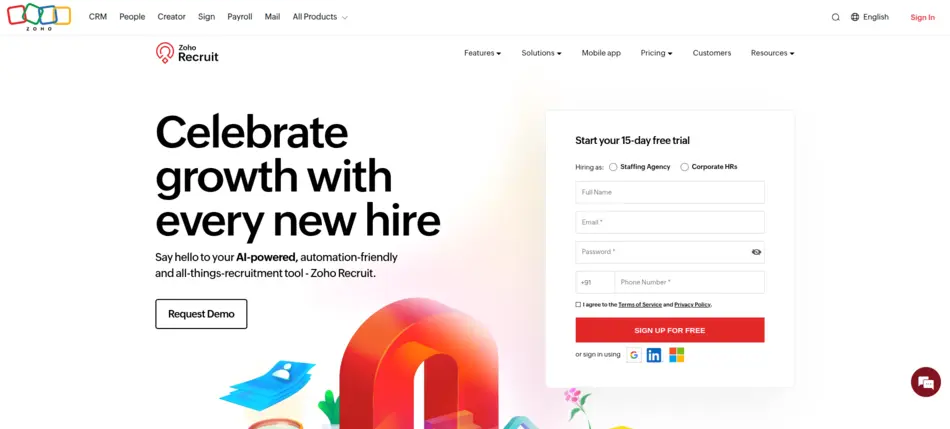
Zoho Recruit is a flexible and affordable AI recruitment software platform designed for startups, staffing agencies, and small businesses. The platform includes powerful resume parsing technology that automatically extracts candidate information and organizes it within the recruitment pipeline.
Zoho Recruit also integrates seamlessly with the broader Zoho ecosystem, allowing businesses to connect recruitment workflows with CRM systems, email marketing tools, and project management platforms.
Key AI Features:
AI resume parsing and candidate screening
Automated hiring workflows
Recruitment analytics dashboards
Candidate pipeline management
Integration with Zoho business tools
Pros:
Highly affordable compared to many enterprise recruiting tools
Strong automation capabilities for small teams
Seamless integration with Zoho ecosystem
Customizable workflows for recruitment processes
Cons:
User interface can feel complex for beginners
Limited advanced AI features compared to enterprise platforms
Some integrations require technical setup
Best For:
Startups and small businesses.
Website: https://www.zoho.com/recruit/
9. iCIMS
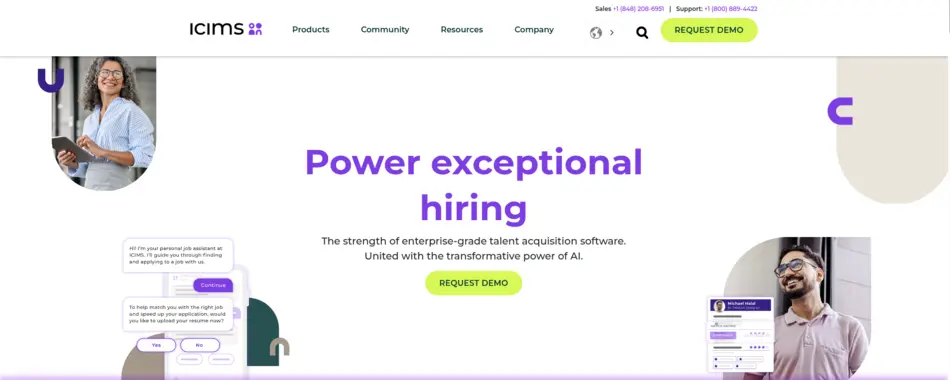
iCIMS is a powerful enterprise-grade AI recruiting software platform that helps organizations manage large-scale hiring operations. The platform includes advanced candidate relationship management (CRM), recruitment marketing tools, and analytics capabilities.
One of iCIMS’ biggest strengths is its integration ecosystem. The platform connects with hundreds of HR technologies, enabling companies to create highly customized recruitment workflows.
Key AI Features:
AI talent sourcing and pipeline management
Candidate engagement automation
Advanced recruiting analytics and reporting
Recruitment marketing automation
AI-powered job matching algorithms
Pros:
Highly scalable platform for enterprise hiring needs
Strong integrations with HR technology ecosystems
Excellent candidate relationship management tools
Robust analytics and reporting features
Cons:
Implementation may require dedicated onboarding support
Pricing can be expensive for smaller companies
Interface may feel complex for new users
Best For:
Large organizations with complex hiring processes.
Website: https://www.icims.com/
10. SmartRecruiters
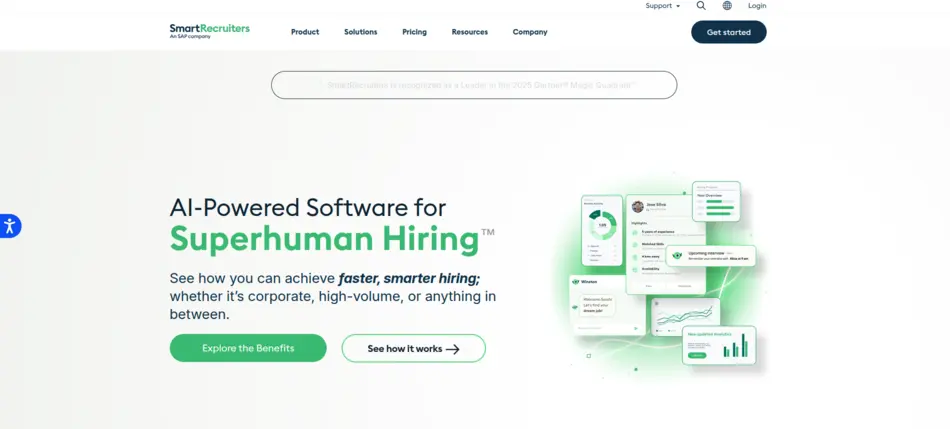
SmartRecruiters is a cloud-based AI hiring platform that helps organizations streamline global recruiting operations. The platform provides a comprehensive hiring suite that includes job distribution, candidate engagement, interview management, and recruitment analytics.
SmartRecruiters is particularly well known for its candidate-centric design. The platform focuses heavily on delivering a smooth application experience while giving recruiters powerful automation tools.
Key AI Features:
AI candidate matching and recommendations
Automated job posting across multiple job boards
Recruiting workflow automation
Hiring analytics and performance insights
Collaborative hiring tools for interview teams
Pros:
Excellent user experience for both recruiters and candidates
Strong automation features that reduce manual tasks
Highly scalable for global hiring teams
Large marketplace of HR integrations
Cons:
Premium pricing compared to smaller recruiting tools
Advanced customization may require technical expertise
Some reporting features require configuration
Best For:
Global companies hiring across multiple regions.
Website: https://www.smartrecruiters.com/
11. SeekOut
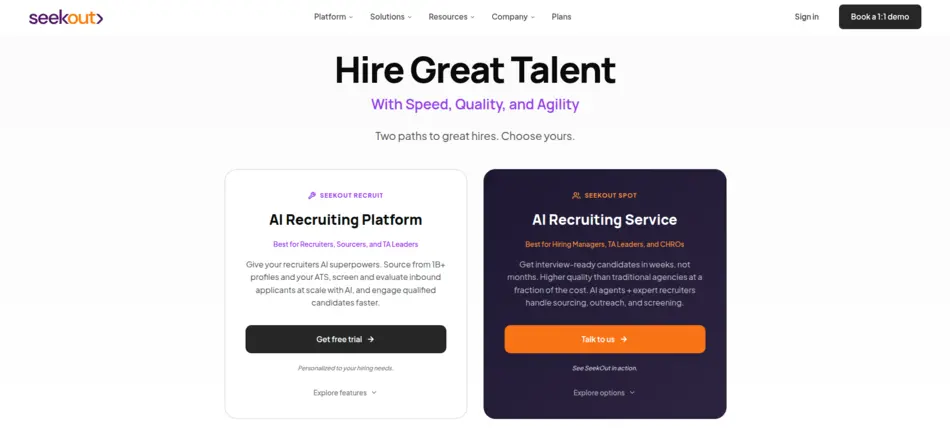
SeekOut is a powerful candidate sourcing AI platform designed to help recruiters discover highly specialized talent across multiple channels. The tool analyzes millions of professional profiles from public data sources, research databases, and developer communities to identify candidates with specific skills and experience. One of SeekOut’s strongest advantages is its ability to help companies build diverse talent pipelines by using advanced filtering and diversity analytics.
Instead of relying solely on traditional job applications, SeekOut enables recruiters to proactively find passive candidates who may not be actively searching for jobs but are highly qualified for specific roles.
Best For:
Recruiters focused on proactive candidate sourcing and diversity hiring initiatives.
Key AI Features:
AI-powered candidate sourcing across multiple data sources
Advanced diversity filters to support inclusive hiring
Skill-based candidate matching algorithms
Automated outreach and engagement tools
Talent pipeline analytics and reporting dashboards
Pros:
Excellent for sourcing hard-to-find technical talent
Supports diversity, equity, and inclusion (DEI) initiatives
Powerful filtering and search capabilities
Cons:
Primarily focused on sourcing rather than full HR management
Some advanced datasets may require higher pricing tiers
Ideal Company Size:
Mid-sized companies to large enterprises
Website: https://www.seekout.com/
12. Pymetrics
Pymetrics is an innovative AI personality assessment platform that helps companies evaluate candidates based on cognitive and behavioral traits rather than just resumes. Instead of relying solely on traditional qualifications, Pymetrics uses neuroscience-based games and behavioral analytics to measure attributes like risk tolerance, attention span, and decision-making style.
These insights allow recruiters to predict how well a candidate may perform in a particular role or work environment. The platform is widely used by organizations seeking to reduce hiring bias and improve talent matching.
Best For:
Companies focused on behavioral assessments and predictive hiring.
Key AI Features:
Neuroscience-based candidate assessment games
Behavioral and cognitive analytics powered by AI
Predictive job-fit scoring algorithms
Bias auditing and ethical AI evaluation frameworks
Role benchmarking using performance data
Pros:
Helps reduce hiring bias in recruitment decisions
Provides deeper insights beyond resumes
Supports data-driven talent evaluation
Cons:
Candidates may require time to complete assessments
Works best when combined with other recruiting tools
Ideal Company Size:
Mid-size companies and enterprises
Website: https://www.pymetrics.com/
13. Cornerstone OnDemand

Cornerstone OnDemand is a comprehensive AI talent management and learning platform designed to help organizations develop and retain employees. While many HR tools focus only on recruitment, Cornerstone emphasizes continuous learning, skill development, and career growth.
The platform uses AI to recommend training programs, identify skill gaps, and personalize employee learning paths. By combining learning and talent management, organizations can create stronger internal career development programs.
Best For:
Organizations focused on employee development and skill management.
Key AI Features:
AI-powered learning recommendations
Skill gap analysis and workforce development insights
Personalized employee training pathways
AI-driven performance management tools
Workforce capability analytics
Pros:
Strong learning management system (LMS) integration
Improves employee retention through skill development
Supports large-scale workforce training programs
Cons:
May require configuration for smaller organizations
Implementation can be time-intensive
Ideal Company Size:
Mid-size to enterprise organizations
Website: https://www.cornerstoneondemand.com/
14. Gloat
Gloat is an AI-powered internal talent marketplace platform that helps organizations unlock hidden talent within their workforce. Instead of hiring externally for every new role, Gloat enables companies to identify employees who already possess the required skills.
By analyzing employee profiles, project history, and performance data, the platform recommends internal candidates for open roles or project-based opportunities.
Best For:
Large organizations focused on internal mobility and workforce optimization.
Key AI Features:
AI-driven internal talent matching
Skill mapping and workforce intelligence
Project-based talent allocation recommendations
Internal career development insights
Employee skill discovery tools
Pros:
Improves employee retention and engagement
Reduces hiring costs through internal mobility
Enhances workforce agility
Cons:
Requires detailed employee skill data for best results
Works best in large organizations with diverse teams
Ideal Company Size:
Large enterprises
Website: https://gloat.com/
15. UKG
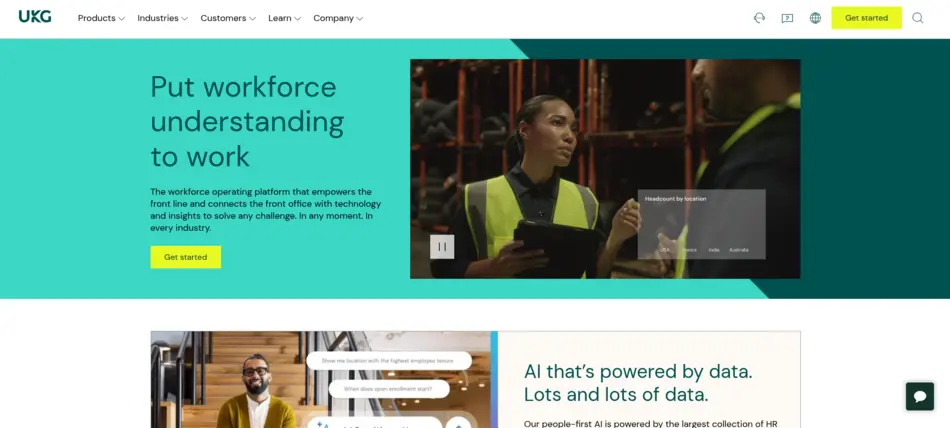
UKG (Ultimate Kronos Group) provides advanced AI workforce analytics and HR compliance tools that help companies manage scheduling, payroll, and employee performance. The platform is particularly useful for industries with large hourly workforces such as healthcare, manufacturing, and retail.
AI algorithms analyze workforce data to optimize schedules, predict labor needs, and detect compliance risks.
Best For:
Organizations managing large operational workforces.
Key AI Features:
AI workforce scheduling optimization
Predictive labor demand forecasting
Compliance monitoring and alerts
Employee engagement analytics
Workforce productivity insights
Pros:
Strong workforce planning capabilities
Excellent compliance management tools
Ideal for shift-based industries
Cons:
Primarily focused on workforce management rather than recruiting
Advanced features may require customization
Ideal Company Size:
Mid-size to enterprise organizations
Website: https://www.ukg.com/
16. SAP SuccessFactors
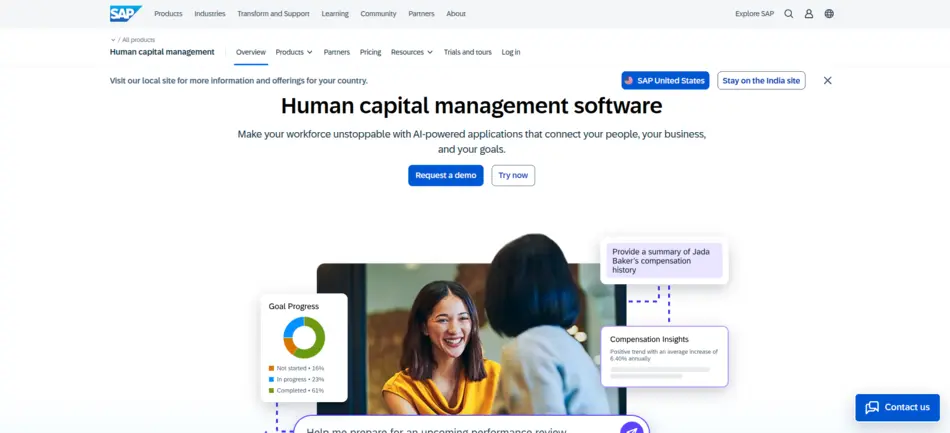
SAP SuccessFactors is a global AI human capital management (HCM) platform designed to support large enterprises with complex HR requirements. The platform combines recruiting, onboarding, performance management, learning, and workforce analytics into a single system.
AI helps HR teams analyze talent data, predict employee performance trends, and optimize workforce planning.
Best For:
Global enterprises needing a complete HR ecosystem.
Key AI Features:
AI candidate matching and recruitment automation
Predictive workforce planning
Employee performance analytics
AI learning recommendations
HR compliance and governance tools
Pros:
Comprehensive HR platform covering the full employee lifecycle
Strong analytics and reporting features
Trusted by global enterprises
Cons:
Higher implementation complexity
Requires dedicated HR IT support
Ideal Company Size:
Large multinational enterprises
Website: https://www.sap.com/india/products/hcm.html
17. Oracle HCM Cloud
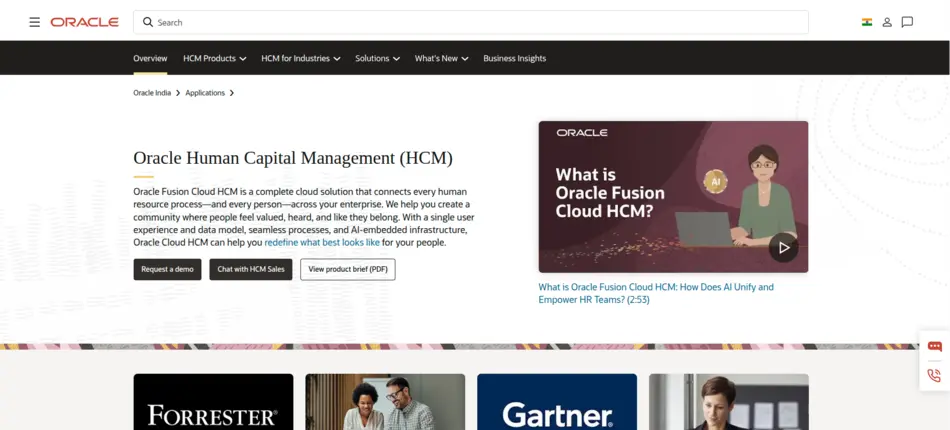
Oracle HCM Cloud is a powerful enterprise HR platform that integrates artificial intelligence across recruiting, performance management, payroll, and workforce analytics. The system helps organizations manage talent acquisition and employee lifecycle management at scale.
AI-driven insights provide HR leaders with actionable workforce intelligence, enabling more strategic hiring and talent development decisions.
Best For:
Enterprises seeking a unified HR management platform.
Key AI Features:
AI-powered candidate matching
Predictive workforce analytics
Automated HR workflows and approvals
Employee engagement insights
AI-based career development recommendations
Pros:
Comprehensive HR ecosystem
Strong analytics and forecasting capabilities
Highly scalable for global organizations
Cons:
Complex deployment for smaller companies
Premium enterprise pricing
Ideal Company Size:
Enterprise organizations
Website: https://www.oracle.com/in/human-capital-management/
18. Fetcher
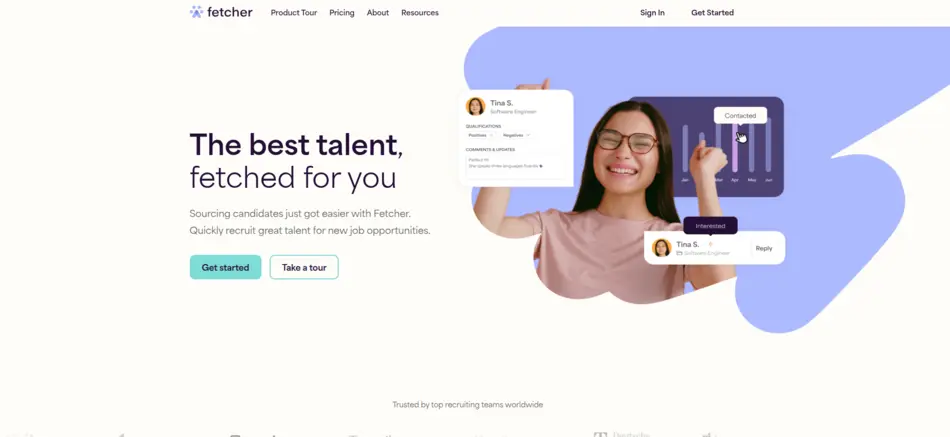
Fetcher is a modern AI candidate sourcing and outreach platform designed to help recruiters identify, engage, and nurture talent pipelines. Instead of manually searching for candidates, recruiters can define job requirements and let Fetcher’s AI discover suitable profiles automatically.
The platform also automates candidate outreach campaigns, making it easier to build relationships with passive talent.
Best For:
Recruiters focused on outbound talent sourcing.
Key AI Features:
AI-powered candidate sourcing and matching
Automated outreach email campaigns
Candidate engagement analytics
Talent pipeline management tools
AI-driven recruiting insights
Pros:
Saves recruiters hours of manual sourcing
Improves passive candidate engagement
Easy-to-use interface
Cons:
Primarily focused on sourcing rather than full HR management
Limited HR lifecycle features
Ideal Company Size:
Startups and mid-size companies
Website: https://fetcher.ai/
19. XOR
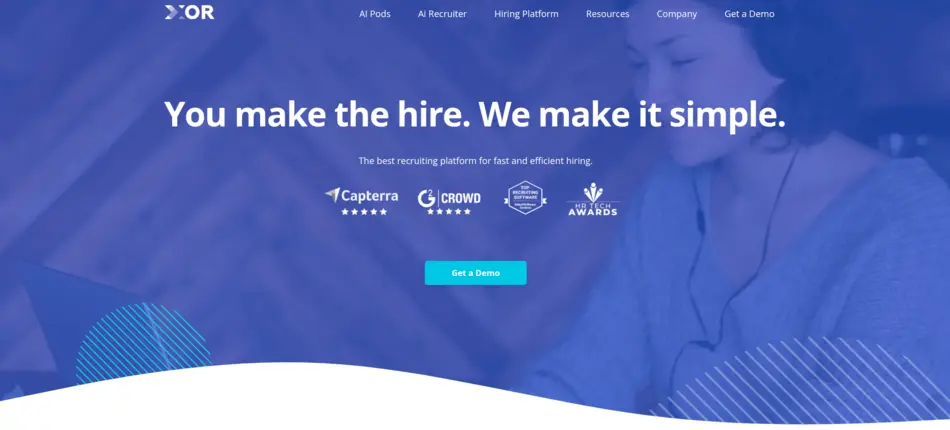
XOR is an AI-powered recruiting chatbot platform that automates candidate communication, screening, and interview scheduling. The chatbot interacts with applicants through messaging platforms such as SMS, career websites, and social media.
This approach allows companies to handle large volumes of applications while maintaining consistent communication with candidates.
Best For:
Companies handling high application volumes.
Key AI Features:
Conversational recruiting chatbot
Automated resume screening
Interview scheduling automation
Candidate communication via messaging platforms
AI recruitment analytics
Pros:
Reduces recruiter workload
Improves candidate response rates
Supports multilingual candidate engagement
Cons:
Chatbot responses require careful configuration
Best results when integrated with ATS systems
Ideal Company Size:
Mid-size companies to enterprises
Website: https://xor.ai/
20. HireEZ
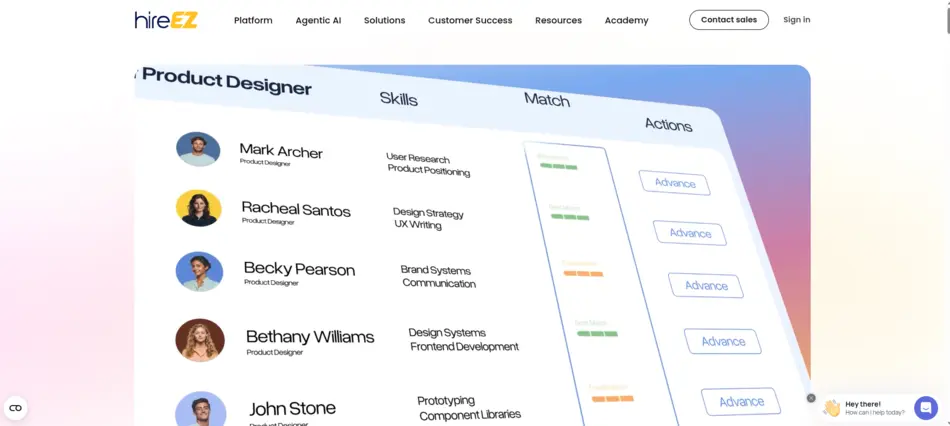
HireEZ is an AI-powered talent sourcing and engagement platform designed to help recruiters build stronger candidate pipelines. The platform combines candidate discovery, outreach automation, and recruiting analytics in one system.
HireEZ uses AI to analyze talent data from multiple sources and recommend candidates who match specific role requirements.
Best For:
Recruiters seeking end-to-end candidate sourcing automation.
Key AI Features:
AI candidate sourcing across global databases
Automated email outreach and engagement campaigns
Talent pipeline analytics and forecasting
Diversity hiring insights
Integration with ATS platforms
Pros:
Excellent for proactive talent sourcing
Reduces manual recruiting effort
Provides detailed talent market insights
Cons:
Focused primarily on recruitment rather than HR management
Advanced features may require premium plans
Ideal Company Size:
Mid-size companies and large enterprises
Website: https://hireez.com/
Top AI HR Tools Compared (2026)
The table below compares the best AI tools for human resources and recruiting based on their primary use cases, core AI capabilities, and ideal company size. This quick comparison helps HR leaders and recruiters identify the right AI recruiting software for their organization.
| Tool | Best For | Key AI Feature | Starting Price* | Ideal Company Size |
|---|---|---|---|---|
| Workday | Workforce analytics & HR management | Predictive workforce planning | Custom | Large enterprises |
| Greenhouse | Structured recruiting | AI resume screening & interview kits | Custom | Scaling companies |
| Eightfold AI | Talent intelligence | Deep-learning candidate matching | Custom | Enterprises |
| HireVue | Interview automation | AI video interview analysis | Custom | High-volume hiring teams |
| Paradox | Recruiting chatbot | Conversational AI hiring assistant | Custom | Mid-size to enterprise |
| Lever | ATS + CRM recruiting | AI sourcing recommendations | Custom | Growing companies |
| BambooHR | HR automation for SMBs | Employee analytics & onboarding AI | $6–$12/user/month | Small to mid-size businesses |
| Zoho Recruit | Affordable recruitment platform | AI resume parsing | $25+/user/month | Startups & small businesses |
| iCIMS | Enterprise recruiting | AI talent pipeline analytics | Custom | Large organizations |
| SmartRecruiters | Global hiring platform | AI candidate matching | Custom | Global enterprises |
| SeekOut | Talent sourcing | AI diversity candidate search | Custom | Tech recruiting teams |
| Pymetrics | Candidate evaluation | AI behavioral & cognitive analysis | Custom | Enterprises |
| Cornerstone OnDemand | Learning & development | AI learning recommendations | Custom | Mid-size to enterprises |
| Gloat | Internal mobility | AI internal talent matching | Custom | Large enterprises |
| UKG | Workforce management | AI scheduling & labor analytics | Custom | Workforce-heavy industries |
| SAP SuccessFactors | Human capital management | AI workforce planning | Custom | Multinational enterprises |
| Oracle HCM Cloud | Enterprise HR ecosystem | AI talent insights | Custom | Global organizations |
| Fetcher | Candidate sourcing | AI automated talent discovery | Custom | Recruiting teams |
| XOR | Recruiting automation | AI chatbot screening | Custom | High-volume hiring companies |
| HireEZ | Talent pipeline building | AI sourcing & engagement automation | Custom | Mid-size to enterprise |
*Pricing varies based on company size, integrations, and hiring volume.
Best AI Recruiting Tools by Business Type
Best for Startups
Startups benefit from AI hiring tools for small business like Zoho Recruit and BambooHR. These platforms combine affordability with automation.
Best for Small Businesses
Greenhouse and Lever provide scalable AI recruitment software without enterprise complexity.
Best for Enterprises
Workday, SAP SuccessFactors, and Oracle HCM Cloud dominate enterprise AI HR software due to deep integrations and analytics.
Best for Remote Teams
HireVue and Paradox improve remote hiring workflows with AI interview software and recruiting chatbots.
AI Recruiting Trends to Watch in 2026
Generative AI job descriptions
Conversational AI interviews
Predictive talent analytics
Ethical AI hiring regulations
AI-powered internal mobility
The future of recruiting with AI is not just automation — it’s augmentation.
How to Choose the Right AI HR Tool
Ask:
Does it integrate with your ATS?
Is AI explainable and compliant?
What’s the ROI timeline?
Can it scale globally?
Budget planning should consider software cost, training, and integration.
Common Mistakes to Avoid
Over-automation
Ignoring human oversight
Poor data quality
Compliance risks
AI should enhance, not replace, human judgment.
FAQs
What are AI recruiting tools?
Software platforms that use machine learning to automate and improve hiring processes.
Is AI replacing HR professionals?
No. AI augments recruiters by automating repetitive tasks.
Are AI hiring tools biased?
Modern AI HR compliance tools include bias-detection features.
What is the best AI tool for recruitment in 2026?
Depends on company size and hiring needs.
How much does AI HR software cost?
Ranges from $50/user/month to enterprise custom pricing.
Final Verdict
The Best AI Tools for Human Resources in 2026 are not one-size-fits-all. Enterprises may prefer Workday or SAP SuccessFactors. Startups may lean toward BambooHR or Zoho Recruit. The key is alignment with your hiring strategy.
At AI Tool Mapper, we help businesses navigate the growing ecosystem of AI recruiting tools and HR automation software to make smarter decisions.
AI isn’t the future of HR. It’s the present.
Key Takeaways
AI recruiting tools reduce hiring time dramatically
AI resume screening improves efficiency
Workforce analytics enable predictive decisions
Recruiting chatbots enhance candidate experience
Ethical AI compliance is critical in 2026
Found this helpful? Save it to your Pinterest board!