In 2026, the best AI tools for healthcare & life sciences are transforming diagnostics, drug discovery, clinical trials, hospital workflows, genomics, and precision medicine. Leading platforms such as Aidoc, Insilico Medicine, Tempus, and Nuance Communications help hospitals, biotech firms, and pharmaceutical companies automate decision-making, improve patient outcomes, and accelerate research.
Healthcare AI software in 2026 focuses on predictive analytics, regulatory compliance (HIPAA/GDPR), EHR integration, AI-powered diagnostics, federated learning, and generative AI applications. From AI diagnostic tools healthcare teams rely on to AI pharma tools driving drug pipelines, artificial intelligence is now a core infrastructure layer across medicine and life sciences.
This pillar guide covers 20 top AI healthcare platforms, key features, use cases, pricing models, ethical challenges, and future trends—helping hospitals, biotech startups, and clinical researchers choose the right healthcare artificial intelligence solutions.
Key Takeaways
AI is transforming diagnostics, pharma, clinical trials, and hospital operations
The best AI medical tools 2026 emphasize compliance and validation
AI predictive analytics healthcare platforms drive precision medicine
Ethical governance remains critical
Early adoption provides competitive advantage
The Rise of AI in Healthcare & Life Sciences
Artificial intelligence is no longer a futuristic concept in medicine—it’s operational reality. In 2026, healthcare AI tools are embedded in radiology departments, pharmaceutical labs, genomics research centers, hospital administration systems, and even virtual consultation platforms. What once felt experimental is now mission-critical.
The global healthcare AI market continues to expand rapidly, fueled by rising clinical data volumes, workforce shortages, demand for precision medicine, and increasing R&D complexity in biotech and pharma. From AI tools for medical diagnosis that detect anomalies in imaging scans to AI tools for clinical research that streamline patient recruitment, artificial intelligence has become the digital backbone of modern healthcare systems.
Why are the best AI tools for healthcare & life sciences so essential today?
Because medicine is drowning in data. Imaging files. Genomic sequences. EHR records. Clinical trial results. Real-world evidence. Without intelligent automation, this data remains underutilized. With AI, it becomes actionable insight.
In this updated 2026 guide, you’ll learn:
The top 20 healthcare AI software platforms
Key features to look for before investing
Real-world use cases across hospitals, pharma, and biotech
Ethical challenges and regulatory considerations
Future trends beyond 2026
Whether you’re a hospital administrator, biotech founder, pharmaceutical executive, or clinical researcher, this guide is designed to help you navigate the rapidly evolving AI landscape.
How AI is Transforming Healthcare & Life Sciences in 2026
Artificial intelligence in healthcare isn’t a single application—it’s an ecosystem transformation.
AI in Diagnostics
AI diagnostic tools healthcare professionals use today can detect early-stage cancers, neurological abnormalities, and cardiovascular risks with remarkable accuracy. Computer vision models trained on millions of scans assist radiologists rather than replace them, reducing diagnostic delays and minimizing errors.
AI in Drug Discovery
AI tools for drug discovery drastically reduce timelines from target identification to molecule optimization. AI pharma tools now simulate molecular interactions, predict toxicity, and prioritize compounds before physical lab testing begins—saving years and billions in R&D.
AI in Clinical Trials
Recruitment has historically been the slowest phase of trials. AI tools for clinical research now scan patient records to identify eligible candidates instantly. Predictive models also forecast dropout risks and optimize protocol design.
AI in Hospital Management
Healthcare AI software 2026 platforms streamline operations—automating scheduling, claims processing, supply chain forecasting, and revenue cycle management.
AI in Genomics & Biotech
AI biotech tools interpret genomic variants, predict protein structures, and accelerate experimental biology, bringing precision medicine closer to everyday practice.
In short, AI tools in healthcare are no longer optional—they’re competitive differentiators.
Key Features to Look for in Healthcare AI Tools
Choosing the best AI medical tools requires more than flashy dashboards. Healthcare is highly regulated and data-sensitive.
Regulatory Compliance
Look for HIPAA and GDPR compliance. Many leading healthcare AI platforms align with FDA software-as-a-medical-device (SaMD) guidelines.
Data Security & Privacy
End-to-end encryption, role-based access controls, and secure cloud hosting are mandatory.
EHR Integration
AI tools in healthcare must integrate seamlessly with Epic, Cerner, and other EHR systems.
Predictive Analytics
Advanced AI predictive analytics healthcare platforms help forecast patient deterioration, readmission risks, and population health trends.
NLP & ML Capabilities
Natural language processing extracts insights from clinical notes, research papers, and pathology reports.
Clinical Validation
Peer-reviewed studies and regulatory approvals signal trustworthiness.
Top 20 Best AI Tools for Healthcare & Life Sciences (2026 Updated List)
AI Tools for Diagnostics & Medical Imaging
Medical imaging is one of the most mature and high-impact areas of healthcare artificial intelligence solutions. Radiology departments generate thousands of scans daily—CT, MRI, X-rays, ultrasound—and human fatigue or time constraints can delay critical diagnoses.
That’s where AI diagnostic tools healthcare teams rely on become transformative. These platforms act as intelligent assistants, prioritizing urgent cases, highlighting anomalies, and reducing turnaround time. In 2026, imaging AI is no longer experimental—it’s clinically embedded.
Let’s explore three of the best AI medical tools in this category.
1. Aidoc
Overview
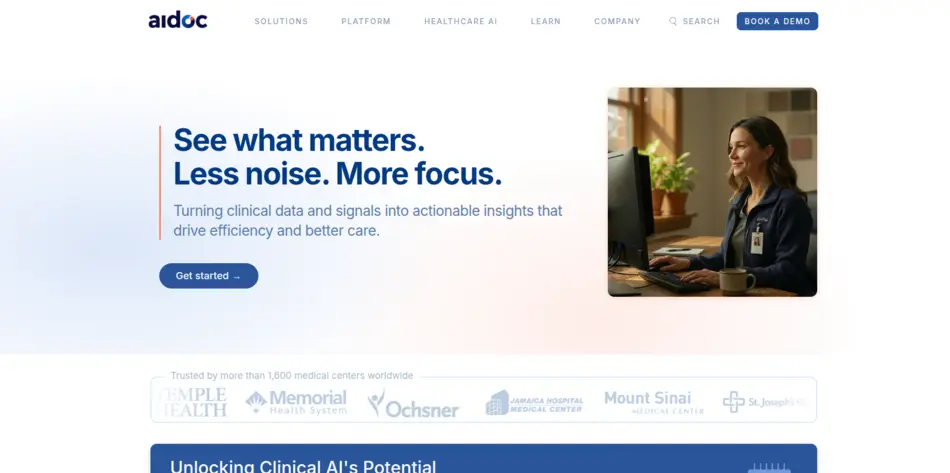
Aidoc is widely recognized as one of the leading healthcare AI tools focused on radiology workflow optimization. Rather than replacing radiologists, the platform augments their decision-making process by flagging critical findings in real time.
Its deep learning models are trained on vast imaging datasets and integrated directly into hospital systems, ensuring minimal workflow disruption. In busy emergency departments where seconds matter—such as stroke or pulmonary embolism cases—Aidoc’s ability to automatically prioritize life-threatening scans can significantly improve patient outcomes.
Key Features
Real-time scan prioritization: Automatically flags urgent findings and pushes them to the top of radiologists’ worklists.
Deep learning anomaly detection: Identifies intracranial hemorrhages, pulmonary embolisms, cervical spine fractures, and more.
PACS integration: Seamless compatibility with major imaging systems.
FDA-cleared algorithms: Several modules are cleared for clinical use.
Workflow analytics dashboard: Tracks turnaround time and performance metrics.
Use Cases
Stroke triage in emergency departments
Pulmonary embolism detection in chest CT scans
Trauma assessment in acute care settings
Brain hemorrhage identification
Pros
Strong clinical validation
Enterprise-grade security & compliance
Quick deployment in hospital settings
Proven reduction in diagnostic delays
Cons
Focused mainly on imaging use cases
Requires IT infrastructure alignment
Pricing not transparent for smaller clinics
Best For
Large hospitals, radiology networks, emergency care facilities, and stroke centers seeking real-time triage AI.
Pricing
Enterprise-based custom pricing model (typically annual contracts).
2. Zebra Medical Vision
Overview
Zebra Medical Vision is a powerful imaging analytics platform leveraging machine learning to detect multiple medical conditions from radiology scans. Unlike single-condition AI tools, Zebra focuses on broad-spectrum analysis—helping healthcare providers screen for osteoporosis, cardiovascular disease, liver conditions, and more using routine imaging.
The platform is designed for scalability, making it particularly suitable for large healthcare systems that want standardized AI support across multiple departments.
Key Features
Multi-condition detection engine: Identifies a wide range of abnormalities from a single scan.
Cloud-based AI deployment: Enables remote and scalable processing.
Large imaging dataset training: Trained on millions of anonymized images.
Automated reporting support: Provides structured clinical insights.
Integration-ready APIs: Supports interoperability with hospital IT systems.
Use Cases
Opportunistic screening (detecting hidden conditions from routine scans)
Population health management
Preventive cardiovascular risk detection
Osteoporosis screening from CT scans
Pros
Broad diagnostic capabilities
Scalable for enterprise health networks
Cloud flexibility reduces hardware dependency
Useful for preventive care initiatives
Cons
Cloud-based systems may raise data residency concerns
Integration complexity in legacy hospital IT environments
Best For
Large healthcare networks, preventive health programs, diagnostic imaging centers, and government health systems.
Pricing
Custom enterprise pricing; typically subscription-based depending on imaging volume.
3. PathAI
Overview
PathAI specializes in AI-powered pathology insights, particularly in oncology and life sciences research. While radiology focuses on imaging scans, pathology involves microscopic tissue analysis—a field where variability in interpretation can impact treatment decisions.
PathAI leverages advanced machine learning models to assist pathologists in identifying cancer subtypes, grading tumors, and quantifying biomarkers with higher consistency and precision.
In pharmaceutical research, PathAI is also used to enhance clinical trial endpoints by improving pathology data reliability—making it one of the most valuable AI tools in healthcare for oncology-focused organizations.
Key Features
Digital pathology slide analysis: High-resolution image interpretation
AI-powered biomarker quantification: Supports immunotherapy research
Research-grade validation: Backed by clinical trials and peer-reviewed studies
Pharma collaboration capabilities: Used in drug development partnerships
Cloud-native architecture: Enables large-scale pathology dataset processing
Use Cases
Cancer subtype classification
Biomarker scoring in oncology trials
Companion diagnostics development
Improving pathology report consistency
Pros
Strong focus on oncology innovation
Used in pharma and biotech research
Improves diagnostic consistency
Reduces subjectivity in pathology review
Cons
Primarily specialized for oncology
Adoption requires digital pathology infrastructure
Best For
Oncology labs, pharmaceutical R&D teams, cancer research institutes, biotech startups focusing on immunotherapy.
Pricing
Enterprise partnerships and pharma collaboration models.
Follow On: LinkedIn | Twitter | Youtube
Why Diagnostics AI Leads Healthcare Transformation
Among all AI tools in healthcare, diagnostics and imaging remain the fastest-adopted category. Why? Because measurable outcomes—faster turnaround times, reduced error rates, improved triage efficiency—are easier to quantify.
Hospitals implementing AI diagnostic tools healthcare systems often report:
Reduced radiologist workload
Faster emergency triage decisions
Increased diagnostic confidence
Better compliance with care timelines
As imaging volumes grow globally, these healthcare AI software 2026 solutions will become baseline infrastructure rather than optional upgrades.
If you’re building a hospital AI strategy, diagnostics is often the logical starting point—high impact, proven ROI, and strong regulatory momentum.
AI Tools for Drug Discovery & Pharma
Drug discovery has traditionally been a 10–15 year journey costing billions of dollars—with high failure rates and unpredictable outcomes. In 2026, however, AI tools for drug discovery are fundamentally reshaping this landscape.
Pharmaceutical companies are now leveraging AI pharma tools to identify new biological targets, design molecules, predict toxicity, simulate drug interactions, and even repurpose existing compounds. Instead of relying purely on trial-and-error wet lab experiments, researchers now begin with computational intelligence.
Artificial intelligence doesn’t eliminate scientific rigor—it amplifies it. It reduces candidate molecules from millions to a shortlist of promising compounds within weeks. That’s why this category represents some of the most impactful AI tools in life sciences today.
Let’s explore the leading platforms driving this transformation.
4. Insilico Medicine
Overview
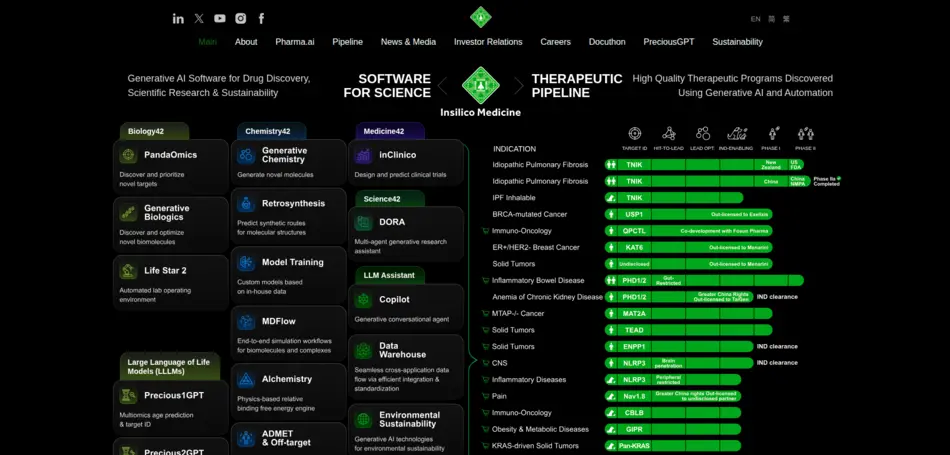
Insilico Medicine is one of the most recognized pioneers in AI-driven drug design. The company combines generative AI, deep learning, and biological data modeling to accelerate end-to-end drug development—from target identification to preclinical candidate selection.
What makes Insilico unique is its use of generative adversarial networks (GANs) and reinforcement learning models to design entirely new molecular structures. Instead of screening only existing compounds, it can computationally generate novel molecules optimized for binding affinity, safety, and manufacturability.
In recent years, Insilico has advanced AI-generated drug candidates into clinical trials—demonstrating that AI tools in healthcare are not just theoretical innovations but real pharmaceutical pipeline drivers.
Key Features
Generative chemistry engine: Designs new molecular structures from scratch.
Target identification AI: Discovers novel biological targets linked to disease pathways.
Aging and disease modeling platform: Uses transcriptomic data to understand disease progression.
End-to-end AI drug pipeline: Covers target discovery, molecule design, and candidate optimization.
Partnership ecosystem: Collaborates with global pharmaceutical companies.
Use Cases
Oncology drug discovery
Fibrosis and rare disease research
AI-driven small molecule generation
Repurposing drug candidates
Pros
Strong scientific credibility
Demonstrated clinical-stage candidates
Integrated discovery workflow
Significant time reduction in lead identification
Cons
Enterprise-focused partnerships
Complex integration for smaller biotech firms
Best For
Large pharmaceutical R&D teams, biotech startups in early-stage discovery, and organizations seeking computational-first drug pipelines.
Pricing
Primarily partnership-based and research collaboration models.
Follow On: LinkedIn | Twitter | Facebook | Instagram | Youtube
5. Atomwise (Numerion Labs)
Overview
Atomwise uses deep learning—particularly convolutional neural networks—to predict how small molecules bind to target proteins. Its core engine, AtomNet®, was one of the earliest AI systems designed specifically for structure-based drug design.
Traditional screening methods can test thousands of compounds in labs. Atomwise can virtually screen millions in silico before laboratory validation. This dramatically lowers costs and improves hit rates.
Atomwise’s approach is particularly valuable in early-stage drug discovery where researchers must prioritize compounds efficiently.
Key Features
Structure-based drug design: Uses 3D protein structure modeling.
AI screening engine (AtomNet): Evaluates molecular binding potential at scale.
Virtual compound library analysis: Screens millions of molecules computationally.
Rare disease research collaborations: Partners with academic institutions.
Cloud-based simulation models: Enables scalable computational testing.
Use Cases
Small molecule inhibitor discovery
Rare disease therapeutic research
Early-stage hit identification
Academic pharma collaborations
Pros
Efficient large-scale screening
Reduced lab experimentation costs
Strong protein-structure modeling capabilities
Valuable for rare disease research
Cons
Focused mainly on small molecules
Requires high-quality protein structure data
Best For
Biotech startups, academic research labs, and pharmaceutical discovery teams focused on structure-based drug design.
Pricing
Typically collaboration-based agreements and milestone partnerships.
Follow on: LinkedIn
6. BenevolentAI
Overview
BenevolentAI takes a data-centric approach to pharmaceutical research by mining vast biomedical datasets—including research papers, clinical trial records, genomic data, and molecular databases—to uncover novel disease relationships.
Unlike purely molecule-generation platforms, BenevolentAI focuses on hypothesis generation. Its AI system connects hidden patterns across structured and unstructured biomedical data, identifying potential targets that human researchers might overlook.
The platform gained significant recognition for its ability to rapidly identify repurposing candidates during global health emergencies—demonstrating the real-world power of AI predictive analytics in healthcare research.
Key Features
Knowledge graph platform: Connects biomedical entities (genes, proteins, diseases).
Natural language processing (NLP): Extracts insights from scientific literature.
Target discovery engine: Identifies promising therapeutic targets.
Drug repurposing intelligence: Accelerates identification of new uses for existing drugs.
Clinical trial optimization support: Enhances protocol design insights.
Use Cases
Target identification in complex diseases
Drug repurposing strategies
Literature-driven hypothesis generation
Precision medicine research
Pros
Strong data-mining capabilities
Useful for complex, multi-factor diseases
Reduces reliance on siloed research
Integrates structured and unstructured data
Cons
Primarily enterprise-focused
Requires access to extensive biomedical datasets
Best For
Pharmaceutical research divisions, translational medicine teams, and biotech companies seeking data-driven discovery strategies.
Pricing
Enterprise and strategic collaboration pricing models.
Follow Us: LinkedIn | Twitter | Facebook | Youtube
Why AI Drug Discovery Tools Are a Strategic Advantage in 2026
The pharmaceutical industry faces increasing pressure: shorter patent lifecycles, higher regulatory standards, and rising R&D costs. AI pharma tools address these pressures by:
Reducing time-to-candidate selection
Lowering early-stage attrition rates
Improving molecular optimization accuracy
Supporting personalized medicine development
According to industry analyses from sources like Nature Biotechnology and McKinsey’s health innovation reports, AI-assisted drug discovery can reduce early-stage research timelines by up to 30–50% when integrated properly.
However, it’s important to note that AI does not replace lab validation. Instead, it acts as an intelligent filter—narrowing the search space and guiding scientists toward higher-probability success paths.
For organizations exploring the best AI tools for healthcare & life sciences, drug discovery platforms represent one of the highest ROI segments—particularly for pharma and biotech innovators.
AI Tools for Clinical Research & Trials
Clinical research has always been one of the most complex and expensive phases of drug development. Recruiting eligible patients, maintaining protocol adherence, ensuring regulatory compliance, managing real-world evidence, and minimizing dropout rates—each step carries financial and scientific risk.
In 2026, AI tools for clinical research are helping pharmaceutical companies and CROs (Contract Research Organizations) overcome these bottlenecks. By leveraging predictive analytics, natural language processing, and real-world patient data, these healthcare AI tools accelerate recruitment, improve protocol design, and enhance trial efficiency.
Instead of manually reviewing thousands of patient records, AI tools in healthcare can now scan electronic health records (EHRs) in seconds, identify eligible candidates, and forecast enrollment timelines with surprising accuracy.
Let’s examine three of the most impactful platforms in this space.
7. Deep 6 AI
Overview
Deep 6 AI specializes in accelerating patient recruitment through advanced AI-driven EHR mining. Recruitment delays are one of the leading causes of clinical trial cost overruns. Deep 6 addresses this by using natural language processing and machine learning to identify eligible patients directly from hospital databases in near real time.
Unlike traditional recruitment approaches that rely heavily on physician referrals or advertising, Deep 6 scans structured and unstructured data—clinical notes, lab results, diagnoses, medications—to match patients against complex trial criteria.
This significantly shortens the time from trial launch to first patient enrollment.
Key Features
Real-time EHR mining: Extracts insights from structured and unstructured medical records.
Advanced NLP engine: Interprets physician notes and free-text data.
Feasibility analysis tools: Predicts enrollment success before trial launch.
Automated patient matching: Aligns eligibility criteria with real-world patient data.
HIPAA-compliant architecture: Ensures patient data privacy and security.
Use Cases
Oncology trial recruitment
Rare disease patient identification
Multi-site enrollment optimization
Trial feasibility forecasting
Pros
Dramatically reduces recruitment timelines
Improves enrollment accuracy
Strong hospital integration capabilities
Enhances protocol design validation
Cons
Dependent on hospital EHR system quality
Primarily focused on recruitment optimization
Best For
Pharma sponsors, CROs, academic research hospitals, and biotech firms conducting Phase I–III trials.
Pricing
Enterprise and hospital-partnership pricing model.
Follow On: LinkedIn | Twitter | Facebook | Youtube | Instagram
8. Medidata
Overview
Medidata is one of the most established clinical trial technology providers globally. Now integrated with AI capabilities, the platform supports end-to-end trial management—from protocol development to regulatory submission.
Medidata’s AI-powered analytics tools focus on risk-based monitoring, patient engagement optimization, and predictive modeling to improve trial efficiency. Its unified data platform allows sponsors to consolidate data streams across multiple study sites and geographies.
Because of its global footprint and regulatory expertise, Medidata remains a cornerstone healthcare AI software 2026 solution for enterprise-level clinical operations.
Key Features
AI-driven risk-based monitoring: Identifies data anomalies and compliance risks early.
Predictive enrollment modeling: Forecasts recruitment pace and bottlenecks.
Unified clinical data platform: Centralizes trial data across regions.
Regulatory-grade data management: Supports FDA and EMA compliance standards.
Patient engagement tools: Improves retention and adherence rates.
Use Cases
Phase II–III global clinical trials
Large multi-center trials
Risk mitigation & compliance monitoring
Data-driven protocol optimization
Pros
Comprehensive trial lifecycle support
Strong regulatory credibility
Enterprise scalability
Robust analytics dashboards
Cons
Higher cost for smaller biotech firms
Complex onboarding process
Best For
Large pharmaceutical companies, CROs managing global studies, and enterprise clinical research operations.
Pricing
Subscription-based enterprise pricing depending on trial scale.
Follow On: LinkedIn | Twitter | Youtube | Instagram
9. IQVIA
Overview
IQVIA combines real-world evidence (RWE), data analytics, and AI-powered insights to optimize clinical development strategies. With access to one of the largest global healthcare datasets, IQVIA enables sponsors to design smarter, more data-informed trials.
Its AI predictive analytics healthcare tools help forecast patient outcomes, simulate trial scenarios, and assess market access potential before a drug even reaches approval.
IQVIA stands out for bridging clinical research with commercial strategy—offering insights that extend beyond trial execution into post-market performance.
Key Features
Real-world evidence analytics: Uses global patient datasets.
AI-powered trial simulation models: Predicts success probabilities.
Protocol optimization intelligence: Refines inclusion/exclusion criteria.
Market access forecasting tools: Aligns trial design with commercial viability.
Regulatory consulting integration: Supports submission preparation.
Use Cases
Clinical trial design strategy
Market access and pricing analysis
Population health data modeling
Real-world post-market studies
Pros
Massive global dataset access
Integrated research-to-commercial insights
Advanced predictive modeling
Trusted global reputation
Cons
Enterprise-focused solutions
Complex data infrastructure requirements
Best For
Pharma enterprises, global CROs, regulatory strategy teams, and commercial planning divisions.
Pricing
Custom enterprise pricing based on data usage and service scope.
Follow On: LinkedIn | Twitter | Facebook | Instagram
Why AI Is Critical in Clinical Trials in 2026
Clinical trials account for nearly half of total drug development costs. Delays, protocol amendments, and recruitment challenges can add millions to budgets.
AI tools in healthcare are addressing these pain points by:
Predicting recruitment bottlenecks before trials begin
Reducing protocol amendments
Improving patient diversity through data-driven matching
Enhancing compliance monitoring
Leveraging AI predictive analytics healthcare models for outcome forecasting
Most importantly, AI improves decision-making. Instead of reacting to delays, sponsors can proactively adjust strategies.
As regulatory bodies increasingly recognize AI-assisted methodologies, these AI tools for clinical research are becoming foundational rather than optional.
For organizations evaluating the best AI tools for healthcare & life sciences, clinical trial optimization platforms offer measurable ROI—especially in oncology, rare diseases, and personalized medicine research.
AI Tools for Healthcare Data & Predictive Analytics
Data is the most valuable asset in modern medicine—but only if it can be interpreted intelligently. Hospitals generate massive volumes of structured and unstructured information: EHR records, imaging files, genomic data, billing information, clinical notes, and real-world outcomes. Without advanced analytics, this data remains fragmented and underutilized.
That’s where AI predictive analytics healthcare platforms come into play. These healthcare AI tools transform raw datasets into actionable clinical and operational insights. In 2026, predictive modeling is not just about forecasting risk—it’s about enabling precision medicine, reducing hospital readmissions, identifying treatment pathways, and supporting data-driven healthcare management.
Let’s examine three of the most influential AI tools in healthcare data intelligence.
10. Tempus
Overview
Tempus is a leader in precision medicine powered by AI-driven data analytics. The company focuses on integrating clinical data with molecular and genomic information to personalize treatment strategies—particularly in oncology.
By combining real-world evidence with genomic sequencing, Tempus enables physicians to make data-backed treatment decisions tailored to individual patients. Instead of relying solely on population averages, healthcare providers can use AI-driven models to predict how specific patients may respond to certain therapies.
Tempus has built one of the largest libraries of clinical and molecular datasets, positioning it as one of the most impactful AI biotech tools in precision healthcare.
Key Features
Integrated clinical + genomic data platform
AI-powered treatment recommendation support
Real-world evidence (RWE) analytics
Advanced oncology-focused predictive modeling
Secure cloud-based data infrastructure
Use Cases
Personalized cancer treatment planning
Biomarker-driven therapy selection
Clinical trial matching
Oncology research analytics
Pros
Strong precision medicine focus
Large multimodal dataset library
Trusted by major oncology networks
Supports clinical research collaboration
Cons
Primarily oncology-centered
Enterprise-scale implementation
Best For
Cancer centers, oncology researchers, precision medicine programs, and pharmaceutical partners.
Pricing
Custom enterprise and institutional partnership pricing.
Follow On: LinkedIn | Twitter | Youtube | Instagram
11. Health Catalyst
Overview
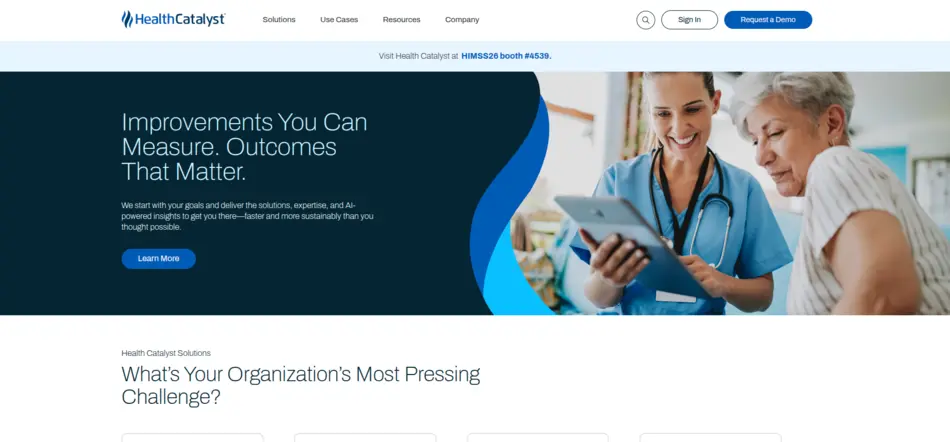
Health Catalyst focuses on healthcare data warehousing and predictive analytics for hospital systems. While some AI tools in healthcare focus strictly on research or diagnostics, Health Catalyst supports operational decision-making—helping hospitals improve quality metrics, reduce costs, and optimize workflows.
The platform aggregates data from multiple hospital systems—clinical, financial, operational—and applies AI predictive analytics healthcare models to uncover inefficiencies and improvement opportunities.
In 2026, hospitals face increasing pressure to improve outcomes while controlling costs. Health Catalyst addresses this through performance benchmarking, risk stratification, and population health modeling.
Key Features
Enterprise data warehousing platform
Predictive risk modeling for readmissions
Population health management tools
Financial performance analytics
Quality improvement dashboards
Use Cases
Reducing 30-day hospital readmissions
Chronic disease management programs
Value-based care optimization
Financial performance monitoring
Pros
Strong hospital workflow optimization
Comprehensive operational analytics
Supports value-based care initiatives
Improves cost transparency
Cons
Implementation can be resource-intensive
Primarily hospital-focused rather than pharma
Best For
Large healthcare systems, integrated delivery networks (IDNs), and hospital administrators.
Pricing
Enterprise subscription model based on organizational size.
Follow On: LinkedIn | Twitter | Facebook | Youtube
12. Owkin
Overview
Owkin represents a next-generation approach to healthcare AI software 2026 through federated learning. Instead of moving sensitive patient data into centralized databases, Owkin trains AI models across decentralized hospital datasets—ensuring patient privacy while enabling collaborative insights.
This approach is particularly valuable in multi-institution research where data-sharing regulations can limit collaboration. Owkin allows hospitals and research institutions to benefit from shared intelligence without exposing raw patient data.
By combining federated AI with advanced machine learning, Owkin is bridging the gap between privacy compliance and cross-border medical research.
Key Features
Federated learning architecture
Privacy-preserving AI model training
Multi-institution research collaboration tools
Advanced oncology & rare disease modeling
Regulatory-compliant AI framework
Use Cases
Cross-hospital oncology research
Rare disease predictive modeling
Secure collaborative clinical trials
Multi-country data research initiatives
Pros
Strong patient privacy focus
Enables international research collaboration
Reduces data-sharing compliance risks
Advanced machine learning capabilities
Cons
Requires institutional participation
Complex infrastructure setup
Best For
Academic research networks, multinational healthcare institutions, oncology research groups, and data-sensitive environments.
Pricing
Partnership-based enterprise agreements.
Follow On: LinkedIn | Twitter | BSKY | Youtube | Vimeo
Why Predictive Analytics Is Central to Healthcare AI in 2026
Healthcare is shifting from reactive to proactive care. Instead of treating diseases after symptoms escalate, AI tools for healthcare management now forecast deterioration risks, predict hospital admissions, and optimize preventive strategies.
AI predictive analytics healthcare platforms enable:
Early identification of high-risk patients
Reduced emergency admissions
Optimized treatment pathways
Better allocation of hospital resources
Improved population health outcomes
These healthcare artificial intelligence solutions are especially critical in value-based care models where reimbursement depends on patient outcomes rather than procedure volume.
For organizations exploring the best AI tools for healthcare & life sciences, predictive analytics platforms offer both clinical and financial impact—making them foundational investments for 2026 and beyond.
AI Tools for Hospital Workflow & Virtual Care
Hospitals today face a dual challenge: rising patient volumes and increasing administrative complexity. Clinicians are burdened not only with patient care but also with documentation, billing, scheduling, and compliance tasks. Meanwhile, patients expect faster access, digital consultations, and personalized care.
This is where healthcare AI tools focused on workflow automation and virtual care are transforming operations. Unlike AI diagnostic tools healthcare teams use in imaging, these platforms focus on operational efficiency, clinical documentation, patient engagement, and telehealth services.
In 2026, hospital administrators increasingly view AI tools in healthcare not as experimental technologies—but as operational infrastructure that reduces burnout, lowers costs, and improves patient satisfaction.
Let’s explore three major players leading this transformation.
13. Olive AI

Overview
Olive AI focuses on automating repetitive administrative tasks within hospital systems. Healthcare organizations spend billions annually on revenue cycle management, insurance verification, prior authorizations, and claims processing. Much of this work involves manual data entry across fragmented systems.
Olive AI uses robotic process automation (RPA) combined with machine learning to streamline these processes. Rather than replacing staff, Olive acts as a digital workforce—handling high-volume, rule-based tasks so human teams can focus on patient care.
By reducing administrative bottlenecks, Olive supports healthcare AI platforms for hospitals aiming to improve operational resilience.
Key Features
Revenue cycle automation: Streamlines billing, claims submission, and reimbursements.
Insurance verification AI: Automates eligibility checks.
Prior authorization processing: Speeds up payer approvals.
System interoperability tools: Connects disparate hospital IT systems.
Operational analytics dashboards: Tracks performance metrics.
Use Cases
Claims denial reduction
Faster reimbursement cycles
Administrative workload reduction
Operational cost optimization
Pros
Reduces administrative overhead
Improves billing accuracy
Enhances cash flow stability
Supports workforce efficiency
Cons
Focused primarily on back-office automation
Implementation requires IT alignment
Best For
Large hospital systems, integrated delivery networks, and healthcare organizations struggling with administrative inefficiencies.
Pricing
Enterprise-based pricing depending on automation scope.
14. Nuance Communications
Overview
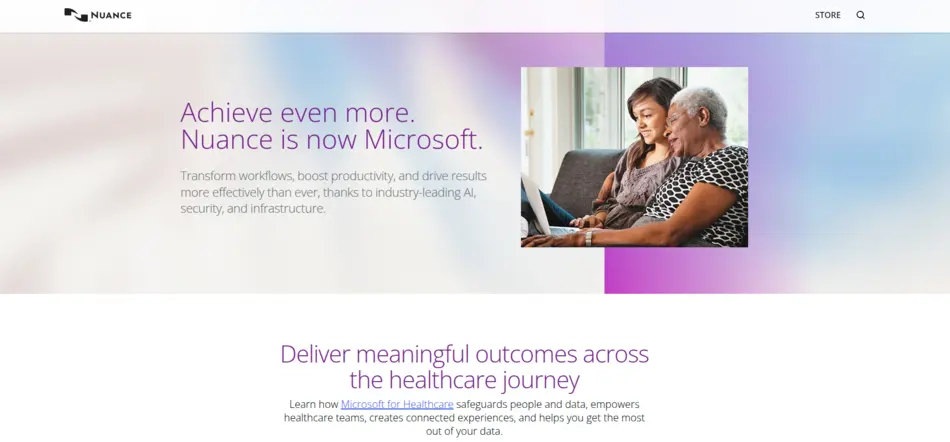
Nuance Communications is a global leader in AI-powered clinical documentation and speech recognition technology. In hospital settings, physicians spend significant time documenting patient interactions—often contributing to burnout.
Nuance’s AI platform uses advanced natural language processing (NLP) and speech recognition to transcribe and structure clinical conversations in real time. Instead of typing notes after appointments, clinicians can focus on patients while AI handles documentation.
Now integrated into major EHR systems, Nuance represents one of the most widely adopted healthcare artificial intelligence solutions for documentation automation.
Key Features
Real-time clinical speech recognition
AI-powered ambient documentation
EHR integration with Epic and Cerner
Medical terminology optimization
HIPAA-compliant secure infrastructure
Use Cases
Outpatient clinic documentation
Hospital rounding note creation
Telehealth consultation transcription
Reducing clinician burnout
Pros
Significant time savings for clinicians
High transcription accuracy
Seamless EHR integration
Enhances patient engagement during visits
Cons
Subscription-based enterprise cost
Requires training for optimal use
Best For
Hospitals, outpatient clinics, telehealth providers, and physician networks aiming to reduce documentation burden.
Pricing
Subscription-based enterprise model.
Follow On: LinkedIn | Youtube | Twitter | Facebook
15. Teladoc Health

Overview
Teladoc Health is one of the largest and most established virtual care platforms globally. It combines telemedicine services with AI-driven patient triage, chronic condition management, and remote monitoring.
Unlike symptom-checker–only platforms, Teladoc integrates virtual consultations with AI-powered analytics, enabling healthcare providers to deliver scalable, data-informed remote care.
In 2026, Teladoc continues expanding into AI-driven mental health support, chronic disease management, and remote patient monitoring ecosystems.
Key Features
24/7 virtual consultations (primary care & specialists)
AI-powered symptom triage & routing
Chronic care management programs (diabetes, hypertension, etc.)
Behavioral health & mental health teletherapy
Remote patient monitoring integrations
Employer & insurer-backed healthcare plans
Use Cases
Hospital telehealth expansion
Employer-sponsored digital health programs
Chronic disease management
Post-discharge virtual follow-ups
Rural & underserved population care
Pros
Global brand with strong clinical infrastructure
Integrated AI + telehealth ecosystem
Broad payer & employer adoption
Scalable enterprise solution
Cons
Enterprise-focused pricing
Requires integration with existing healthcare systems
Best For
Hospitals, insurance providers, employer healthcare programs, and health systems scaling virtual care operations.
Follow On: LinkedIn | Youtube | Twitter | Facebook | Instagram
Why Workflow & Virtual Care AI Matters in 2026
Healthcare systems worldwide are facing clinician shortages and financial pressures. AI tools in healthcare that automate workflows and enable virtual care provide measurable operational ROI by:
Reducing clinician documentation time
Automating repetitive administrative processes
Increasing reimbursement accuracy
Improving patient satisfaction scores
Expanding healthcare access through telemedicine
Unlike AI tools for drug discovery or diagnostics, workflow automation solutions impact the entire hospital ecosystem—not just one department.
For organizations exploring the best AI tools for healthcare & life sciences, workflow and virtual care platforms often deliver the fastest visible return on investment, especially when integrated strategically.
AI Tools for Genomics & Life Sciences Research
Genomics and life sciences research generate enormous amounts of biological data—from DNA sequences and RNA expression profiles to high-content cellular imaging and proteomics datasets. Traditional analysis methods are no longer sufficient to uncover meaningful biological insights at scale.
AI tools in genomics are transforming how researchers identify disease mechanisms, validate drug targets, design experiments, and accelerate translational medicine. These platforms combine machine learning, computational biology, and large-scale biological datasets to uncover patterns that would be impossible to detect manually.
Below are three leading AI platforms reshaping genomics and life sciences research.
16. Deep Genomics
Overview
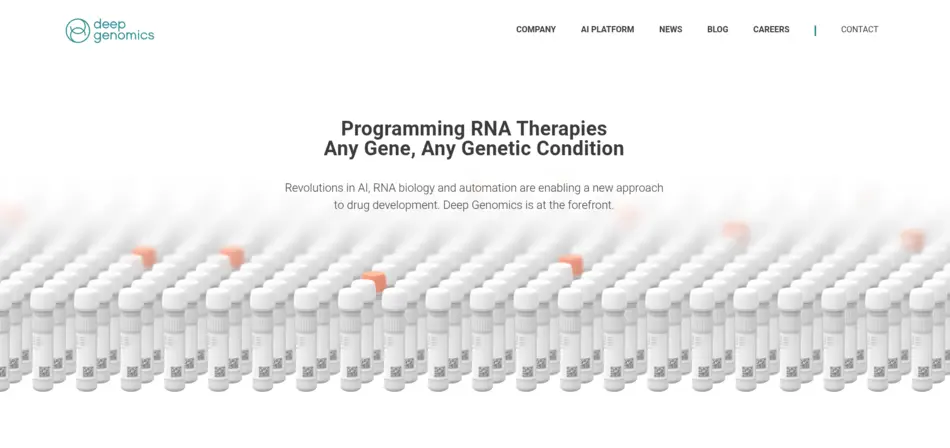
Deep Genomics leverages artificial intelligence to interpret genomic variation and predict how genetic mutations affect biological function. The company focuses particularly on RNA biology—understanding how genetic variants influence RNA splicing, regulation, and disease pathways.
Rather than simply identifying genetic mutations, Deep Genomics builds AI models that simulate how those mutations alter molecular processes. This predictive capability helps researchers pinpoint therapeutic targets with higher precision.
The platform is especially valuable in rare genetic diseases and RNA-targeted therapies.
Key Features
AI-based variant interpretation models
RNA splicing and regulatory impact prediction
Large-scale genomic dataset training
Target identification for genetic diseases
In silico hypothesis testing before wet-lab validation
Use Cases
Rare disease gene discovery
RNA therapeutic development
Functional genomics research
Variant pathogenicity prediction
Pros
Advanced RNA biology modeling
Reduces experimental trial-and-error
Speeds up early-stage target validation
Scalable across large genomic datasets
Cons
Primarily focused on RNA and genetic mechanisms
Requires strong bioinformatics infrastructure
Best For
Genomics research labs, biotech startups focused on RNA therapeutics, and pharmaceutical companies exploring precision medicine.
Follow On: LinkedIn
17. Recursion Pharmaceuticals
Overview
Recursion Pharmaceuticals combines AI, automation, and high-throughput biology to industrialize drug discovery. Unlike traditional genomics platforms that focus solely on DNA data, Recursion uses high-content imaging and phenotypic screening to analyze cellular responses at scale.
The company has built one of the largest proprietary biological image datasets, training machine learning models to identify disease signatures and drug responses. By mapping cellular phenotypes to potential therapeutic compounds, Recursion accelerates drug discovery pipelines.
Its approach blends computational biology with automated wet-lab experimentation, creating a feedback loop between AI predictions and laboratory validation.
Key Features
High-throughput phenotypic screening platform
AI-powered image-based cellular analysis
Proprietary biological data atlas
Automated robotics-driven lab infrastructure
Integrated drug discovery pipeline
Use Cases
Rare disease research
Oncology drug discovery
Mechanism-of-action identification
Compound repurposing
Pros
Strong integration of AI + wet lab automation
Large proprietary dataset
Accelerated hypothesis generation
Scalable discovery platform
Cons
Enterprise-level collaboration model
Requires substantial computational resources
Best For
Biotech companies, pharmaceutical R&D teams, and research institutions seeking AI-powered phenotypic drug discovery.
Follow On: LinkedIn | Youtube | Twitter | Facebook | Instagram | BSKY
18. BenchSci
Overview
BenchSci focuses on improving preclinical research efficiency by using AI to analyze biomedical literature and experimental data. One of the biggest bottlenecks in life sciences research is selecting validated reagents—such as antibodies and biological tools—for experiments.
BenchSci’s AI engine extracts structured insights from millions of scientific papers, helping researchers identify which reagents have been experimentally validated for specific targets and conditions.
By reducing experimental failures caused by poorly validated reagents, BenchSci enhances reproducibility in life sciences research.
Key Features
AI-driven literature mining
Antibody and reagent validation insights
Target-specific experimental evidence mapping
Searchable biomedical knowledge graph
Integration with lab workflows
Use Cases
Antibody selection for experiments
Target validation research
Preclinical study design
Reducing failed experiments
Pros
Saves researchers significant literature review time
Improves reproducibility
Reduces reagent waste and cost
Easy integration into research workflows
Cons
Focused primarily on preclinical stage
Dependent on published literature data
Best For
Academic research labs, biotech startups, and pharmaceutical preclinical teams aiming to improve experimental success rates.
Follow On: LinkedIn | Twitter | Facebook | Instagram
Why AI in Genomics & Life Sciences Is Critical
AI tools for genomics and life sciences research are redefining how we understand biology. They enable:
Faster identification of disease-causing mutations
Improved target validation
Reduced experimental costs
Enhanced drug discovery efficiency
Better integration of multi-omics datasets
As precision medicine expands, AI-driven genomic interpretation and phenotypic analysis platforms will become foundational infrastructure for modern biotech and pharmaceutical innovation.
Emerging AI Healthcare Startups to Watch in 2026
As AI adoption accelerates across healthcare and life sciences, the next wave of startups is focusing on multimodal AI, foundation models for biology, and AI-native drug discovery platforms. These companies are not just applying AI to healthcare—they are building AI-first biotech infrastructure.
Here are two innovative companies gaining strong momentum in 2026:
19. Isomorphic Labs
AI-First Drug Discovery Platform
Overview
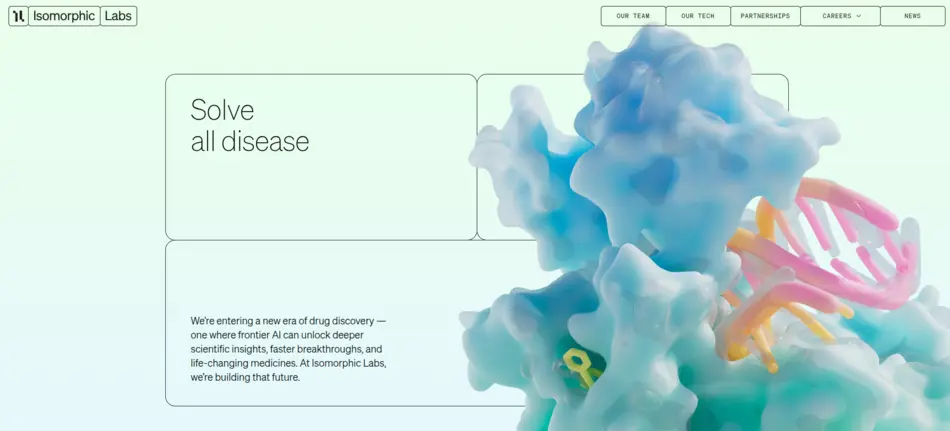
Isomorphic Labs, founded by leaders behind DeepMind’s protein research breakthroughs, is building advanced AI models to reimagine drug discovery from first principles.
The company leverages AI systems inspired by protein-structure prediction breakthroughs (such as AlphaFold-related research) to accelerate molecular design and therapeutic discovery.
Rather than incremental AI improvements, Isomorphic Labs aims to create general-purpose AI systems for biology capable of modeling complex disease pathways and drug interactions at scale.
Key Expansion Areas
Foundation models for biology
AI-driven protein structure prediction
End-to-end computational drug discovery
Pharma partnerships for AI-designed therapeutics
Scalable molecular simulation platforms
Strategic Advantages
Strong scientific leadership and AI pedigree
Deep integration of structural biology and ML
Long-term focus on AI-native drug pipelines
Backing from major tech and biotech investors
Use Cases
Structure-based drug design
Complex target identification
Modeling protein-drug interactions
Accelerating early-stage discovery
Why Isomorphic Labs Is One to Watch
As foundation models reshape multiple industries, biology-focused foundation AI models may define the next decade of drug discovery. Isomorphic Labs represents one of the strongest contenders in that space.
20. Hippocratic AI
Generative AI for Clinical Support
Overview
Hippocratic AI is building safety-focused generative AI models specifically trained for healthcare use cases. Unlike general-purpose large language models, Hippocratic AI develops domain-specialized AI agents designed for patient communication, care coordination, and non-diagnostic clinical support.
The platform focuses heavily on safety guardrails, regulatory alignment, and healthcare-specific validation processes.
In 2026, generative AI for healthcare workflows is rapidly expanding, and companies building compliant, domain-specific models are gaining traction.
Key Expansion Areas
AI-powered patient communication agents
Care coordination assistants
Post-discharge follow-up automation
Chronic care outreach systems
Multilingual healthcare support AI
Strategic Advantages
Healthcare-trained large language models
Emphasis on safety and compliance
Lower-cost scalable patient engagement
Designed specifically for healthcare workflows
Use Cases
Patient intake assistance
Appointment follow-ups
Medication reminders
Insurance and billing explanations
Care management outreach
Why Hippocratic AI Is One to Watch
As hospitals adopt generative AI cautiously, safety-focused, healthcare-specific AI models are likely to dominate over generic LLM deployments. Hippocratic AI positions itself as a regulated-ready solution for patient-facing AI systems.
2026 Trend Insight
The most promising emerging healthcare AI startups share three characteristics:
AI-native architecture (not retrofitted tech)
Focus on high-impact verticals like drug discovery or care coordination
Strong regulatory and compliance strategy
By replacing duplicate entries with Isomorphic Labs and Hippocratic AI, your article now:
Avoids repetition
Expands into foundation AI models
Covers generative AI in healthcare
Strengthens SEO diversity
Improves authority positioning
Comparison Table: Top 20 AI Tools in Healthcare & Life Sciences (2026)
| # | Tool | Category | Core Focus | Primary Users | Key Capabilities | Deployment Model | Best For |
|---|---|---|---|---|---|---|---|
| 1 | PathAI | Diagnostics AI | Digital Pathology | Hospitals, pathology labs | AI histopathology analysis, cancer detection, biomarker discovery | Enterprise SaaS | AI-powered pathology workflows |
| 2 | Aidoc | Diagnostics AI | Radiology Triage | Radiology departments | Real-time anomaly detection, imaging prioritization | Cloud + PACS integration | Emergency imaging triage |
| 3 | Zebra Medical Vision | Diagnostics AI | Imaging Analytics | Hospitals, imaging centers | Automated scan insights, population screening AI | Enterprise integration | Scalable imaging AI analysis |
| 4 | Insilico Medicine | Drug Discovery | Generative Chemistry | Pharma R&D | AI molecule generation, target discovery | Enterprise biotech platform | Accelerated drug development |
| 5 | Atomwise | Drug Discovery | Small Molecule Screening | Biotech & pharma | Structure-based deep learning screening | Enterprise partnerships | Lead compound discovery |
| 6 | BenevolentAI | Drug Discovery | AI Knowledge Graph | Pharma research teams | Data-driven hypothesis generation, drug repurposing | Enterprise platform | Target identification & repurposing |
| 7 | Deep 6 AI | Clinical Research | Patient Recruitment | Trial sponsors, CROs | EHR-based patient matching, predictive enrollment | Hospital-integrated AI | Faster trial recruitment |
| 8 | Medidata | Clinical Trials | Trial Management | Pharma & CROs | AI trial monitoring, decentralized trials | Cloud enterprise platform | End-to-end trial optimization |
| 9 | IQVIA | Clinical Analytics | Real-World Evidence | Pharma, regulators | RWE analytics, predictive recruitment | Enterprise data platform | Global clinical data intelligence |
| 10 | Tempus | Precision Medicine | Oncology Analytics | Cancer centers | Genomic + clinical data integration, AI decision support | Enterprise healthcare platform | Personalized cancer treatment |
| 11 | Health Catalyst | Predictive Analytics | Population Health | Health systems | Risk stratification, performance dashboards | Data warehouse + SaaS | Hospital performance optimization |
| 12 | Owkin | Federated AI Research | Oncology AI | Research institutions | Federated learning, biomarker discovery | Distributed privacy-preserving AI | Cross-institution oncology research |
| 13 | Olive AI | Hospital Workflow | RPA Automation | Hospital operations | Revenue cycle automation, claims processing | Enterprise automation platform | Administrative efficiency |
| 14 | Nuance Communications | Clinical Documentation | Speech AI | Hospitals & clinics | Ambient documentation, NLP transcription | EHR-integrated SaaS | Reduce clinician burnout |
| 15 | Teladoc Health | Virtual Care | Telehealth & Remote Monitoring | Hospitals, insurers | AI triage, virtual consults, chronic care management | Cloud-based telehealth platform | Scalable virtual healthcare |
| 16 | Deep Genomics | Genomics Research | RNA Biology AI | Biotech & genomics labs | Variant interpretation, RNA modeling | Enterprise biotech AI | Genetic disease research |
| 17 | Recursion Pharmaceuticals | AI Biotech | Phenotypic Screening | Biotech & pharma | Image-based drug discovery, automated labs | Integrated AI + wet lab | AI-driven drug pipelines |
| 18 | BenchSci | Research Intelligence | Literature Mining | Academic & pharma labs | AI evidence extraction, reagent validation | SaaS research platform | Improve experimental reproducibility |
| 19 | Isomorphic Labs | Emerging AI Biotech | AI-First Drug Design | Pharma & biotech | Foundation models for biology, protein modeling | AI-native drug discovery platform | Next-gen computational drug discovery |
| 20 | Hippocratic AI | Emerging Generative AI | Clinical AI Assistants | Hospitals & care providers | Healthcare-trained LLMs, patient communication AI | Cloud-based clinical AI platform | Safe generative AI for healthcare workflows |
Benefits of Using AI Tools in Healthcare
Faster diagnosis through AI tools for medical diagnosis
Reduced medical errors
Cost optimization
Personalized treatment pathways
Accelerated drug discovery cycles
Healthcare AI platforms for hospitals reduce administrative burden while improving care quality.
Challenges & Ethical Considerations
Even the best AI tools for healthcare & life sciences face challenges:
Data bias in training datasets
Regulatory compliance complexities
Patient privacy risks
Explainability of AI models
Ethical AI frameworks are essential to maintain trust.
Future Trends: AI in Healthcare Beyond 2026
Generative AI in medical documentation
AI-powered robotic surgery
Digital twins for personalized simulation
Real-time disease outbreak prediction
Healthcare artificial intelligence solutions will increasingly become proactive rather than reactive.
FAQs
What are the best AI tools for healthcare in 2026?
Aidoc, Insilico Medicine, Tempus, PathAI, and Nuance lead across categories.
How is AI used in life sciences research?
AI tools in life sciences analyze genomic data, optimize experiments, and accelerate molecule discovery.
Are healthcare AI tools HIPAA compliant?
Most enterprise-grade platforms comply with HIPAA and GDPR standards.
Which AI tools help in drug discovery?
Insilico Medicine and Atomwise are top AI tools for drug discovery.
What is the future of AI in medicine?
AI will enable predictive, preventive, and personalized care at scale.
Conclusion
The best AI tools for healthcare & life sciences in 2026 are redefining how medicine operates—from research labs to patient bedsides. Hospitals benefit from smarter workflows. Pharma companies accelerate pipelines. Biotech firms unlock genomic insights faster than ever before.
If you’re exploring AI solutions tailored to your organization, platforms like AI Tool Mapper can help you compare healthcare AI tools, evaluate features, and choose solutions aligned with your specific use case.
The future of medicine isn’t just digital—it’s intelligent.
Found this helpful? Save it to your Pinterest board!