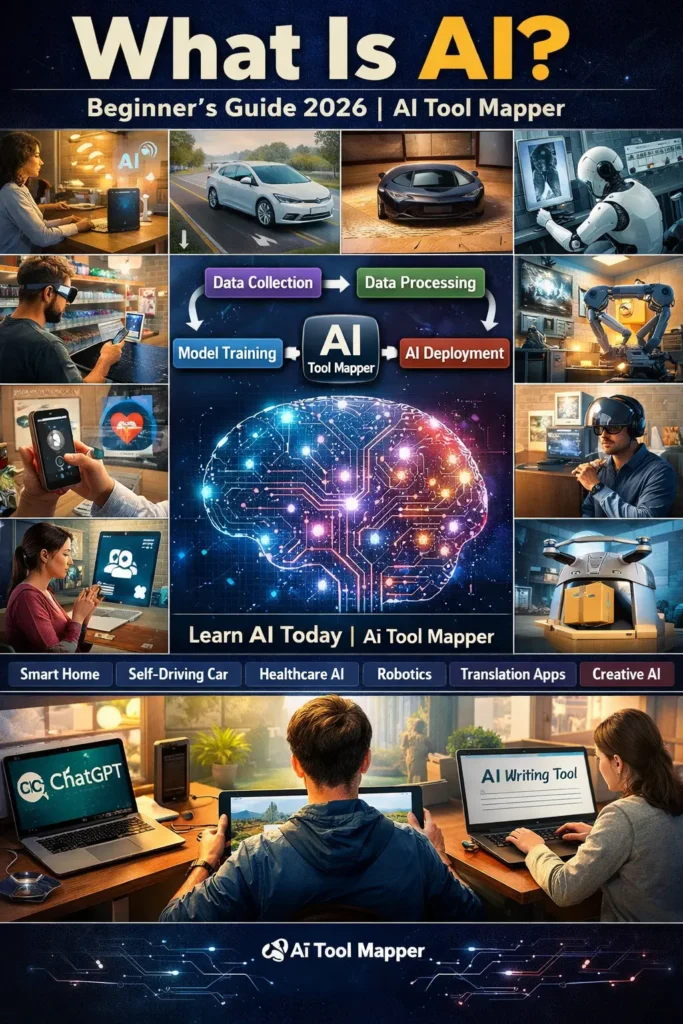

Artificial Intelligence (AI) is no longer just a concept from science fiction—it’s now a part of our everyday lives. But what is artificial intelligence exactly? At its core, AI is the science of making machines think, learn, and act like humans. From your smartphone’s voice assistant to Google search predictions, AI powers tools we interact with every day.
Why is AI everywhere? Because it can analyze massive amounts of data, recognize patterns, and make decisions faster than humans. For beginners, understanding AI is not just a tech curiosity—it’s a crucial skill for navigating the modern digital world. Imagine a world where your phone predicts your needs before you even ask or healthcare systems detect diseases early. That’s AI in action.
What Is Artificial Intelligence? (Simple Definition)
Simply put, artificial intelligence is the ability of machines to perform tasks that typically require human intelligence. Think of AI as a digital brain that can process information, make decisions, and even learn from experience.
Human Intelligence vs Machine Intelligence: Humans can understand context, emotions, and abstract ideas, while machines excel at processing vast data sets with accuracy. AI’s basic goal is to replicate these cognitive functions to assist humans or even perform tasks independently.
In simple terms, AI is designed to make machines “smart” enough to improve efficiency, solve problems, and enhance decision-making in real-world scenarios.
How Artificial Intelligence Works (Step-by-Step)

AI may sound complex, but it works through a series of understandable steps. Let’s break it down:
Data Collection
AI starts with data—lots of it. This could be images, text, or user behavior. Data fuels AI models, enabling them to learn patterns and predict outcomes.
Machine Learning & Algorithms
Machine learning (ML) is a core component of AI. ML uses algorithms to process data, detect patterns, and “learn” from it. For instance, Netflix recommends shows based on what you watch using ML algorithms.
Training, Testing & Prediction
AI models are trained on data, tested for accuracy, and then used to make predictions. For beginners, think of it as teaching a child: you show examples (training), check understanding (testing), and then let them apply knowledge (prediction).
This learning cycle allows AI to continually improve its performance over time.
Types of Artificial Intelligence Explained
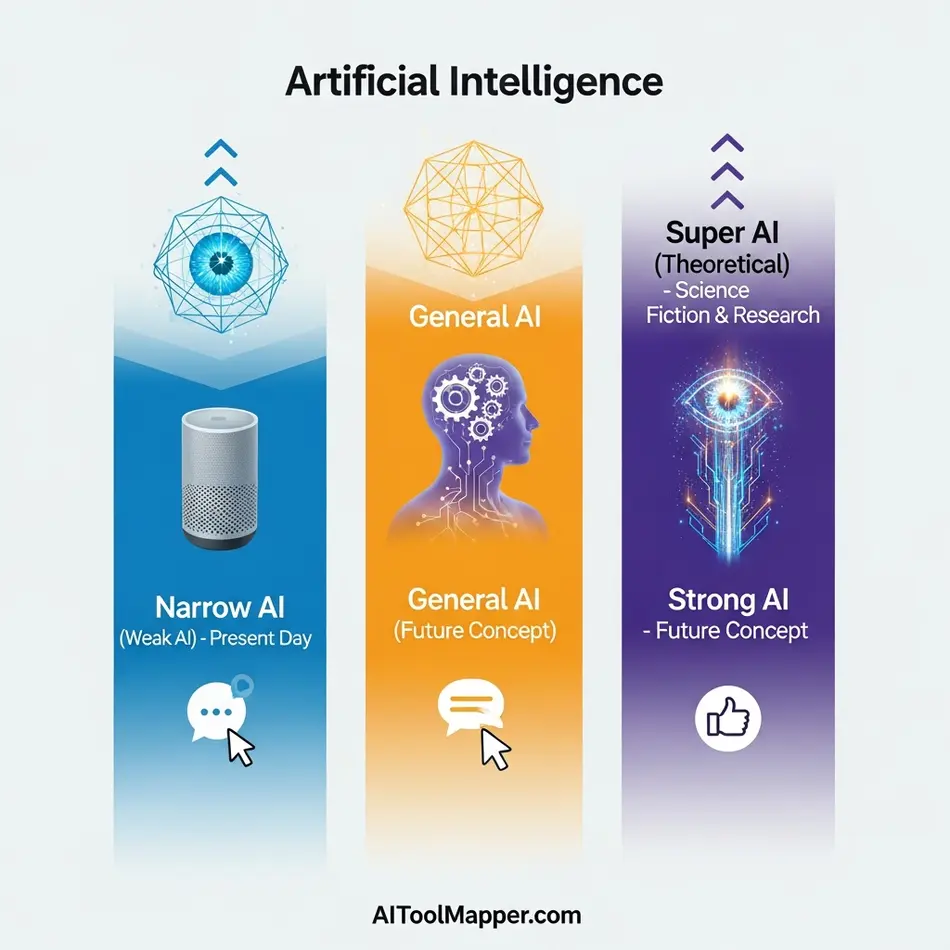
AI can be classified into three main types:
Narrow AI (Weak AI)
Currently, most AI falls into this category. Narrow AI focuses on specific tasks, like Siri, Alexa, or ChatGPT. These systems are highly effective but cannot perform tasks outside their domain.
General AI (Strong AI)
Strong AI is still a future concept. It would possess intelligence comparable to humans, capable of understanding, reasoning, and learning across diverse tasks.
Super AI (Theoretical)
This is the stuff of science fiction: machines that surpass human intelligence in all aspects. While theoretical today, it’s a popular subject in movies and AI research.
AI vs Machine Learning vs Deep Learning
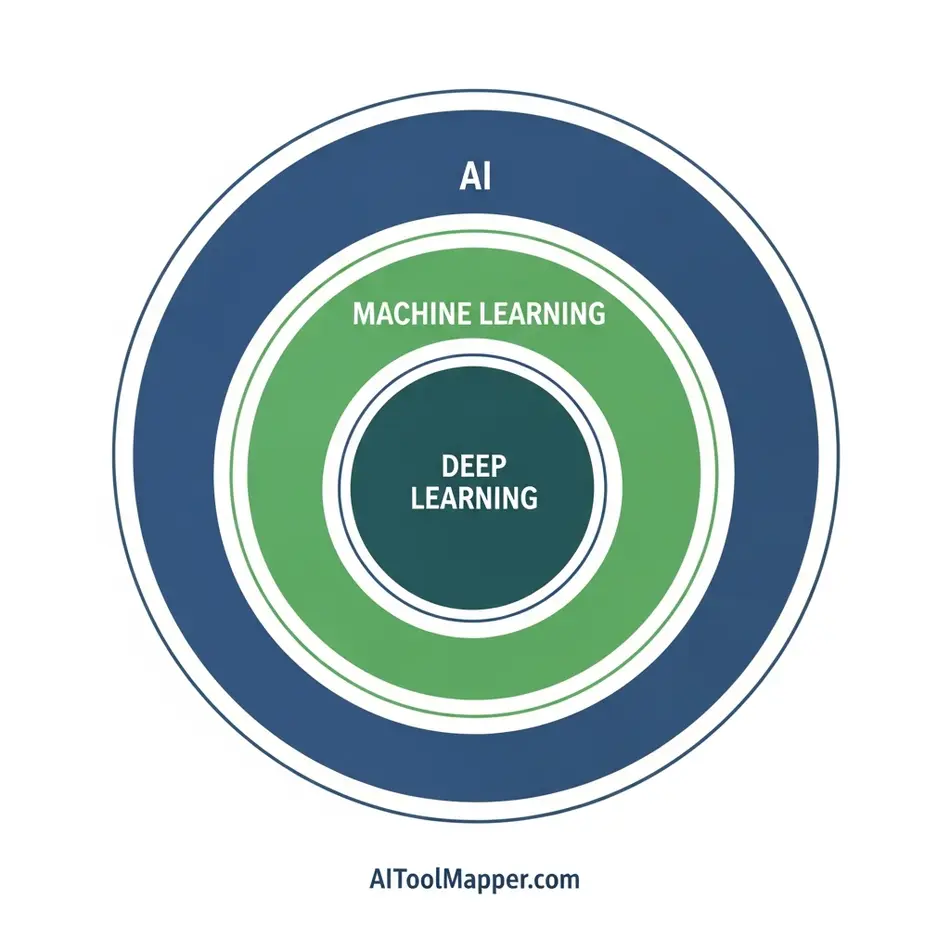
Understanding AI requires distinguishing it from related concepts:
| Concept | Definition | Example |
| AI | Machines simulating human intelligence | ChatGPT, Google AI |
| Machine Learning (ML) | AI subset that learns from data | Recommendation systems |
| Deep Learning (DL) | ML subset using neural networks | Self-driving cars |
In short, all ML is AI, but not all AI is ML. Deep learning is an advanced form of ML designed for complex tasks.
Applications of Artificial Intelligence in Daily Life
Artificial Intelligence is quietly working behind the scenes in our everyday routines. Most people use AI multiple times a day without even realizing it. From the moment you unlock your phone to the time you scroll social media or search on Google, AI is constantly analyzing data, predicting preferences, and making your digital experience smoother. Let’s explore how artificial intelligence shows up in daily life through some familiar and practical examples.
AI in Smartphones & Apps
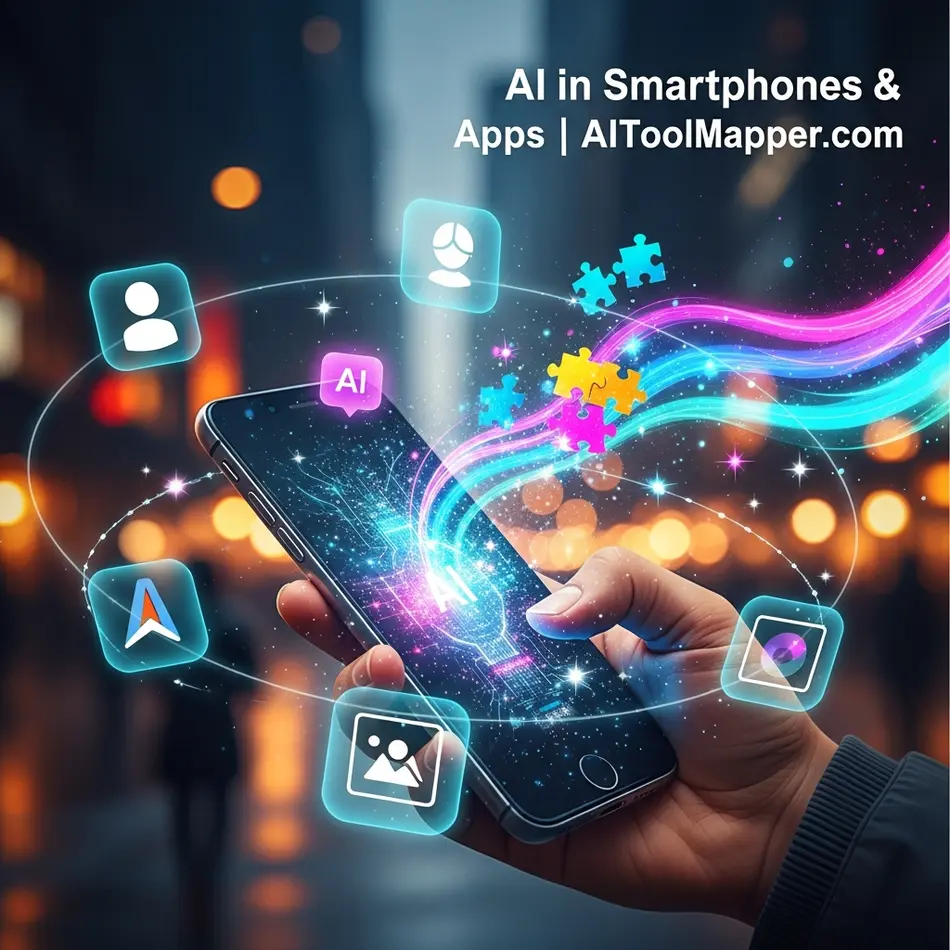
Smartphones are one of the most common examples of artificial intelligence in action. Voice assistants like Google Assistant, Siri, and Alexa rely on AI to understand spoken language, respond accurately, and even learn your preferences over time. Predictive text and autocorrect features use AI algorithms to suggest the next word before you type it, saving time and reducing errors.
AI also powers facial recognition and fingerprint unlocking, making phones more secure and convenient. Photo apps use AI to automatically organize images, recognize faces, enhance picture quality, and even suggest edits. Social media apps use artificial intelligence to personalize your feed, showing content based on what you like, watch, or interact with the most.
AI in Healthcare

Artificial intelligence is playing a transformative role in healthcare, helping doctors and medical professionals make faster and more accurate decisions. AI systems can analyze medical images such as X-rays, MRIs, and CT scans to detect diseases like cancer at an early stage, often with impressive accuracy.
AI also helps predict patient outcomes by studying medical history, symptoms, and treatment responses. Hospitals use AI-powered tools to manage patient data, schedule appointments, and optimize treatment plans. Wearable devices and health apps use AI to monitor heart rate, sleep patterns, and physical activity, alerting users to potential health risks before they become serious.
AI in Business & Marketing
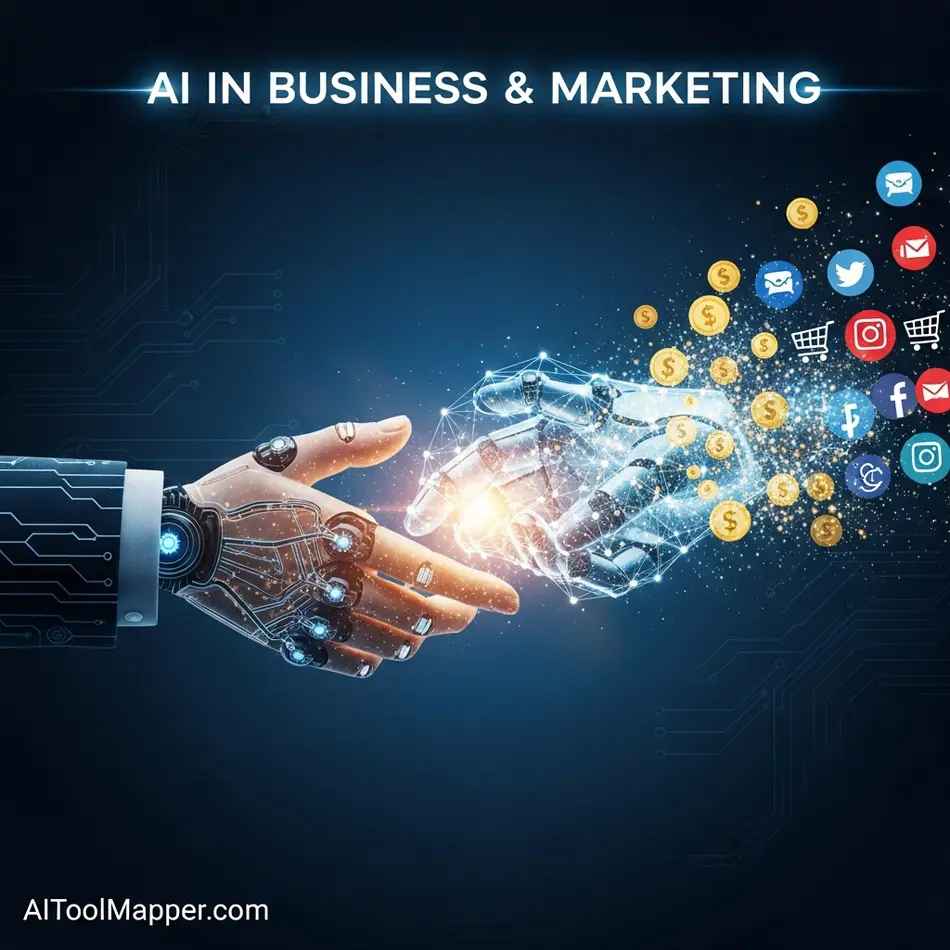
In the business world, artificial intelligence has become a powerful tool for improving efficiency and boosting profits. Chatbots handle customer queries 24/7, providing instant responses and improving customer satisfaction. These AI-driven assistants can answer common questions, process orders, and even resolve basic issues without human involvement.
In marketing, AI analyzes customer behavior, purchase history, and browsing patterns to deliver highly targeted ads. This allows businesses to reach the right audience at the right time, increasing conversion rates and return on investment (ROI). AI also helps companies forecast sales, optimize pricing strategies, and make data-driven decisions that were once time-consuming and complex.
AI in Education & Content Creation
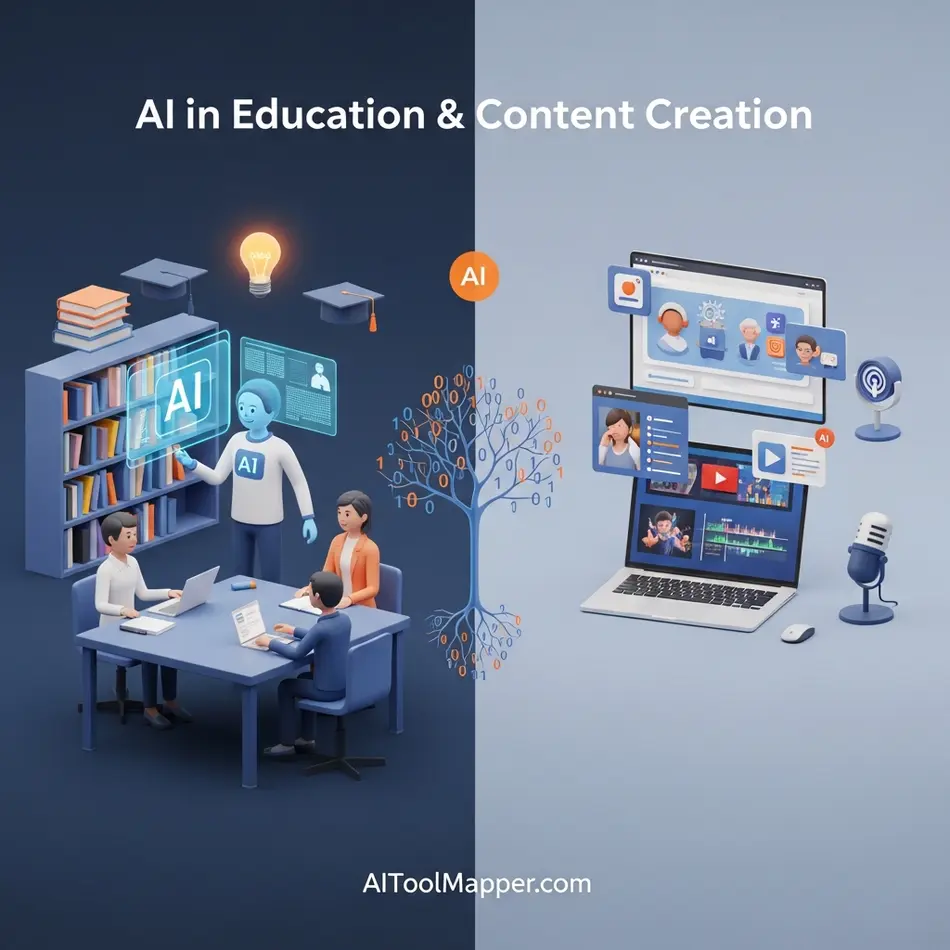
Education is another area where artificial intelligence is making a noticeable impact. AI-powered learning platforms adapt to each student’s pace and learning style, offering personalized lessons and practice exercises. Automated essay graders and plagiarism checkers help teachers save time while maintaining consistency in evaluations.
In content creation, AI tools assist writers, designers, and marketers by generating ideas, improving grammar, summarizing information, and even creating images or videos. These tools don’t replace human creativity but enhance productivity, allowing creators to focus more on strategy and originality. For beginners, AI makes learning and content production more accessible than ever before.
Benefits of Artificial Intelligence
AI brings numerous advantages to individuals and organizations:
- Time Saving: Automates repetitive tasks.
- Accuracy & Automation: Reduces human error in complex processes.
- Cost Reduction: Streamlines operations efficiently.
- Smarter Decision-Making: Uses data-driven insights for informed decisions.
Limitations and Risks of Artificial Intelligence
Despite its advantages, AI comes with challenges:
- Job Displacement: Automation may replace routine jobs.
- Bias in AI: Data-driven AI can inherit human biases.
- Data Privacy: Sensitive information must be handled securely.
- Over-dependence on AI: Relying too heavily on AI can reduce human skill development.
Future of Artificial Intelligence
AI is evolving rapidly. Key trends include:
- AI Tools Marketplaces & Automation: Platforms for integrating AI into business workflows.
- AI Careers & Opportunities: Data science, AI engineering, and AI consulting are booming fields.
- Emerging Technologies: AI-powered robotics, virtual assistants, and creative AI tools will redefine industries.
Best AI Tools for Beginners (2026)
Starting with AI is easier than ever thanks to beginner-friendly tools:
- ChatGPT: Conversational AI for content, ideas, and research.
- AI Image Tools: Generate creative visuals with AI-powered design platforms.
- AI Writing Tools: Assist in content creation, SEO optimization, and grammar.
- AI Automation Platforms: Connect multiple tools for workflow efficiency.
Visit AI Tool Mapper AI Tools Directory for the latest listings.
Frequently Asked Questions About AI
1. Is AI hard to learn for beginners?
Not at all! AI has many beginner-friendly resources, including online tutorials, courses, and AI Tool Mapper listings. By starting with practical projects and guided tools, beginners can grasp concepts like machine learning, chatbots, and AI automation without feeling overwhelmed.
2. Can AI replace humans?
AI mainly enhances human work rather than replacing it. While it can automate repetitive tasks, uniquely human skills like creativity, critical thinking, and empathy remain essential. Collaboration between humans and AI often yields the best results.
3. Is AI safe to use?
Yes, when implemented responsibly. Safe AI practices include proper data handling, transparency in algorithms, and adherence to ethical guidelines. Choosing trusted AI platforms and regularly reviewing AI outputs also ensures safer usage.
4. How can beginners start learning AI?
Beginners can start with online courses, experimenting with AI tools like ChatGPT, or exploring AI Tool Mapper’s AI Tools Directory. Hands-on practice, small projects, and learning from tutorials make understanding AI concepts practical and achievable.
5. What programming languages are best for AI?
Python is the most popular language for AI due to its simplicity and extensive libraries. Other languages like R, Java, and Julia are also used, depending on the project type, such as machine learning, data analysis, or robotics.
6. How long does it take to learn AI basics?
For beginners, learning AI fundamentals typically takes a few weeks to a few months, depending on time commitment. Consistent practice with tutorials, small projects, and AI tools accelerates understanding and builds confidence.
7. Do I need a strong math background for AI?
While a basic understanding of algebra, statistics, and probability helps, many beginner-friendly AI tools and tutorials minimize complex math. Hands-on experimentation often allows learners to progress without advanced mathematics initially.
8. Can AI help me in my career?
Absolutely! AI skills are in high demand across industries like marketing, healthcare, finance, and tech. Understanding AI tools can improve productivity, automation capabilities, and career opportunities, even for non-technical professionals.
9. Are there free AI learning resources?
Yes! Numerous free resources include online tutorials, courses on platforms like Coursera or Khan Academy, open-source AI tools, and AI Tool Mapper listings. Beginners can start learning without paying and scale up as needed.
10. How do I choose the right AI tool?
Choose based on your goals, technical skills, and project needs. Beginner-friendly options like ChatGPT or AI Tool Mapper’s directory simplify learning, while advanced platforms may require coding knowledge. Look for usability, documentation, and community support.
Final Thoughts on Artificial Intelligence
Artificial intelligence is transforming the world at a pace faster than ever. Understanding what is artificial intelligence, its workings, types, applications, and benefits equips beginners to embrace the AI-driven future confidently.
Your next step? Explore AI tools on AI Tool Mapper, experiment, and start building your AI knowledge today. Remember, AI is not just technology—it’s a tool for enhancing human potential.
Found this helpful? Save it to your Pinterest board!