What if someone could find your Instagram photos anywhere on the internet—just by using your face?
Tools like FaceCheck ID are making this possible, and they’re spreading fast. While they promise powerful features like identity verification and image tracking, they also raise serious privacy concerns—especially for users of Instagram.
So, is FaceCheck ID actually safe, or are you unknowingly putting your personal data at risk?
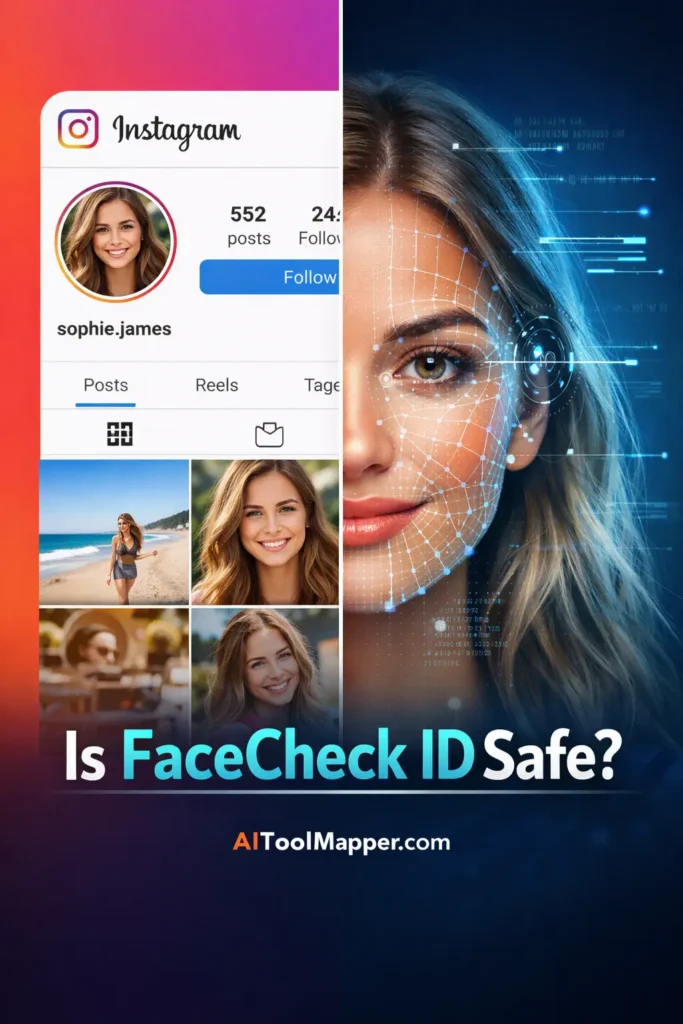
The truth is, FaceCheck ID is generally safe to use, but it can scan publicly available photos, which means users with public Instagram profiles are far more exposed than they realize. If you’re not careful, your images could be searchable across the web.
Key Takeaways
- FaceCheck ID is powerful but comes with privacy risks
- It does not hack Instagram, but can index public images
- Public Instagram profiles are more vulnerable
- Facial recognition data is highly sensitive
- Users must take proactive steps to protect their identity
In this guide, we break down everything you need to know—how it works, the real privacy risks, and simple steps you can take to protect your identity before it’s too late.
What Is FaceCheck ID?
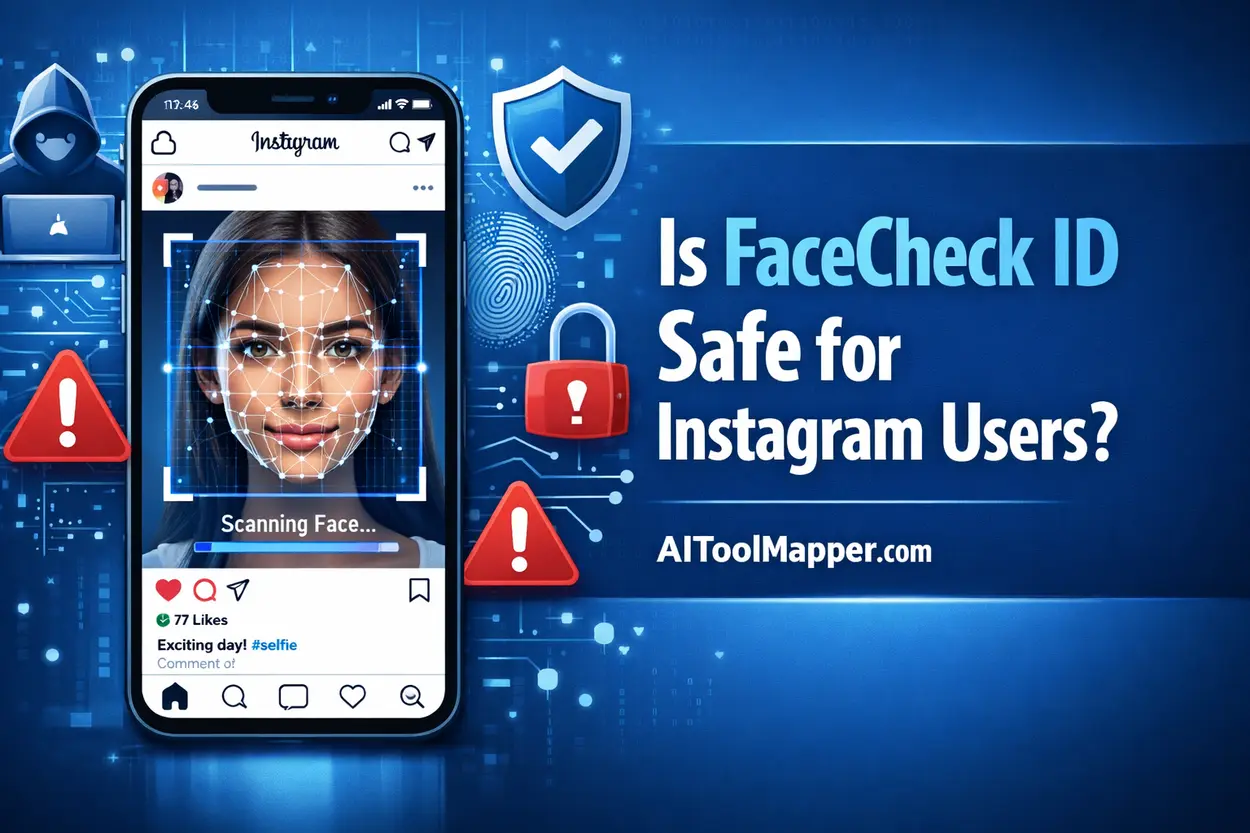
FaceCheck ID is a reverse face search tool that allows users to upload a photo and find visually similar faces across the internet. It scans publicly available data sources such as websites, forums, and social media profiles to match faces.
How It Works
- Upload a photo
- AI analyzes facial features
- Matches against indexed images online
- Displays potential matches with links
For Instagram users, this means your publicly posted images could be indexed and discoverable using such tools.
Why Instagram Users Are Using FaceCheck ID
Many Instagram users are turning to face search tools for legitimate reasons:
1. Finding Fake Profiles
FaceCheck ID helps identify fake accounts using stolen images.
2. Protecting Personal Photos
You can check if your photos are being reused elsewhere without permission.
3. Online Dating Verification
Some users verify identities before interacting with strangers.
4. Brand & Influencer Protection
Influencers ensure their content isn’t being plagiarized.
While these benefits are valuable, they come with privacy trade-offs.
Is FaceCheck ID Safe?
The short answer: It depends on how you use it.
Let’s break it down.
1. Data Privacy Concerns
Uploading a photo means:
- Your image is processed by their system
- It may be temporarily stored
- You may not have full control over its deletion
Risk: Your image could become part of future search results.
2. Facial Recognition Sensitivity
Facial data is extremely sensitive biometric information.
Unlike passwords, you can’t change your face if data is misused.
3. Lack of Full Transparency
Many face search tools (including FaceCheck ID):
- Do not clearly explain data retention policies
- May not disclose all sources used for indexing
4. Potential Misuse
FaceCheck ID can be used ethically—but also unethically:
- Stalking
- Identity tracking
- Harassment
This raises serious ethical and legal concerns.
Does FaceCheck ID Access Your Instagram Account Directly?
No, FaceCheck ID does not directly hack or access your Instagram account.
However:
- It can scan publicly available Instagram images
- If your profile is public, your photos are exposed to indexing
Key Insight
👉 If your Instagram account is private, your images are less likely to appear in search results.
How FaceCheck ID Affects Instagram Privacy
Public Profiles = Higher Risk
- Anyone can access your photos
- Tools like FaceCheck ID can index them
Private Profiles = Better Protection
- Limited visibility
- Reduced indexing chances
Hashtags & Viral Posts
Even private users can be exposed if:
- Their images are reposted elsewhere
- Content goes viral through third parties
Is FaceCheck ID Legal?
Face recognition tools operate in a gray legal area in many countries.
Global Privacy Laws
- GDPR (Europe) restricts biometric data usage
- Some countries require consent for facial recognition
However, enforcement varies.
Ethical Questions
- Is it okay to search someone’s face without consent?
- Should such tools be publicly accessible?
Pros and Cons of FaceCheck ID for Instagram Users
✅ Pros
- Helps detect fake profiles
- Useful for identity verification
- Protects against image theft
❌ Cons
- Privacy risks
- Potential misuse
- Unclear data handling policies
How to Stay Safe While Using FaceCheck ID
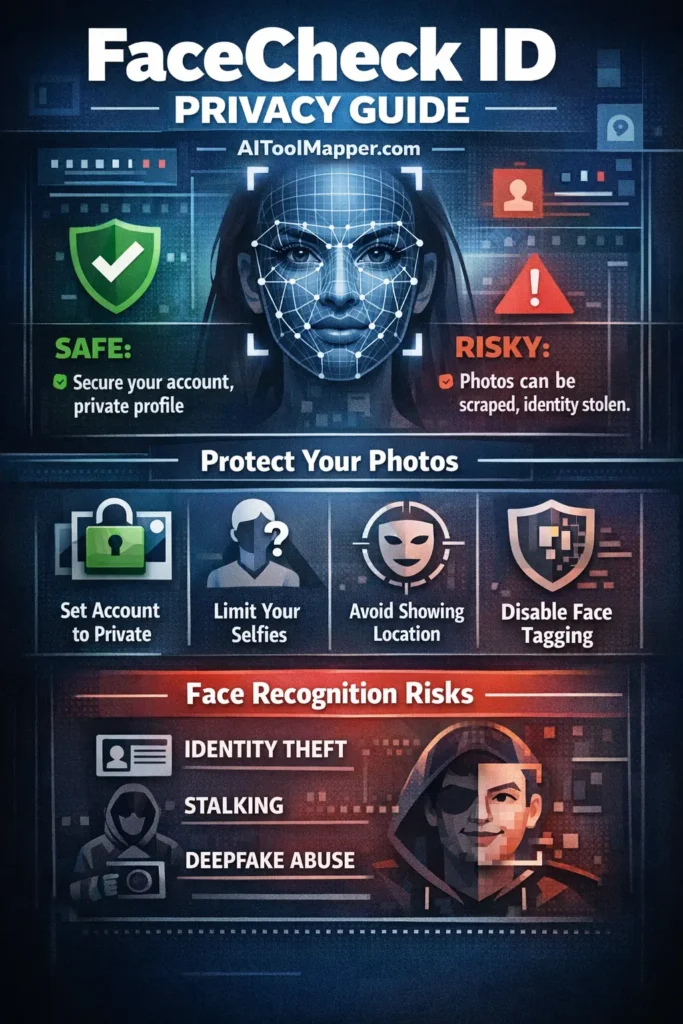
1. Avoid Uploading Personal Photos
Use generic or non-sensitive images when testing the tool.
2. Set Instagram to Private
This significantly reduces exposure.
3. Monitor Your Online Presence
Regularly search your own images to detect misuse.
4. Avoid Sharing Sensitive Content
Limit posting high-resolution personal images.
5. Read Privacy Policies
Always understand how your data is handled.
Alternatives to FaceCheck ID
If privacy is your priority, consider:
- Reverse image search tools without facial recognition
- Platforms with transparent policies
Examples include:
- Google Images (less aggressive facial matching)
- TinEye (focuses on image duplication)
Future of Face Search & Instagram Privacy
AI-powered face recognition is evolving rapidly. As tools become more accurate:
- Privacy concerns will grow
- Regulations may tighten
- Users must stay informed and cautious
Instagram may also introduce stricter controls to protect user data.
FAQs: FaceCheck ID & Instagram Privacy
1. Is FaceCheck ID safe for Instagram users?
FaceCheck ID is relatively safe if used responsibly. However, uploading personal images can pose privacy risks. Instagram users with public profiles are more vulnerable since their images may be indexed and searchable without consent.
2. Can FaceCheck ID hack my Instagram account?
No, FaceCheck ID cannot hack or access your Instagram account. It only scans publicly available images across the web. However, your photos can still appear in search results if your account is public.
3. Does FaceCheck ID store uploaded images?
Some face search tools may temporarily store uploaded images for processing. The exact duration depends on their privacy policy, which is often not fully transparent. Users should be cautious before uploading sensitive photos.
4. How can I prevent my Instagram photos from appearing in face search tools?
Set your account to private, avoid sharing high-resolution images publicly, and monitor where your photos are reposted. Limiting exposure significantly reduces the chances of being indexed.
5. Is facial recognition legal in India?
India currently lacks strict facial recognition laws like GDPR, but privacy concerns are growing. Users should stay informed and cautious when using such tools, as regulations may evolve in the future.
6. Can FaceCheck ID identify fake Instagram profiles?
Yes, it can help detect fake accounts by matching profile pictures with other sources online. This makes it useful for identifying impersonation or stolen images.
7. What are the risks of uploading photos to FaceCheck ID?
The main risks include data misuse, unauthorized storage, and potential indexing. Since facial data is sensitive, users should avoid uploading personal or private images.
8. Are there safer alternatives to FaceCheck ID?
Yes, tools like Google Images and TinEye offer reverse image search without deep facial recognition. They are generally considered safer for privacy-conscious users.
9. Can private Instagram accounts be indexed by FaceCheck ID?
Private accounts are less likely to be indexed. However, if your images are shared publicly by others, they may still appear in search results.
10. Should influencers worry about face search tools?
Yes, influencers are more exposed due to public content. They should monitor their images regularly and take steps to prevent misuse or impersonation.
Conclusion: Should Instagram Users Trust FaceCheck ID?
FaceCheck ID is a double-edged sword. While it offers powerful tools for identity verification and online safety, it also introduces serious privacy concerns—especially for Instagram users.
If you’re cautious, informed, and proactive, you can use it safely. But blindly uploading personal images? That’s a risk you shouldn’t take.
👉 Bottom line: Use FaceCheck ID as a tool—not a habit—and always prioritize your privacy.