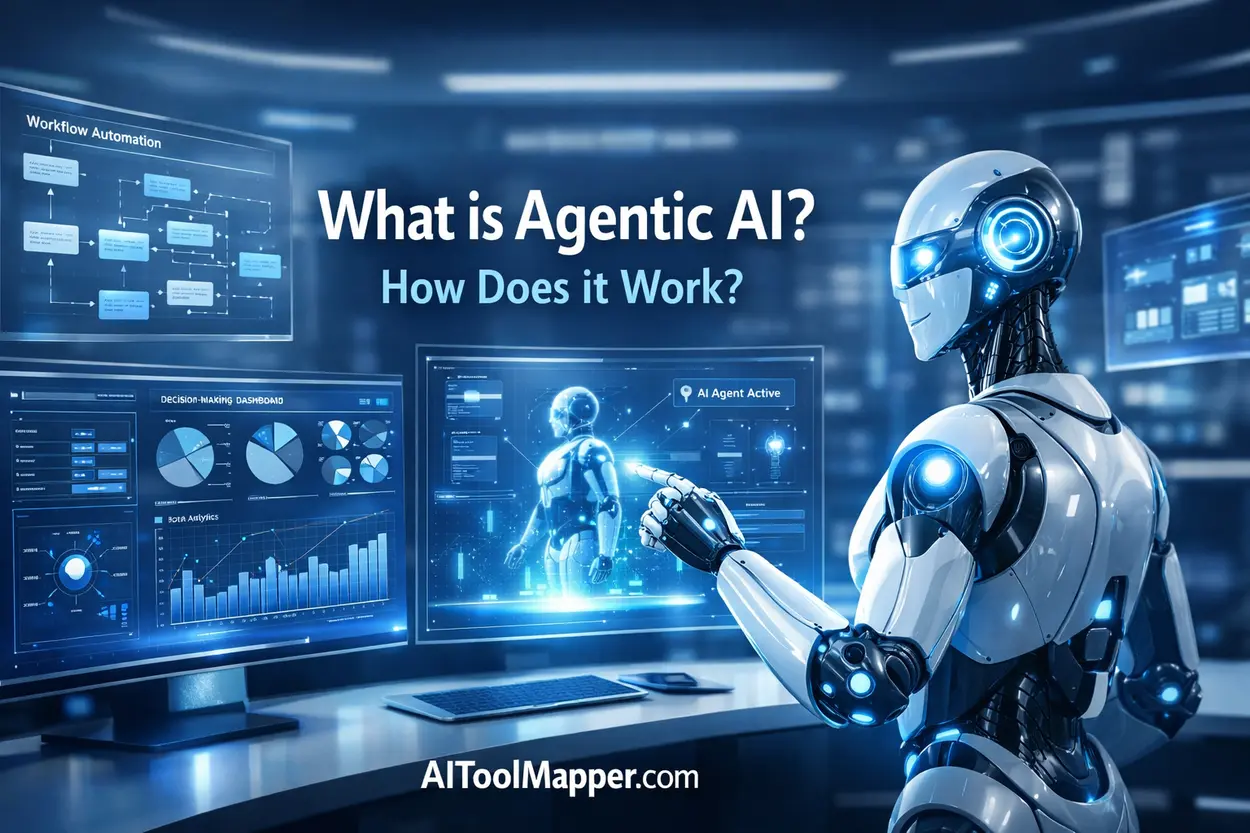
Agentic AI is a new generation of artificial intelligence that can act autonomously. Unlike traditional AI, it doesn’t just respond to prompts—it plans, decides, and executes tasks based on goals.
🧠 Key Takeaways
- Agentic AI is goal-driven and autonomous, unlike traditional AI systems
- It can plan, decide, act, and learn from feedback
- Widely used in automation, finance, healthcare, and marketing
- Combines technologies like machine learning, NLP, and reinforcement learning
- Plays a major role in the future of AI-driven businesses and automation
Understanding Agentic AI (Simple Explanation)
💡 Agentic AI Meaning in Simple Terms
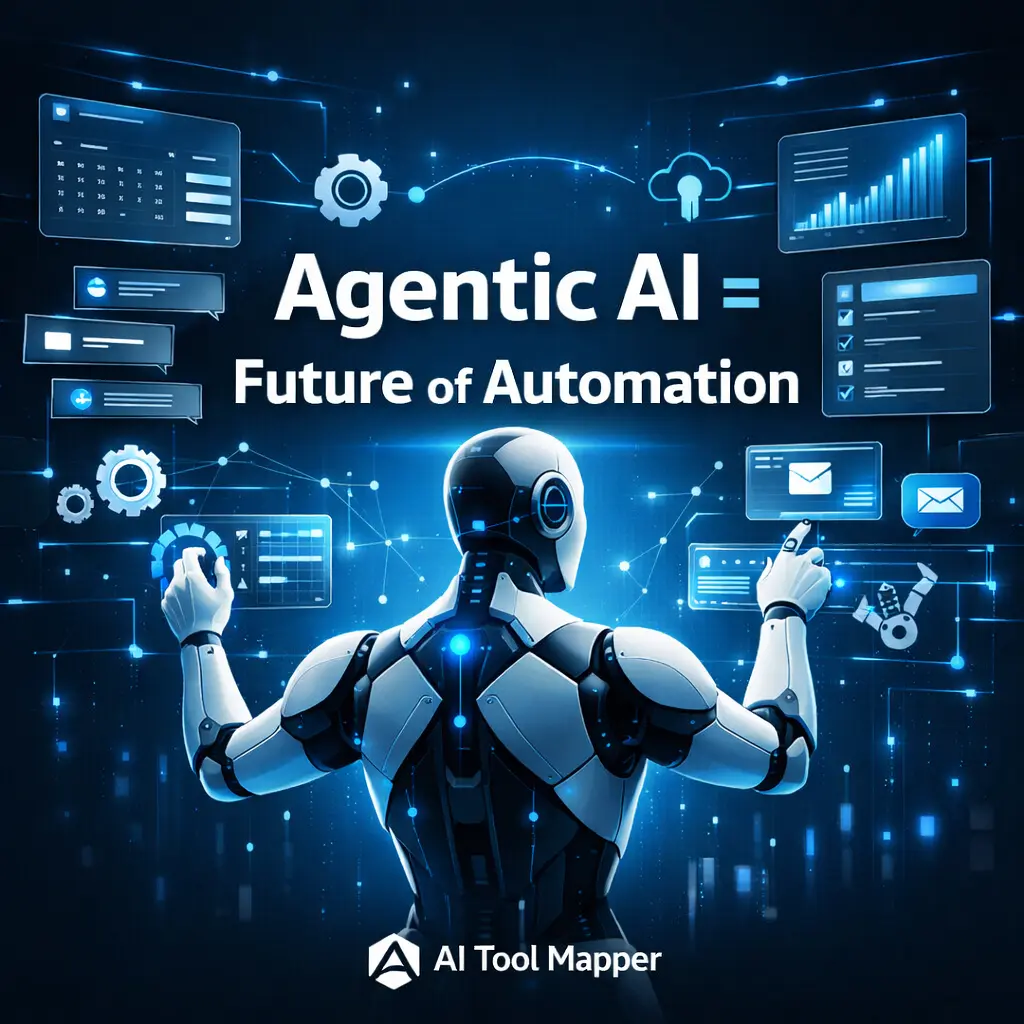
Think of Agentic AI as AI that doesn’t wait for instructions—it takes initiative.
Traditional AI tools respond when you ask something. But Agentic AI? It acts like a decision-maker.
👉 Imagine this:
Instead of asking an AI to write emails one by one, you tell it:
“Manage my entire email workflow.”
And it actually does it.
That’s Agentic AI.
⚙️ Key Characteristics of Agentic AI
1. Autonomy
Agentic AI systems operate independently with minimal supervision.
2. Goal-Oriented Behavior
They are designed to achieve specific objectives, not just complete tasks.
3. Decision-Making Capability
They analyze data and make informed decisions in real-time.
4. Learning & Adaptation
They improve continuously based on feedback and new data.
⚙️ How Does Agentic AI Work?
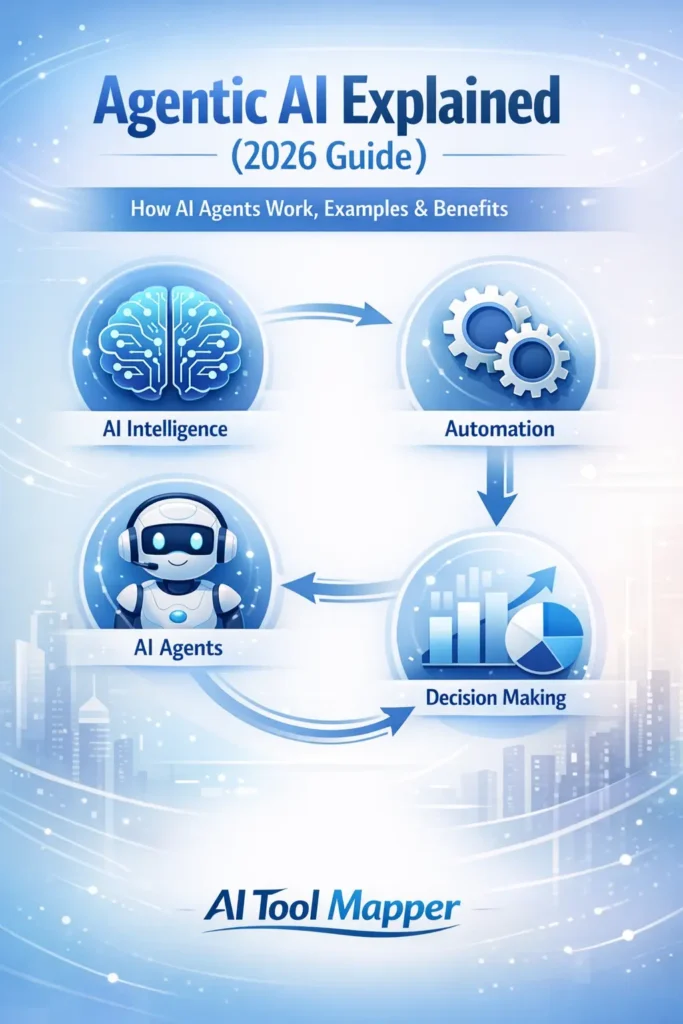
🔄 Step-by-Step Working Process
Understanding how autonomous AI agents work becomes easier when broken into steps:
1. Goal Setting
The system is given a clear objective (e.g., optimize marketing campaigns).
2. Environment Analysis
It gathers data from different sources to understand the context.
3. Decision Making
Using algorithms, it selects the best possible action.
4. Action Execution
It performs tasks automatically—sending emails, adjusting campaigns, etc.
5. Learning from Feedback
It analyzes results and improves future decisions.
🧩 Core Technologies Behind Agentic AI
Agentic AI doesn’t exist in isolation—it’s built on powerful technologies:
🔹 Machine Learning
Helps systems recognize patterns and improve over time.
👉 Learn more: https://developers.google.com/machine-learning/crash-course
🔹 Reinforcement Learning
Enables AI to learn through trial and error.
👉 Reference: https://deepmind.google/education/
🔹 Natural Language Processing (NLP)
Allows AI to understand human language and context.
👉 Guide: https://nlp.stanford.edu/
🔹 Multi-Agent Systems
Multiple AI agents collaborate to solve complex problems.
👉 Research: https://ieeexplore.ieee.org/Xplore/home.jsp
🔄 Agentic AI vs Generative AI
Key Differences Table
| Feature | Agentic AI | Generative AI |
| Purpose | Decision & Action | Content Creation |
| Autonomy | High | Low |
| Behavior | Goal-driven | Prompt-driven |
| Examples | AI agents, automation systems | Chatbots, image generators |
| Output | Actions & results | Text, images, code |
🤔 Which One is Better?
It depends on your use case.
- Need content? → Generative AI
- Need automation and decisions? → Agentic AI
In reality, both work best together.
For example, an AI agent might use generative AI to create content while managing workflows.
🌍 Real-World Examples of Agentic AI
🏠 Everyday Use Cases
- AI assistants managing schedules automatically
- Smart recommendation engines optimizing user experience
- Autonomous customer support systems
🏢 Industry Applications
🏥 Healthcare
AI agents assist in diagnosis and patient monitoring.
💰 Finance
Used in automated trading and fraud detection systems.
📈 Marketing
AI tools automate campaigns, analyze data, and optimize conversions.
👉 Explore AI tools directory on AIToolMapper to find real-world automation tools for marketing and business workflows.
🚀 Benefits of Agentic AI
✅ Increased Efficiency
Automates repetitive tasks and saves time.
✅ Reduced Human Effort
Minimizes manual intervention.
✅ Faster Decision-Making
Processes large data instantly.
✅ Scalability
Handles large operations without additional workforce.
⚠️ Challenges & Risks of Agentic AI
❗ Lack of Control
Autonomous systems may act unpredictably.
⚖️ Ethical Concerns
Decision-making without human oversight raises questions.
📊 Data Dependency
Accuracy depends heavily on data quality.
🧠 Bias in Decisions
AI can inherit biases from training data.
🔮 Future of Agentic AI
The future looks powerful—and a bit disruptive.
🚀 Trends to Watch
- Rise of autonomous businesses
- AI replacing repetitive jobs
- Integration with IoT and robotics
- Advanced multi-agent collaboration systems
Soon, companies won’t just use AI—they’ll run on AI agents.
🛠️ Popular Agentic AI Tools & Platforms
- Autonomous AI agents (AutoGPT-type systems)
- Workflow automation platforms
- Enterprise AI solutions
FAQs
1. What is agentic AI in simple words?
Agentic AI is a type of artificial intelligence that can make decisions and take actions on its own. Instead of just responding to commands, it works toward goals, analyzes situations, and completes tasks automatically with minimal human involvement.
2. How is agentic AI different from traditional AI?
Traditional AI follows predefined rules and responds to inputs, while agentic AI is more autonomous. It can set goals, make decisions, and adapt based on outcomes, making it far more flexible and capable in complex, real-world scenarios.
3. Is agentic AI the future of automation?
Yes, agentic AI is considered the future of automation because it goes beyond simple task execution. It can manage workflows, make decisions, and continuously improve performance, making businesses more efficient and scalable.
4. What are examples of agentic AI?
Examples include autonomous customer service agents, AI-powered trading systems, smart assistants that manage tasks independently, and workflow automation tools that optimize business operations without human intervention.
5. Can agentic AI replace humans?
Agentic AI can replace repetitive and routine tasks but not human creativity, empathy, or strategic thinking. It is more likely to augment human capabilities rather than fully replace humans in most industries.
6. How does agentic AI work step by step?
Agentic AI works by setting a goal, analyzing its environment, making decisions based on available data, executing actions, and then learning from feedback. This continuous loop allows it to improve performance over time and handle complex, multi-step tasks with minimal human involvement.
7. What are the main benefits of agentic AI?
The main benefits of agentic AI include increased efficiency, faster decision-making, reduced human effort, and improved scalability. It can automate repetitive tasks, optimize workflows, and adapt to changing conditions, helping businesses operate more effectively in dynamic environments.
8. What industries use agentic AI the most?
Agentic AI is widely used in industries such as healthcare, finance, marketing, logistics, and e-commerce. It helps with tasks like automated trading, personalized recommendations, customer support, and supply chain optimization, making operations faster and more intelligent.
9. What is the difference between agentic AI and generative AI?
Agentic AI focuses on decision-making and task execution, while generative AI is designed for creating content like text, images, or code. Agentic AI is goal-driven and autonomous, whereas generative AI typically requires prompts and human guidance to produce outputs.
10. Are autonomous AI agents safe to use?
Autonomous AI agents can be safe when properly designed and monitored, but they also come with risks such as bias, lack of transparency, and unintended actions. Implementing ethical guidelines, human oversight, and robust data practices is essential to ensure safe and responsible use.
The Rise of Agentic AI
Agentic AI isn’t just another buzzword—it’s a shift in how machines interact with the world.
We’re moving from tools that assist to systems that act.
And that changes everything.
Businesses that adopt agentic AI early will gain a massive competitive advantage. Those that don’t? They may struggle to keep up.