In the past decade, content creation has undergone a revolutionary transformation. From manually writing blogs and designing graphics to crafting social media campaigns, the process was traditionally labor-intensive, time-consuming, and dependent on human creativity alone. But today, generative AI content creation is redefining how content is developed, distributed, and optimized. Businesses, marketers, and creators are increasingly adopting AI content generation tools to produce high-quality material faster and at scale. With the ability to generate text, images, videos, and even interactive content, AI is not just a productivity enhancer—it is a game-changer in the content ecosystem. The rise of AI writing tools has unlocked opportunities for personalization, consistency, and scalability, making it easier than ever for brands to engage audiences while saving time and cost.
Key Takeaways
- Generative AI accelerates and scales content creation while maintaining quality.
- Best used in collaboration with human creativity for optimal results.
- Impacts SEO, marketing, and overall digital strategy positively.
Future trends point toward personalized, multimodal, AI-powered content solutions.
What Is Generative AI in Content Creation?
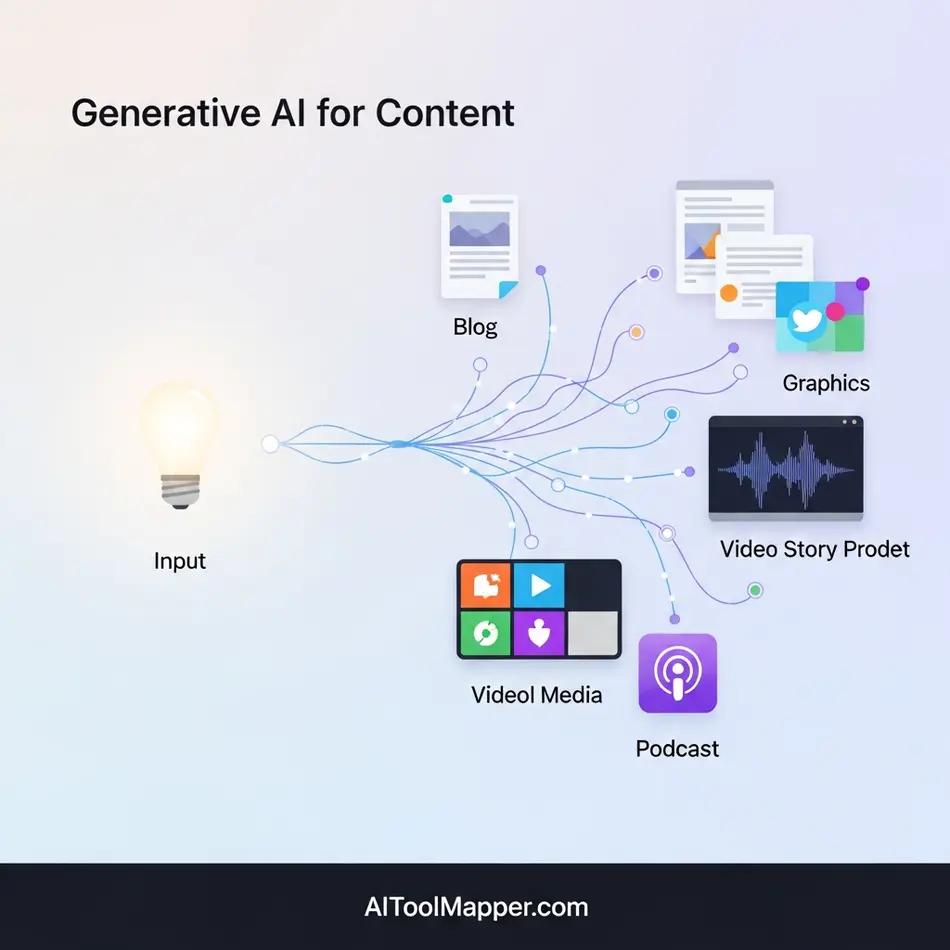
Generative AI refers to artificial intelligence systems capable of creating original content such as text, images, videos, and audio based on input prompts. Unlike traditional AI, which typically analyzes data or automates repetitive tasks, generative AI creates new content from scratch using models trained on vast datasets. For instance, AI content creation tools can write articles, generate social media captions, and even design visual graphics by leveraging AI text generation and creative algorithms.
Traditional AI works reactively—responding to commands or analyzing patterns. In contrast, generative AI works proactively, producing content that mimics human creativity while maintaining consistency. Platforms like OpenAI’s GPT models or image generation tools such as DALL·E showcase how AI can collaborate with humans to accelerate content production.
How Generative AI Is Changing the Content Creation Process
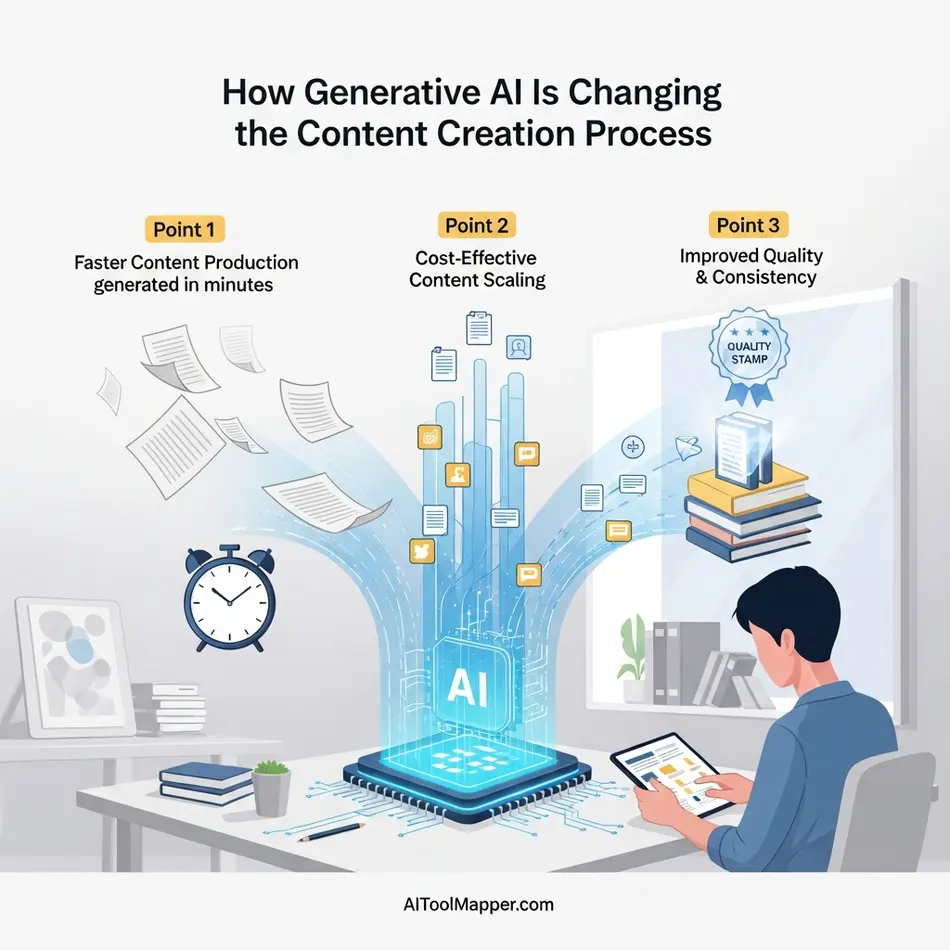
1. Faster Content Production
One of the most significant advantages of AI content generation is speed. Writers and marketers can produce drafts, outlines, and ideas in minutes instead of hours or days. AI can quickly research, summarize information, and provide structured content ready for human refinement. For example, generating an SEO-optimized blog with AI writing tools allows creators to focus on creative strategy instead of repetitive tasks.
2. Cost-Effective Content Scaling
AI enables brands to scale content creation without a proportional increase in resources. Startups and small businesses, in particular, benefit from cost savings, as fewer human resources are needed to produce high-quality material. AI tools help create newsletters, social media campaigns, or product descriptions efficiently, making content strategies more budget-friendly.
3. Improved Content Quality & Consistency
Generative AI enhances grammar, tone, and structure, ensuring content is both accurate and professional. AI tools maintain consistency across multiple formats and channels, which is particularly valuable for large-scale campaigns. The integration of AI writing tools can help brands standardize messaging while preserving a unique voice.
Popular Use Cases of Generative AI for Content
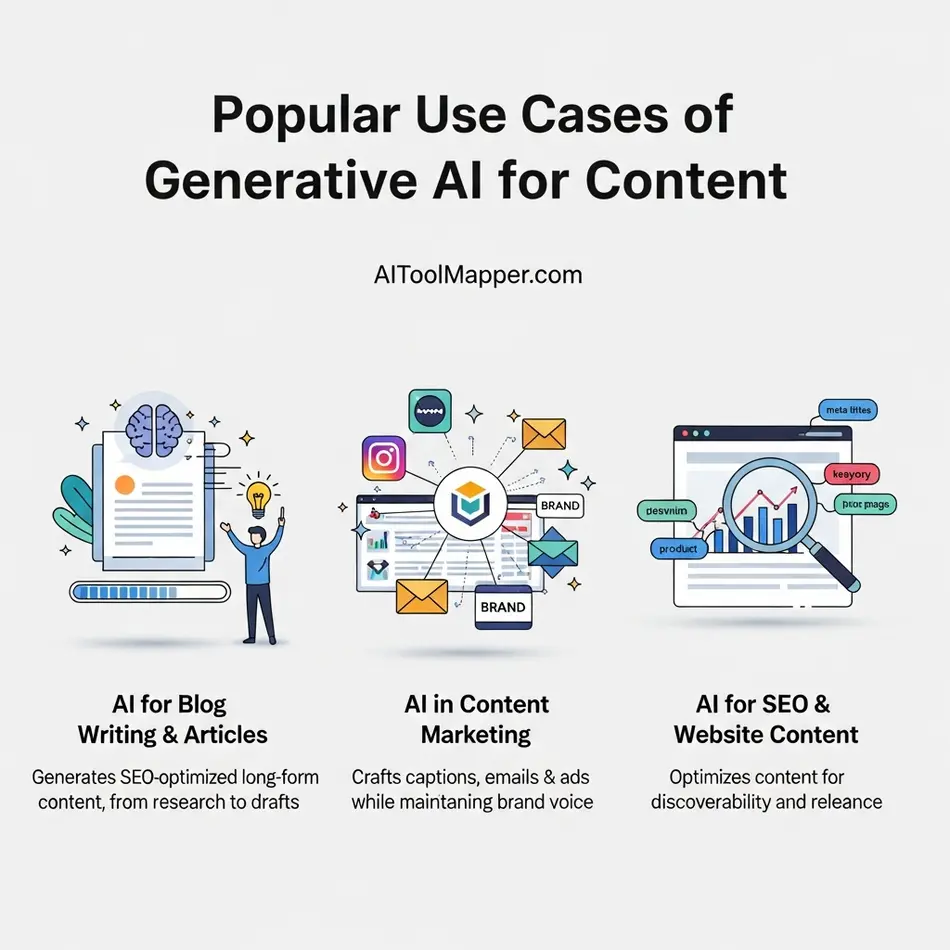
AI for Blog Writing & Articles
AI content generation tools can produce long-form, SEO-optimized blogs with minimal human input. From research summaries to full drafts, AI speeds up content creation, allowing writers to focus on strategy and creativity.
AI in Content Marketing
Generative AI is revolutionizing digital marketing. AI tools can craft social media captions, email marketing campaigns, and ad copy quickly, maintaining brand tone and style. Platforms like Jasper AI or Writesonic provide marketers with templates and automated suggestions for higher engagement.
AI for SEO & Website Content
AI also helps optimize content for search engines by generating meta titles, descriptions, and product pages. This enhances discoverability while saving time and improving content relevance.
Top Benefits of Generative AI for Content Creators
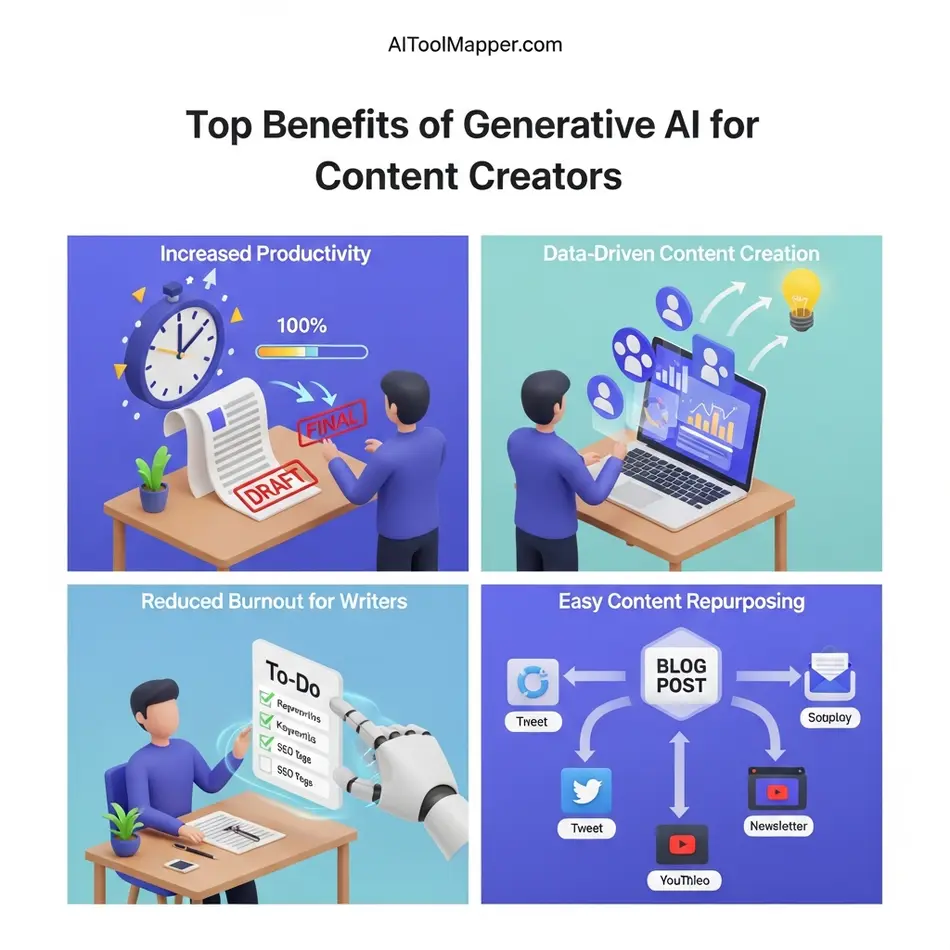
- Increased Productivity: AI accelerates content creation, reducing hours spent on drafting and editing.
- Data-Driven Content Creation: AI uses insights and analytics to guide content strategy, improving relevance and audience engagement.
- Reduced Burnout for Writers: By handling repetitive or time-consuming tasks, AI allows writers to focus on creativity.
- Easy Content Repurposing: AI can transform blogs into social posts, videos, or newsletters with minimal effort.
Generative AI vs Human Content Creation
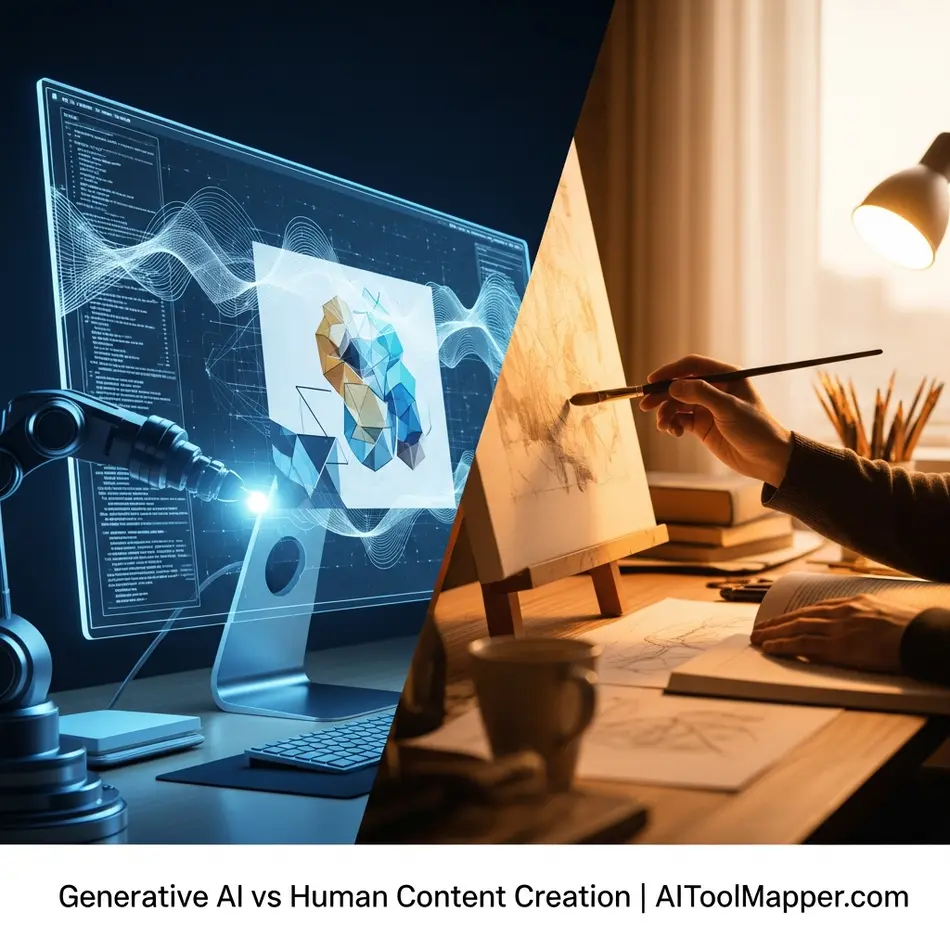
AI-generated content offers speed, scalability, and consistency, but human creativity remains indispensable. The best results come from a hybrid approach—humans refine AI drafts, add personal storytelling, and ensure cultural context. This collaboration enhances efficiency without compromising authenticity.
Impact of Generative AI on SEO & Content Strategy
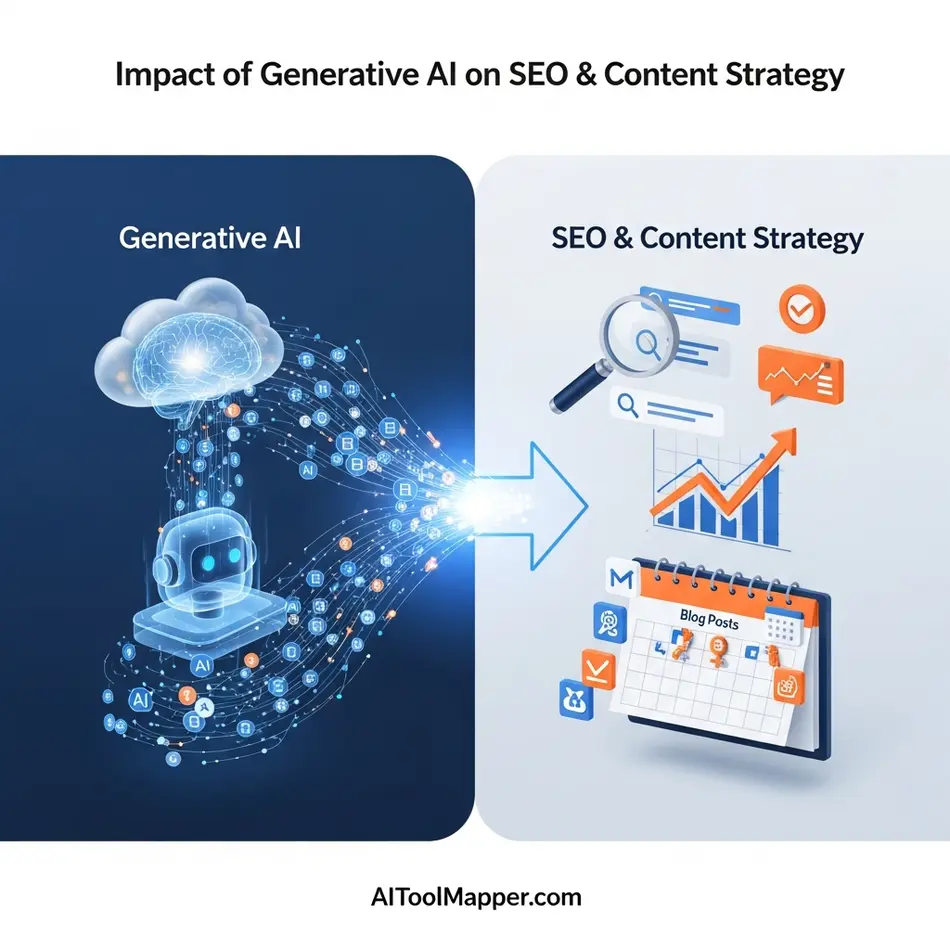
AI is transforming SEO workflows. Tools can analyze keyword trends, generate AI-friendly content for Google SGE, and suggest optimizations in real-time. Generative Engine Optimization (GEO) ensures AI-generated content aligns with search intent while maintaining readability and engagement.
Challenges & Limitations of Generative AI Content
While promising, AI content creation has drawbacks:
- Risk of plagiarism or low originality.
- Over-optimization, making content feel robotic.
- Need for human editing and fact-checking to maintain accuracy and trustworthiness.
Future of Content Creation with Generative AI
The future is bright and transformative. We expect:
- Personalized & multimodal content combining text, video, and interactive media.
- AI-powered content marketplaces connecting creators and brands.
- Advancements in Generative AI trends 2025 will push creative boundaries further.
Best Practices for Using Generative AI in Content Creation
- Use AI as an assistant, not a replacement.
- Optimize content for E-E-A-T (Experience, Expertise, Authoritativeness, Trustworthiness).
- Combine AI tools with human insights to preserve authenticity and originality.
FAQs – Generative AI & Content Creation
1. What is generative AI content creation?
Generative AI content creation uses artificial intelligence to produce original text, images, or videos from user prompts. It helps automate content production, improve efficiency, and provide creative ideas, while still requiring human oversight to ensure accuracy, tone, and relevance.
2. Is AI-generated content good for SEO?
Yes. When properly optimized, fact-checked, and enriched with keywords, AI-generated content can boost search rankings, drive traffic, and increase engagement. However, quality control and human editing remain essential to maintain credibility and avoid duplication or low-value content issues.
3. Can AI replace human writers?
Not completely. AI can speed up writing, provide drafts, and generate scalable content, but it lacks human intuition, creativity, and nuanced understanding. Combining AI with human expertise ensures high-quality, engaging, and contextually accurate content.
4. What are the best AI content creation tools?
Top AI content tools include OpenAI’s GPT models, Jasper AI, Writesonic, Copy.ai, and Canva AI. These platforms help create text, visuals, and marketing content efficiently, each offering unique features such as style customization, SEO integration, and multimedia generation.
5. How much does AI content generation cost?
Costs vary by tool and plan. Some offer free basic versions, while premium plans range from $20 to $100+ per month. Pricing typically depends on usage limits, AI model access, and additional features like SEO tools or team collaboration.
6. Is AI content plagiarism-free?
Most AI tools generate original content, but outputs may occasionally resemble existing material. Always run plagiarism checks and edit to ensure uniqueness, especially for professional or published content.
7. Can AI write in multiple languages?
Yes. Advanced AI models can create content in numerous languages, including English, Spanish, French, Hindi, and more. Accuracy improves when prompts are clear, but human review is recommended for cultural nuances and localization.
8. Does AI content creation save time?
Absolutely. AI can draft articles, social media posts, and visuals in minutes, drastically reducing manual effort. It streamlines brainstorming, outlines, and repetitive tasks, allowing content creators to focus on strategy, quality, and creative refinement.
9. Can AI generate images and videos?
Yes. AI tools like Canva AI, DALL·E, and Runway can produce original visuals and videos based on prompts. These tools accelerate design, enhance storytelling, and complement written content, but human input ensures alignment with branding and style.
10. Is AI content always accurate?
No. AI may produce errors, outdated facts, or misleading statements. Fact-checking and human editing are essential to maintain credibility, especially for technical, medical, or business-related content.
11. Do AI tools require technical skills?
Not necessarily. Most AI content tools are designed for beginners, with user-friendly interfaces, templates, and guided prompts. Basic familiarity with writing or digital marketing helps, but advanced coding is generally not required.
12. Can AI help with content marketing strategy?
Yes. AI can analyze trends, suggest topics, generate SEO-friendly drafts, and optimize content calendars. Combined with human insights, it supports effective campaigns, boosts engagement, and ensures consistent messaging across channels.
Conclusion
Generative AI is reshaping content creation by making it faster, more scalable, and data-driven. Yet, human expertise remains essential to preserve authenticity, storytelling, and cultural nuance. By adopting AI wisely, creators and marketers can unlock new levels of productivity and creativity. Explore the latest AI content creation tools and strategies on AI Tool Mapper to stay ahead in this evolving landscape.
Found this helpful? Save it to your Pinterest board!