

Future of work is here. AI agents are no longer just a tech buzzword—they are transforming how businesses operate, automate, and scale. From small startups to large enterprises, organizations are increasingly leveraging AI agents for business to streamline operations, enhance productivity, and gain a competitive edge in 2026. But what exactly are AI agents, how do they work, and why are they suddenly everywhere? In this article, you’ll discover everything you need to know about AI agents, their benefits, use cases, challenges, and the future of business automation AI.
Key Takeaways
- AI agents automate, adapt, and execute tasks autonomously.
- Businesses benefit from increased productivity, faster decision-making, and operational scaling.
- Use cases span marketing, sales, HR, operations, and customer support.
- AI agents outperform traditional automation tools due to flexibility and learning capabilities.
- Early adoption provides strategic advantages and prepares organizations for 2026 trends.
Why AI Agents Are Suddenly Everywhere
AI agents are intelligent programs capable of performing tasks autonomously with minimal human intervention. Think of them as digital coworkers that can analyze data, make decisions, and execute actions in real-time. Unlike traditional AI tools that provide recommendations or analytics, AI agents actively operate within business workflows, making them game-changers in enterprise AI.
Businesses are adopting AI agents now more than ever due to advancements in large language models (LLMs), machine learning, and integration-ready AI platforms. With AI automation agents, companies can automate repetitive processes, improve decision-making speed, and free employees to focus on strategic tasks. From marketing automation to workflow management, AI agents for business are reshaping productivity and redefining the future of work.
What Are AI Agents?

An AI agent is a software entity designed to perform specific tasks autonomously by interacting with data and systems. Unlike static AI tools, AI agents are dynamic—they learn, adapt, and make decisions based on new information.
AI Tools vs AI Agents
Traditional AI tools often provide analytics, recommendations, or insights. For instance, a reporting tool can tell you your weekly sales trend. An autonomous AI agent, on the other hand, can proactively generate reports, send alerts, optimize campaigns, and even execute business strategies without human intervention.
Examples of AI Agents:
- Chat Agents: Handle customer support or sales inquiries in real-time.
- Workflow Agents: Automate repetitive tasks in HR, finance, or operations.
- Decision Agents: Analyze data to make strategic decisions like inventory management or ad bidding.
By adopting autonomous AI agents, businesses can achieve continuous productivity, improved workflow efficiency, and actionable intelligence at scale.
How AI Agents Work in Real Business Environments
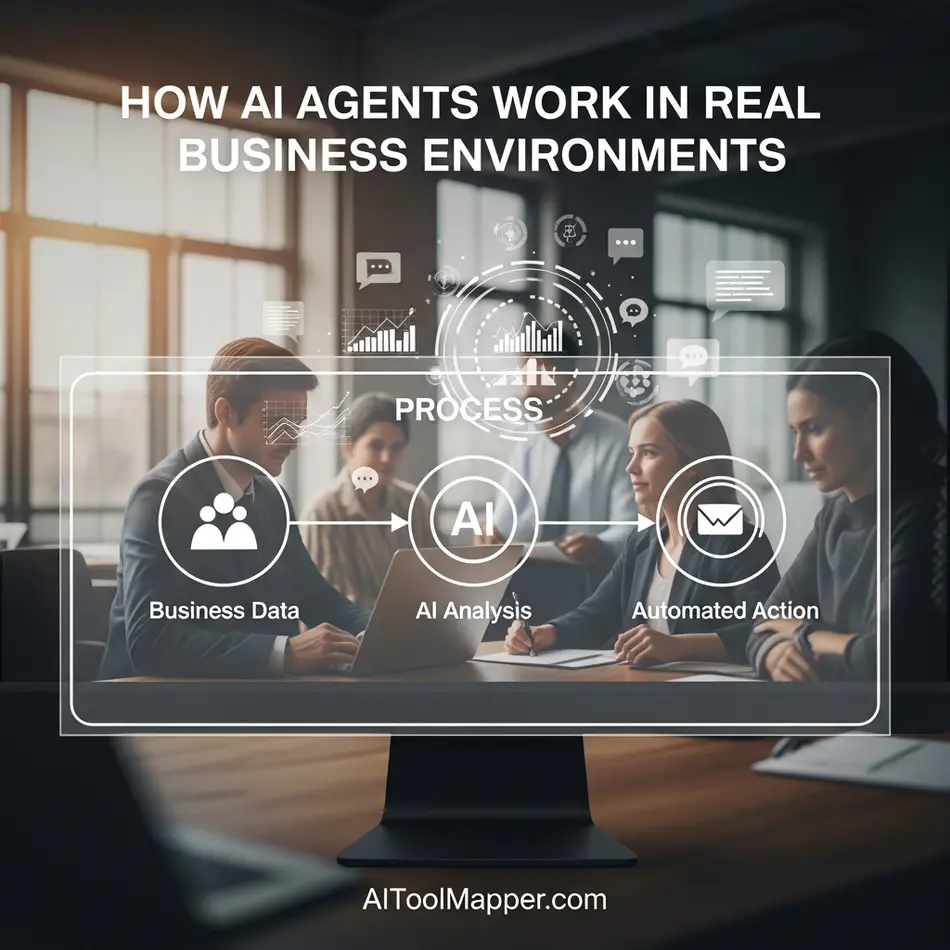
At their core, AI agents follow a simple loop: data input → decision → action. Here’s how they operate:
- Data Collection: AI agents gather data from multiple sources, including CRM systems, ERP platforms, SaaS applications, and even social media.
- Analysis & Decision-Making: Using machine learning models or LLMs, the agent evaluates data, predicts outcomes, and determines the best course of action.
- Execution: The agent performs the task autonomously, whether it’s sending an email, updating records, or adjusting a marketing campaign.
Integration is key. Modern AI agent platforms connect seamlessly with existing enterprise tools, making adoption smoother and less disruptive. For example, AI agents in business can automate lead scoring in a CRM, trigger workflows in project management tools, or personalize customer communication in marketing automation platforms.
Key Benefits of AI Agents for Businesses

Increased Productivity & Efficiency
AI agents can handle repetitive and time-consuming tasks, allowing teams to focus on high-value activities. By automating routine processes, organizations experience a significant boost in overall efficiency.
Cost Reduction & Operational Scaling
Hiring additional staff or outsourcing tasks can be costly. Business automation AI enables companies to scale operations without proportional increases in headcount, reducing operational costs while maintaining quality.
Faster Decision-Making
Decision-making is faster with AI agents because they can analyze large datasets in real-time, provide actionable insights, and implement strategies without waiting for manual approvals.
24/7 Automation & Support
Unlike humans, AI agents never sleep. They provide round-the-clock automation and customer support, ensuring businesses can operate seamlessly across time zones and global markets.
By leveraging these benefits of AI agents for business, organizations gain measurable productivity gains and strategic advantages over competitors still reliant on traditional workflows.
Popular Use Cases of AI Agents Across Industries

AI Agents in Marketing Automation
AI agents can automate content scheduling, optimize ad campaigns, and personalize email marketing at scale. For instance, a marketing automation AI agent can analyze engagement metrics and adjust campaign strategies in real-time for maximum ROI.
AI Agents in Sales & Customer Support
Sales teams can use AI agents to automate lead follow-ups, scoring, and pipeline updates. Customer support agents can handle repetitive queries, provide instant responses, and escalate complex cases to humans efficiently.
AI Agents in Operations & Workflow Automation
AI agents streamline HR onboarding, expense approvals, inventory management, and supply chain optimization, ensuring operational workflows run smoothly with minimal human intervention.
AI Agents in HR & Recruitment
AI agents can screen resumes, schedule interviews, and even perform preliminary candidate assessments, reducing hiring time and improving recruitment efficiency.
These AI agents use cases illustrate how AI in workflow automation can transform businesses across sectors, from marketing to HR and beyond.
AI Agents vs Traditional Automation Tools
Traditional automation relies on rigid, rule-based workflows. If a scenario changes, the system often breaks or requires human intervention. AI agents, however, are adaptive and capable of learning from data, making them more flexible and future-ready.
- Flexibility & Learning Capability: AI agents continuously improve through experience and feedback loops.
- Proactive Action: They can anticipate issues, suggest solutions, and act autonomously, unlike static scripts or macros.
This is why AI agents vs traditional automation is a critical distinction—intelligent agents are the future of scalable business automation.
Challenges & Risks of Implementing AI Agents
While AI agents offer significant advantages, businesses must consider challenges:
- Data Privacy & Security: Agents access sensitive data, making robust security measures essential.
- Cost & Infrastructure: Initial implementation can be expensive, particularly for enterprise-grade solutions.
- Skill Gap & Adoption Challenges: Teams may need training to interact effectively with AI agents.
Proper planning and implementing AI agents with structured guidelines can mitigate these risks and maximize ROI.
How Businesses Can Start Using AI Agents
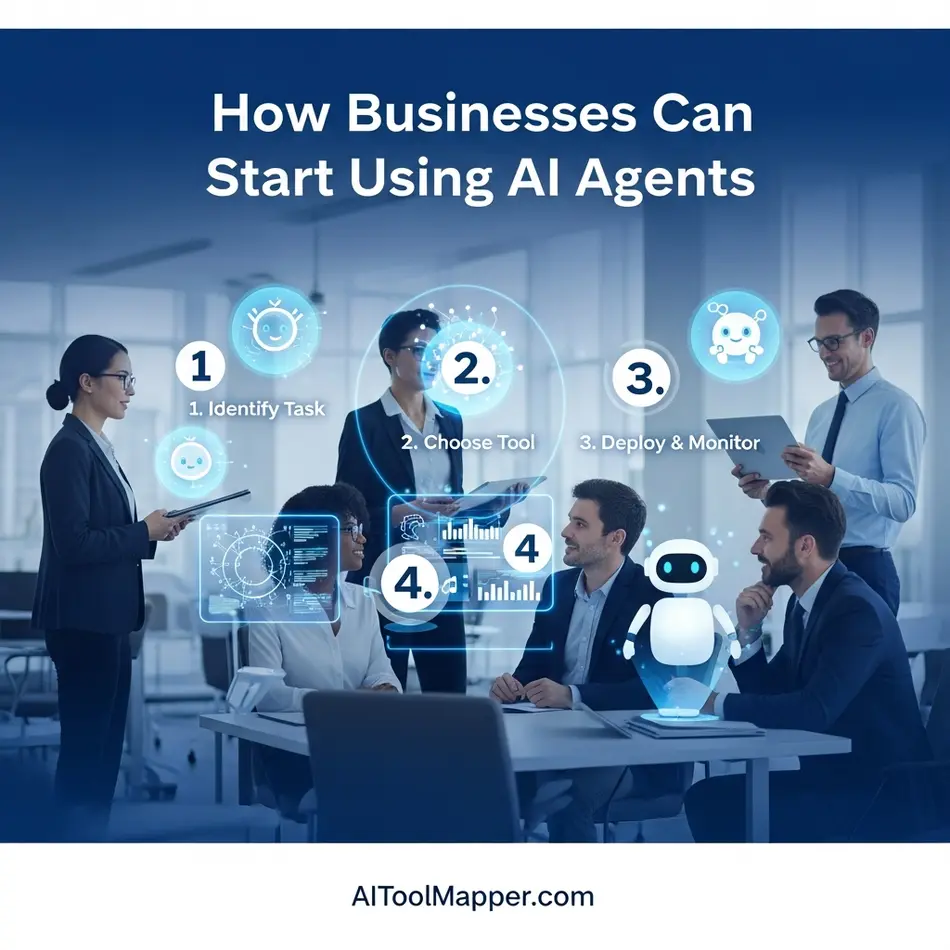
Step-by-Step Beginner Roadmap
- Identify repetitive tasks and high-impact workflows.
- Choose AI agent platforms compatible with existing tools.
- Start small with pilot projects, then scale gradually.
Choosing the Right AI Agent Platform
Look for platforms offering flexibility, integrations with your software ecosystem, and strong support. Some popular AI agent platforms focus on marketing, sales, or operations, so choose based on business needs.
Small Business vs Enterprise Approach
Small businesses may prioritize cost-effective agents for marketing automation or customer support. Enterprises may deploy multi-agent systems across departments for maximum efficiency.
Starting early gives organizations a competitive edge in the 2026 AI agents adoption wave.
The Future of AI Agents in Business (2026 & Beyond)
AI agents are evolving rapidly, and their adoption is set to accelerate in 2026:
- Multi-Agent Systems: Teams of AI agents collaborating on complex tasks.
- Human-AI Collaboration: Agents assisting humans rather than replacing them, creating a hybrid workforce.
- Smarter Decision-Making: Advanced LLMs enable agents to tackle strategic decisions with minimal human oversight.
The future of AI agents points toward more autonomous, intelligent, and collaborative workflows, offering unprecedented business scalability.
What This Means for Business Owners & Decision Makers
Early adoption of AI agents provides:
- Strategic Advantage: Faster operations, better insights, and data-driven decisions.
- Competitive Edge: Businesses leveraging AI agents can outperform competitors reliant on manual processes.
- Scalability & Flexibility: AI agents allow companies to adapt quickly to changing market conditions.
Business leaders ignoring AI agents risk falling behind in a rapidly automating marketplace.
FAQs
1. What are AI agents used for in business?
AI agents streamline operations by automating repetitive tasks, enhancing workflow efficiency, improving data-driven decision-making, and supporting departments like marketing, sales, HR, and operations. They save time, reduce errors, and allow teams to focus on strategic work.
2. Are AI agents better than automation tools?
Yes. Unlike standard automation tools, AI agents learn from data, adapt to changes, and make proactive decisions. They go beyond predefined rules, offering intelligent solutions that can scale with business needs, improving efficiency and responsiveness over traditional automation.
3. Can small businesses use AI agents?
Absolutely. Small businesses can leverage affordable AI agents for marketing, customer support, and workflow optimization. Even with limited resources, AI agents can automate repetitive tasks, enhance productivity, and deliver insights, making them accessible and valuable for growth-focused small enterprises.
4. Are AI agents expensive?
Costs vary widely. Enterprise-level AI agents can be costly, but small-scale solutions are budget-friendly. The investment is often justified by efficiency gains, reduced labor costs, and improved customer satisfaction, offering significant ROI for businesses of all sizes.
5. How do AI agents improve customer service?
AI agents provide instant responses, handle routine queries, and escalate complex issues to humans. By ensuring consistent, 24/7 support, they enhance customer satisfaction, reduce wait times, and allow support teams to focus on high-value tasks, creating a better overall experience.
6. Do AI agents require technical expertise?
Not always. Many modern AI agents come with user-friendly interfaces and pre-built workflows. Businesses can deploy them with minimal technical knowledge, though customization for advanced tasks may require some expertise or guidance from AI specialists.
7. Can AI agents integrate with existing software?
Yes. AI agents are designed to integrate with CRM, marketing, HR, and other business platforms. Seamless integration allows them to automate processes, synchronize data, and work alongside existing systems without major infrastructure changes.
8. Are AI agents secure to use?
Most AI agents follow strict security protocols, including encryption and compliance with data privacy regulations. Businesses should choose agents with robust security features to ensure sensitive information remains protected from breaches or misuse.
9. How quickly can businesses see results with AI agents?
Results depend on the tasks and complexity of deployment. Simple automations can show immediate time savings, while more advanced analytics or workflow optimizations may take a few weeks. Overall, efficiency and ROI are typically noticeable within the first few months.
10. What industries benefit most from AI agents?
AI agents are versatile and benefit industries like retail, healthcare, finance, manufacturing, and customer service. Any sector with repetitive tasks, data processing, or customer interactions can leverage AI agents to boost efficiency, reduce costs, and improve decision-making.
Conclusion: AI Agents Are Not Optional Anymore
AI agents are transforming the business landscape. From automating mundane tasks to enhancing decision-making, AI agents for business are becoming essential for competitiveness and growth. Organizations adopting AI agents now can scale faster, reduce operational costs, and prepare for the future of intelligent business automation.
Explore top AI tools and platforms on AI Tool Mapper to find the right AI agents for your business.
Found this helpful? Save it to your Pinterest board!