If you have spent any time doing online research lately, you already know the problem. There is too much content and not enough hours in the day to consume it all. A single topic search on Google can return dozens of long-form articles, several research papers, and a handful of hour-long YouTube videos before you even scratch the surface.
According to research published by Magai on AI summarization and workflow efficiency, knowledge workers spend an average of 3.6 hours daily just searching for information and process over 8,200 words per day. That is a staggering cognitive load, and it is only getting heavier as digital content continues to grow. Separate data from Jenova AI’s 2026 analysis of summarization tools shows that approximately 58% of U.S. adults now regularly refer to AI-generated summaries when conducting online searches — a figure that tells you exactly where information habits are heading.
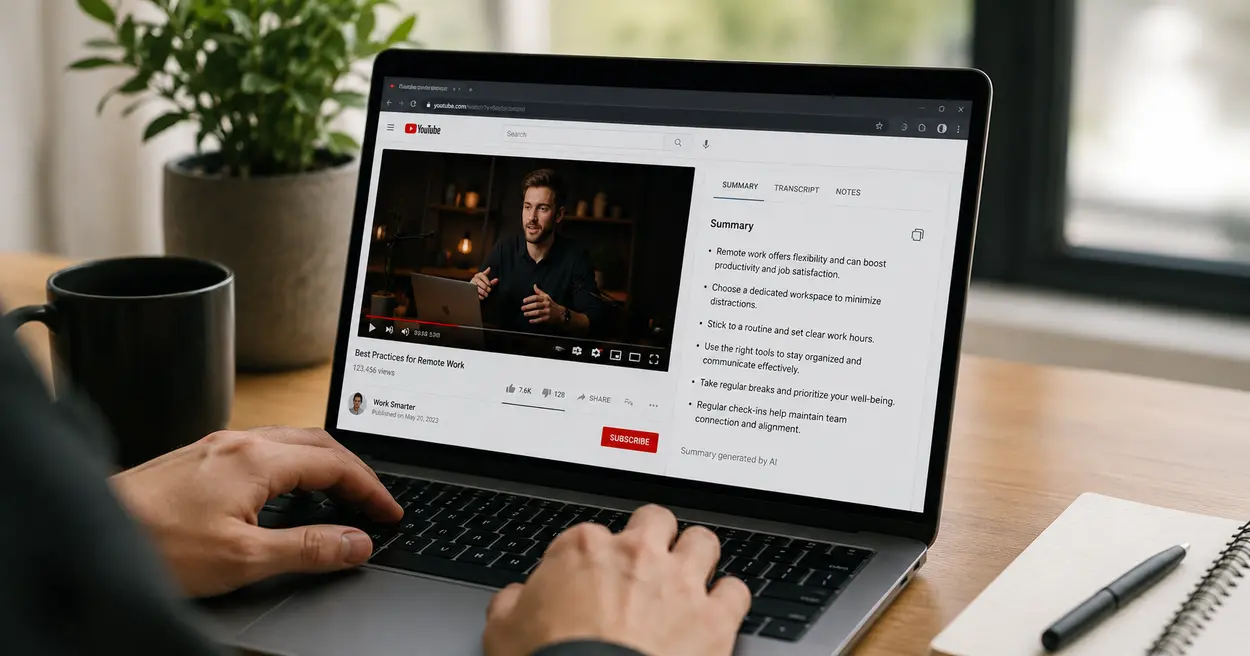
This is where tools like Solid Point AI have entered the picture. Solid Point (also written as SolidPoint) is an AI-powered summarization platform that promises to cut through the noise by turning lengthy YouTube videos, web articles, Reddit discussions, and research papers into concise, digestible summaries. The idea is simple: instead of watching a 45-minute lecture or reading a 6,000-word report, you get the key takeaways in minutes.
But does Solid Point AI actually deliver on that promise? Is the summarization accurate enough to rely on? Who benefits most from using it, and is it worth your time compared to other AI tools already available?
In this Solid Point AI review, you will get a complete breakdown of what the platform does, how it works, its key features, honest pros and cons, a step-by-step usage guide, real-world use cases, pricing information, and a comparison against competing tools. By the end, you will have everything you need to decide whether Solid Point AI belongs in your workflow.
What Is Solid Point AI?
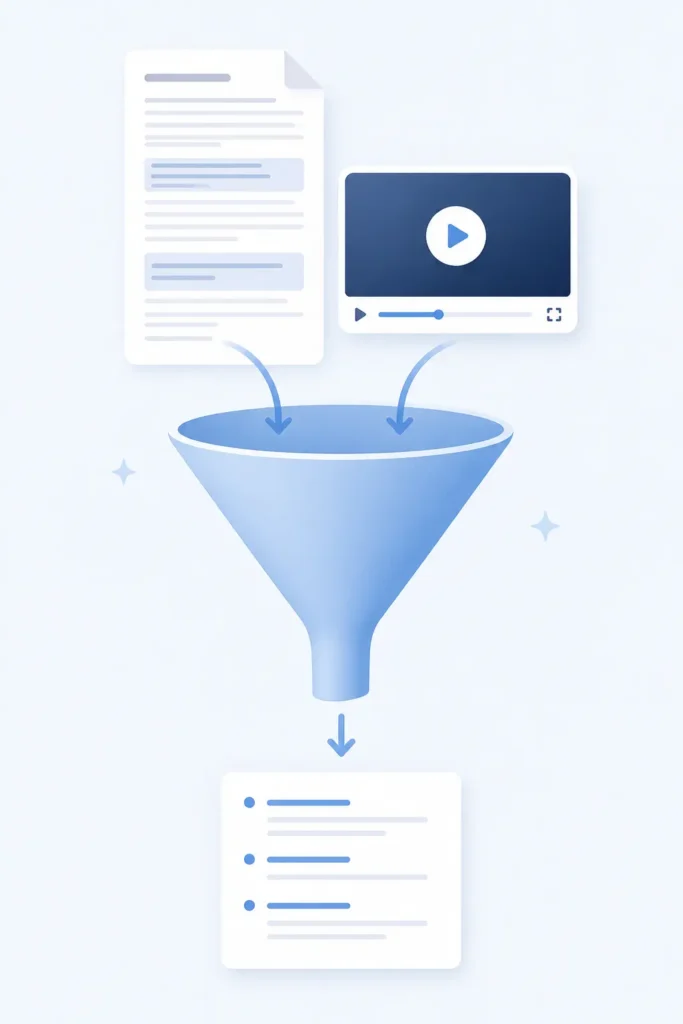
Solid Point AI (accessed at solidpoint.ai) is an AI-powered content summarization platform designed to help users extract key information from multiple types of digital content without needing to consume the entire source material. At its core, the tool takes long-form content — whether a YouTube video, a web article, a Reddit thread, or an academic paper from arXiv — and uses artificial intelligence to condense it into a clean, structured summary of the most important points.
According to its listing on OpenTools, SolidPoint AI is described as “a cutting-edge platform designed to simplify content consumption by efficiently summarizing vast amounts of information from multiple sources.” The platform stands out not just for summarizing text but for handling video content as well — a capability that genuinely sets it apart from many basic text-only summarizers.
What Problem Does Solid Point AI Solve?
The core problem Solid Point AI addresses is information overload. Researchers, students, and professionals routinely face situations where they need to process far more content than time realistically allows. A student reviewing multiple educational videos before an exam, a content creator who needs to survey dozens of articles for a piece, a professional who wants to stay up to date on industry trends — these users all share the same challenge. Reading or watching everything in full is not practical.
Solid Point AI’s answer is to act as an intelligent filter: it analyzes the source material, identifies the key ideas, and presents them in a form that takes minutes rather than hours to read.
Supported Content Types
One of Solid Point AI’s more notable characteristics is its multi-source support. The platform can summarize:
- YouTube videos — including timestamped key points
- Web articles and blog posts — via URL input
- Reddit posts and comment threads
- arXiv research papers — particularly useful for academic users
- General documents and text
This multi-format capability, highlighted by Siteefy in its product overview, makes it more flexible than narrowly focused tools that only handle one content type.
Who Should Use Solid Point AI?
The platform is genuinely useful across a broad range of users, but it tends to deliver the most value to specific groups:
Students — Particularly those dealing with lengthy lecture videos, educational YouTube channels, or research papers before exams. The flashcard generation feature (discussed below) adds an extra layer of academic value.
Researchers — Academics and independent researchers who need to survey large volumes of literature or stay current on a topic without reading every paper in full.
Content Creators — Writers, YouTubers, and bloggers who need to gather information and insights from multiple sources before producing their own content.
Marketers and Analysts — Professionals who need to quickly digest industry reports, competitive content, or market discussion threads.
Professionals and Executives — Business users who want to stay informed without spending excessive time on reading or video consumption.
Casual Learners — Anyone who uses YouTube to learn new topics and wants a faster way to absorb the material.
How Does Solid Point AI Work?
Before diving into the features, it helps to understand the basic process behind what Solid Point AI is actually doing when it generates a summary.
At a high level, the platform uses natural language processing (NLP) and machine learning algorithms to analyze content. When you submit a YouTube URL, for example, the tool accesses the video’s transcript (either from auto-generated captions or existing closed captions), then runs that transcript through its AI model. The model identifies which sentences, phrases, and passages carry the most informational weight — the key claims, main arguments, data points, and conclusions — and builds a condensed version that captures the essential meaning without the filler.
For text-based content like articles or Reddit posts, the process is similar: the AI reads the full text, maps out the semantic structure, and extracts the most meaningful segments.
As research.com explains in its analysis of AI summarization in education, modern AI-driven summarization tools have reached a point where they can produce “clearer and contextually more appropriate extracts — understanding nuanced academic language,” particularly for structured educational content.
There are two main approaches AI summarizers can use:
Extractive summarization — The AI selects actual sentences from the source material and presents them as the summary. This tends to be more accurate but can feel fragmented.
Abstractive summarization — The AI generates new sentences that paraphrase and synthesize the source material. This reads more naturally but introduces more room for slight inaccuracies.
Solid Point AI uses a combination of both approaches depending on the content type, which is why results can vary somewhat between a well-structured YouTube lecture and a complex academic paper.
The User Workflow
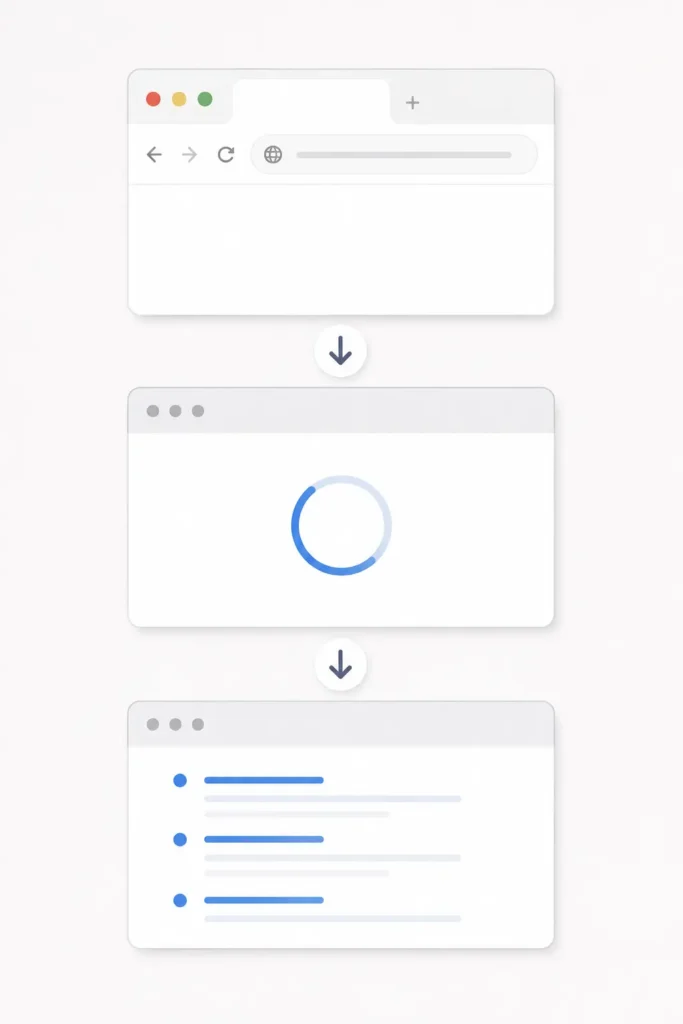
From the user’s perspective, the process is straightforward:
- You visit the Solid Point AI platform
- You paste a link (YouTube URL, article URL, Reddit thread, or arXiv paper link)
- The AI processes the content
- You receive a summary with key points, often organized by topic or timestamp
- You can then use, save, or share the output
The entire process from submitting a link to receiving a summary typically takes a matter of seconds to a minute, depending on the length and complexity of the source material.
Key Features of Solid Point AI

Rather than simply listing features, it is worth understanding what each one actually means for your daily workflow.
Feature 1: AI Content Summarization
The foundation of the platform is its ability to take long-form content and produce a shortened version that captures the essential information. This is not just about trimming word count — a well-executed summary should preserve the logic, the key claims, and the conclusions of the original content. Solid Point AI’s summarization engine is most reliable when working with clearly structured content that has an obvious thesis and supporting points, such as educational videos or news articles.
Feature 2: YouTube Video Summarization with Timestamps
This is arguably Solid Point AI’s most popular and defining feature. As described on the platform’s YouTube summarizer page, users can paste any YouTube video URL and receive a summary of the content along with timestamped key points.
For students watching lecture recordings, or professionals watching industry conference talks, this feature alone can save hours every week. The timestamp functionality is especially useful because it allows you to jump directly to the parts of the video that matter to you rather than scrubbing through the entire timeline.
That said, this feature has also received the most criticism from users. Independent reviews note that YouTube summarization can be inconsistent — particularly with videos that have poor audio quality, rely heavily on visuals, or lack accurate auto-generated transcripts. One review by Tools for Humans notes that “if your workflow depends on YouTube summarisation being accurate, you’ll hit problems.” This is worth keeping in mind before relying on the tool for critical work.
Feature 3: Multi-Source Summarization (Articles, Reddit, arXiv)
Beyond YouTube, Solid Point AI supports web articles, Reddit posts and threads, and arXiv academic papers. As noted in Skywork’s comparison review, the Reddit summarization feature performs particularly well — providing “a clear and reliable overview” of discussion threads.
The arXiv integration is a meaningful feature for academic users. Being able to paste a paper link from arXiv and receive a structured summary of the abstract, methodology, and key findings can genuinely accelerate literature review processes.
Feature 4: AI Flashcard Generation
One of Solid Point AI’s more distinctive features is its ability to convert summaries into interactive flashcards with spaced repetition support. This is directly aimed at students and learners who not only need to understand content but retain it.
Rather than reading a summary and moving on, users can generate a set of flashcards from the summarized material and use them for active recall practice. According to the Tools for Humans review, “the flashcard generator with spaced repetition is the strongest feature” for students, and it’s noted as “genuinely useful” even in an otherwise cautious assessment of the platform.
Feature 5: Knowledge Library
Solid Point AI includes a searchable knowledge library where you can store your saved summaries and access them later. For researchers or content creators who summarize content regularly, this acts as a personal database of digested information, organized and searchable rather than scattered across browser tabs and note-taking apps.
Feature 6: Simple, Accessible Interface
The platform is designed to require minimal setup. You do not need to create a complex account or learn a multi-step workflow. The input is a URL, and the output is a summary. For users who are not particularly tech-savvy, or who simply want a tool that gets out of the way and delivers results, this simplicity is a genuine feature rather than a shortcoming.
Feature 7: Export and Sharing Options
Solid Point AI offers the ability to export summaries in multiple formats, which makes it easier to use the output in other workflows — pasting into a research document, sharing with a team, or adding to a content brief.
How to Use Solid Point AI: Step-by-Step Guide
This section walks you through the practical process of using Solid Point AI from start to finish, whether you are summarizing a YouTube video or a web article.
Step 1: Visit the Platform
Go to solidpoint.ai in your browser. No complex sign-up process is required to start using the basic features — you can begin summarizing content immediately.
Step 2: Choose Your Content Type
On the main interface, you will see options to summarize different types of content. Choose the appropriate one for your needs: YouTube video summarization, web article, Reddit thread, or arXiv paper.
Practical tip: If you are using the YouTube summarizer for the first time, start with a video that has clean audio and auto-generated English captions. Educational channels on topics like science, business, or technology tend to have well-structured transcripts that AI handles reliably.
Step 3: Paste Your URL or Link
Copy the URL of the content you want to summarize and paste it into the input field. For a YouTube video, this is the standard YouTube URL from your browser bar. For articles, it is the full webpage URL.
Common mistake to avoid: Do not paste the embed URL or a shortened URL. Use the full, standard page URL for the best results.
Step 4: Generate the Summary
Click the summarize button and wait for the AI to process the content. Processing time varies from a few seconds to around a minute depending on the length of the material. For a 30-minute YouTube video, expect roughly 30 to 60 seconds.
Step 5: Review the Key Takeaways
Once the summary is generated, read through it carefully. Pay attention to:
- The main arguments or claims presented
- Any numbered or bulleted key points
- Timestamps (for video content) that reference specific sections
- Whether anything important appears to be missing
Beginner tip: Do not treat the summary as a complete replacement for the source material if the topic is critical to an important decision, academic paper, or professional deliverable. Use it as an orientation tool first, then go deeper on the sections that matter most.
Step 6: Generate Flashcards (Optional)
If you want to retain the information, use the flashcard generation feature to convert the summary into study cards. This is particularly effective for educational content where you need to remember specific facts, terminology, or concepts.
Step 7: Save to Your Knowledge Library
Save the summary to your personal knowledge library within the platform. This keeps your summarized content organized and searchable for future reference.
Step 8: Apply Insights to Your Work
Use the extracted information in your research document, content brief, study notes, article outline, or professional report. The summary becomes a reference point rather than a finished product — it points you toward the most important ideas, which you can then develop or verify as needed.
Beginner Tips for Better Results
- Use well-structured source content. AI summarization performs significantly better when the source material is logically organized with clear headings, transitions, and arguments. A chaotic Reddit thread will produce a less reliable summary than a well-edited educational video.
- Cross-check surprising claims. If a summary includes a specific statistic or strong claim that you intend to use in your own work, verify it against the original source.
- Use multiple content types on the same topic. Summarize a YouTube video, a related article, and a Reddit thread on the same subject to get a more complete picture.
Solid Point AI Review: An Honest Evaluation
Having gone through what Solid Point AI offers, this section takes a step back and assesses the platform as an honest user would.
Ease of Use: 9/10
Solid Point AI is genuinely easy to use. The interface is clean and intuitive, the input process is minimal, and you do not need a tutorial to get started. For any user who has ever been frustrated by complicated AI tools with steep learning curves, this simplicity is refreshing. The learning curve is close to zero.
Accuracy: 6.5/10
This is where the picture becomes more nuanced. Solid Point AI’s accuracy is respectable for structured, well-transcribed content — educational videos with clear audio, news articles with defined structure, and arXiv papers with formal organization. However, the YouTube summarizer in particular has received criticism for inconsistency. The Tools for Humans review is direct about this: “The YouTube summarizer can be inconsistent and sometimes provides incorrect information.” For anyone relying on YouTube summaries for academic or professional work, this inconsistency is a meaningful limitation.
The Reddit summarizer, by contrast, appears to perform more reliably and was noted in independent testing as providing “a clear and reliable overview.”
Speed: 9/10
Processing speed is one of Solid Point AI’s genuine strengths. Summaries are generated quickly — typically within a minute for most content lengths. For users who need rapid turnaround, the speed is a practical advantage.
User Experience: 8/10
Beyond ease of use, the overall experience of working with Solid Point AI is positive. The interface does not feel cluttered or overwhelming, the output is presented cleanly, and the flashcard and knowledge library features add tangible value to the core summarization function.
Summary Quality: 6.5–7.5/10
Summary quality varies by content type. Academic papers and well-structured articles tend to produce cleaner, more reliable outputs. The flashcard feature genuinely enhances retention for educational content. Where the platform struggles is with nuanced, complex, or primarily visual content — particularly YouTube videos where the key information is conveyed through on-screen graphics or demonstrations rather than spoken words.
What It Does Well
- Fast processing of most content types
- Genuinely useful flashcard feature for students
- Reliable Reddit and article summarization
- Clean, distraction-free interface
- Multi-source capability on a single platform
Areas for Improvement
- YouTube summarization accuracy needs improvement
- No explicit pricing transparency on the public-facing site
- Platform is still being refined in several areas
- Summaries of complex academic or technical material can lose nuance
Pros and Cons of Solid Point AI
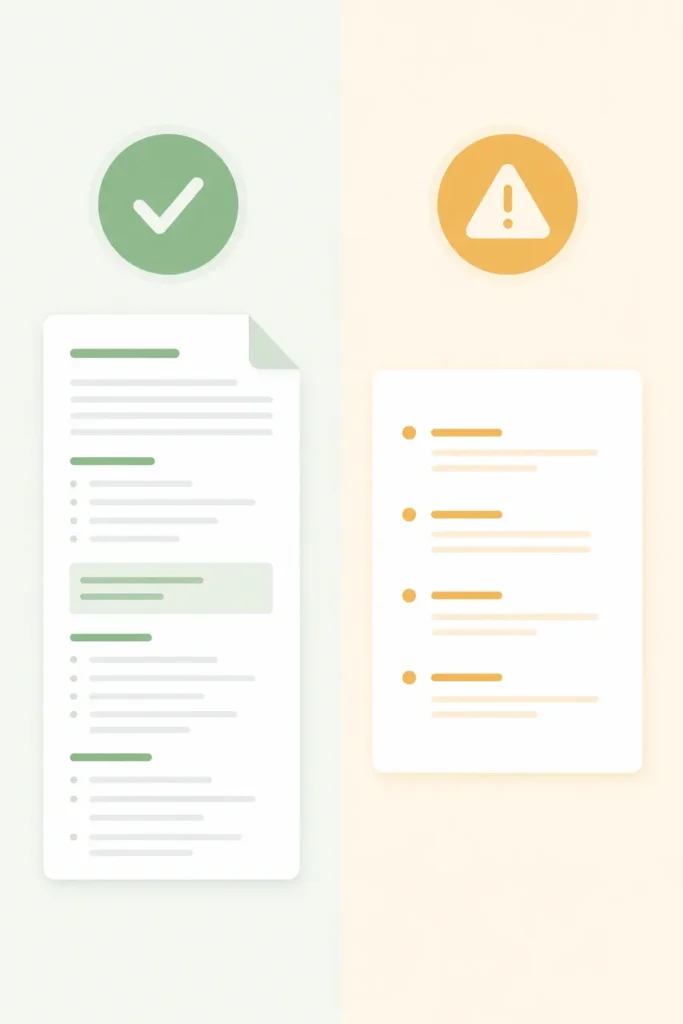
Pros
Saves significant time — For users processing large volumes of content regularly, the time savings are real. Rather than watching a 40-minute lecture to extract three key insights, you can get them in two minutes.
Genuinely easy to use — No complex onboarding. Paste a URL, get a summary. Anyone can use it immediately.
Multi-source summarization — The ability to summarize YouTube videos, articles, Reddit threads, and academic papers in a single platform reduces the need to switch between specialized tools.
Flashcard generation with spaced repetition — A feature that goes beyond simple summarization and into active learning, making it particularly valuable for students.
Free plan available — Users can test the platform on their own content before committing to any paid plan.
Knowledge library — Organized storage of past summaries creates a personal research database over time.
Cons
YouTube summarization is inconsistent — This is the most frequently cited limitation. Videos with poor transcripts, heavy visual content, or unclear audio produce unreliable summaries.
Summaries can lose nuance — Condensation by definition means some detail gets dropped. For complex or context-dependent topics, this can result in summaries that miss important caveats or subtleties.
Not a replacement for full research — Solid Point AI is a starting point, not an endpoint. Anyone using its summaries for academic citations, professional reports, or significant decisions needs to verify the original source.
Accuracy depends on source quality — The quality of the AI’s output is directly tied to the quality of the input. Poorly structured content produces poorly structured summaries.
Pricing lacks transparency — The platform does not prominently display pricing information, which makes it harder for potential users to evaluate the value proposition upfront.
Platform still maturing — Independent reviewers note that some features are still being refined, and the user base has not shown significant sustained growth, suggesting retention challenges.
Real-World Use Cases

Use Case 1: Students Reviewing Educational Videos
A university student preparing for exams across three subjects has a backlog of 15 lecture videos, each between 30 and 50 minutes long. Watching all of them in full is not feasible in the time available. Using Solid Point AI, the student can generate summaries of each video in a few minutes, identify which lectures contain content they already understand and which require deeper review, and use the flashcard generator to build a study set from the most important material.
This workflow — summarize to triage, then flashcards to retain — represents one of the platform’s strongest practical applications.
Use Case 2: Researchers Surveying Literature
An independent researcher exploring a new topic needs to survey 20 papers from arXiv to understand the current state of research before writing a literature review section. Reading all 20 in full would take days. Using Solid Point AI’s arXiv integration, the researcher can generate summaries of each paper in minutes, identify the five or six most relevant studies, and go deeper on those while using the summaries as orientation for the remaining material.
Use Case 3: Content Creators Gathering Source Material
A tech blogger writing an article about a recent development in AI needs to pull insights from multiple YouTube interviews, a handful of news articles, and a couple of Reddit discussions. Rather than watching and reading everything in full, the creator uses Solid Point AI to summarize all of it, then pulls the key themes and quotes into a content brief. The tool does not write the article — that still requires the creator’s judgment and voice — but it dramatically shortens the research phase.
Use Case 4: Professionals Staying Informed
A marketing professional needs to stay current on industry trends but has limited time for deep reading. By using Solid Point AI to summarize long-form industry reports, webinar recordings, and relevant Reddit threads, they can stay meaningfully informed without dedicating hours each week to reading.
Use Case 5: Busy Learners on Self-Improvement Topics
A professional following a course on YouTube to develop a new skill wants to review the material efficiently. They use Solid Point AI to summarize each lesson video, keeping a library of key concepts from the course that they can return to without re-watching entire episodes.
Is Solid Point AI Free?
This is one of the most common questions users ask before trying the platform, and the answer is: yes, there is a free plan, but with limitations.
Solid Point AI operates on a freemium model. The free plan allows users to access the core summarization features — including YouTube video summarization, article summarization, and basic flashcard generation — without requiring payment. This gives you enough functionality to meaningfully test whether the tool works for your specific use case and content types.
The platform’s paid plan, referenced in available reviews, is priced at approximately $15 per month for the Pro tier. At this level, users get expanded usage limits, access to more features, and presumably higher processing capacity.
What the free plan is good for:
- Testing the YouTube summarizer on your actual content
- Trying the Reddit and article summarization features
- Generating a limited number of flashcards
- Evaluating summary quality before committing
What the free plan may limit:
- Number of summaries per day or month
- Access to advanced features
- Processing priority
Our recommendation: Use the free plan to stress-test the tool on the specific types of content you intend to summarize regularly. If YouTube videos are your primary use case, test several videos that match your real workflow — educational lectures, industry talks, or technical tutorials — before deciding whether the Pro plan is worth $15 per month.
Given the acknowledged inconsistency in YouTube summarization quality, the advice from independent reviewers applies here: “Don’t subscribe until you’ve stress-tested the free plan on your actual content types.”
Solid Point AI vs Other AI Summarization Tools
Understanding where Solid Point AI sits in the broader landscape helps you make a more informed choice about which tool fits your specific needs.
| Feature | Solid Point AI | ChatGPT | Claude | QuillBot | Scholarcy |
| Primary Use Case | Multi-source summarization | General AI assistant | General AI assistant | Text rewriting & summarization | Academic paper summarization |
| YouTube Summarization | Yes (inconsistent) | With transcript pasting | With transcript pasting | No | No |
| arXiv/Academic Papers | Yes | Manual input | Manual input | Limited | Yes (specialized) |
| Reddit Summarization | Yes | Manual input | Manual input | No | No |
| Flashcard Generation | Yes | No (native) | No (native) | No | Yes |
| Free Plan | Yes | Yes (limited) | Yes (limited) | Yes | Limited trial |
| Ease of Use | Very high | High | High | High | Medium |
| Best For | Students, multi-source research | Broad tasks, writing | Writing, analysis | Text editing | Academic research |
Solid Point AI vs ChatGPT
ChatGPT is a general-purpose AI assistant that can summarize content, but it requires you to manually paste or upload the text. It does not natively pull content from YouTube URLs, Reddit threads, or arXiv links the way Solid Point AI does. For structured summarization of diverse online sources without manual copying, Solid Point has a workflow advantage. For everything beyond summarization — writing, coding, analysis, brainstorming — ChatGPT is significantly more capable.
Solid Point AI vs Claude
Anthropic’s Claude is a powerful language model capable of high-quality summarization when content is provided to it. Like ChatGPT, it excels at nuanced, context-aware summaries but requires manual content input. Claude tends to produce more accurate and contextually sensitive summaries for complex material, but lacks the one-click URL processing workflow that defines Solid Point AI’s value proposition.
Solid Point AI vs QuillBot
QuillBot’s summarizer is primarily a text-based tool focused on article and document summarization with adjustable summary length. It does not support YouTube or Reddit content and lacks the flashcard generation feature. QuillBot is a stronger choice for text-heavy workflows, but Solid Point AI is more versatile for multimedia research.
Solid Point AI vs Scholarcy
Scholarcy is a dedicated academic summarization tool that goes deep on research papers — extracting key claims, methodology, cited works, and creating structured “study cards.” For purely academic use, Scholarcy arguably goes deeper on individual papers. However, as noted in comparative reviews, Solid Point AI offers a broader platform: “While Scholarcy is deeper on academic papers, SolidPoint offers a single platform to also summarize a related YouTube lecture and a Reddit discussion on the same topic, providing a more holistic research experience.”
Common Limitations Users Should Know
A balanced review requires an honest look at what AI summarization tools like Solid Point AI cannot reliably do.
Context Loss
Summarization is inherently reductive. When an AI condenses a 10,000-word article into 300 words, a significant amount of nuance, qualification, and supporting context gets dropped. This is not a flaw unique to Solid Point AI — it is a fundamental limitation of all summarization. The risk is treating a compressed version as equivalent to the original, particularly for topics where caveats and context are as important as the main claims.
Accuracy Variations
As noted throughout this review, summary accuracy is not uniform across all content types. Structured, well-transcribed content performs better than informal, visual-heavy, or poorly captioned material. This means that users who primarily want YouTube summarization should test carefully before relying on the tool.
Complex Topics
Solid Point AI’s AI model, like all current summarization tools, can struggle with highly technical, interdisciplinary, or domain-specific content where meaning depends on specialized vocabulary or complex logical sequences. A video on quantum computing or a paper on econometrics may produce a technically incomplete summary.
Source Quality Dependence
The output is only as good as the input. A YouTube video with inaccurate auto-generated captions, a poorly written article, or a disorganized Reddit thread will all produce lower-quality summaries. Solid Point AI does not correct errors in source transcripts.
Not a Full Research Replacement
As industry analysts and independent reviewers consistently emphasize, AI summarization tools are “accelerators, not replacements for due diligence.” For academic citations, professional decisions, or any situation where accuracy has real consequences, the source material must be consulted directly.
Frequently Asked Questions (FAQ)
What is Solid Point AI?
Solid Point AI is an AI-powered content summarization platform available at solidpoint.ai. It uses natural language processing and machine learning to generate concise summaries of YouTube videos, web articles, Reddit posts, and arXiv research papers. The platform is designed for students, researchers, content creators, and professionals who need to process large amounts of content efficiently.
Is Solid Point AI free?
Yes, Solid Point AI offers a free plan that allows users to test the core summarization features. A paid Pro plan is available at approximately $15 per month for users who need expanded usage and additional features. The free plan provides enough functionality to evaluate whether the tool works for your specific content types before committing to a subscription.
How does Solid Point AI work?
Solid Point AI uses AI language models to analyze source material — either by accessing a video transcript or processing web content from a URL — and identifies the most important information. It then generates a condensed summary that captures the key points, claims, and conclusions of the original content. For video content, it also provides timestamps referencing specific sections of the source.
How to use Solid Point AI?
To use Solid Point AI, visit solidpoint.ai, select the content type you want to summarize (YouTube video, article, Reddit, or arXiv), paste the URL into the input field, and click to generate the summary. The AI processes the content and delivers a structured summary, often within a minute. You can then save the summary to your knowledge library or generate flashcards from it.
Can Solid Point AI summarize YouTube videos?
Yes, YouTube video summarization is one of Solid Point AI’s primary features. It generates summaries with key points and timestamps. However, independent testing has noted that this feature can be inconsistent, particularly for videos with poor audio quality or inaccurate auto-generated transcripts. The feature works best with well-structured educational or professional content.
Is Solid Point AI accurate?
Accuracy varies by content type. Article and Reddit summarization generally receives better accuracy scores from users. YouTube summarization is more variable and has been described as “inconsistent” in independent reviews. For any critical use — academic work, professional decisions, or content intended for publication — users should verify key claims against the original source.
Is Solid Point AI worth using?
Whether Solid Point AI is worth using depends on your specific use case. Students who can benefit from the flashcard generation and arXiv integration will find genuine value in the free plan. Researchers and content creators who need multi-source summarization in one place will also find it useful. For users whose primary need is reliable YouTube summarization, it is worth stress-testing the free plan before subscribing.
What are the best alternatives to Solid Point AI?
The best alternatives depend on your primary use case. For general AI summarization with high quality, Claude and ChatGPT both handle text-based summarization well when content is pasted in. For academic paper summarization, Scholarcy goes deeper on research papers. For text summarization with length control, QuillBot is a reliable option. For YouTube-specific summarization, tools like Glasp or Eightify are worth comparing directly against Solid Point AI.
Conclusion
Solid Point AI is a genuinely useful tool with a clear purpose: helping users process more content in less time. Its multi-source summarization capability — covering YouTube, articles, Reddit, and arXiv in a single platform — gives it a practical versatility that more specialized summarizers cannot match. The flashcard generation feature is a genuine differentiator for students, and the clean, low-friction interface makes it accessible to anyone regardless of technical background.
That said, this review would not be honest if it did not clearly acknowledge the limitations. The YouTube summarization feature, which is arguably the platform’s marquee offering, has consistency issues that are well-documented and worth taking seriously. Summary quality varies depending on the quality and structure of the source material, and the platform is still maturing — some features remain in development, and user retention data suggests it has not yet built the momentum of more established tools.
Who should use Solid Point AI?
- Students who regularly deal with educational videos and want flashcard support
- Researchers who need to triage arXiv papers or summarize multi-source material
- Content creators using it as a research intake tool rather than a final output generator
- Professionals who want to stay informed on topics without reading full-length reports
Who might want to look elsewhere?
- Users whose primary need is accurate YouTube summarization for professional or academic work
- Anyone who needs a tool for tasks beyond summarization (writing, analysis, coding)
- Users who need academic-depth paper summarization (consider Scholarcy)
The free plan makes the decision easy: try it on your actual content before committing. If Solid Point AI performs well for your specific use cases, the Pro plan at $15/month is a reasonable investment. If the YouTube summarizer does not meet your accuracy needs, free alternatives deserve a closer look first.
For a tool that is still finding its footing, Solid Point AI shows enough promise — particularly in its multi-source approach and flashcard feature — to be worth adding to your AI toolkit for the right workflows.