AI customer support is revolutionizing online business operations. By integrating AI-powered chatbots and customer service software, businesses reduce response times, provide 24/7 support, and personalize interactions. Explore top AI tools, case studies, and practical implementation tips for improved customer satisfaction and operational efficiency.
Why AI in Customer Support is a Game Changer
In the fast-paced world of e-commerce and online businesses, providing exceptional customer support can be the difference between growth and stagnation. Customers today expect quick, personalized, and round-the-clock assistance, and this is where AI customer support steps in as a game-changer. According to recent studies, businesses that implement AI tools in their customer service operations report a 30–50% faster response time and a 20% increase in overall customer satisfaction.
AI-powered support tools allow businesses to automate repetitive queries, provide instant answers, and even predict customer needs using advanced analytics. For online businesses aiming to improve customer service, integrating AI is no longer a luxury—it’s a necessity. Platforms like AI Tool Mapper are showcasing how AI can transform customer experiences, making support smarter, faster, and more reliable.
Understanding AI Customer Support
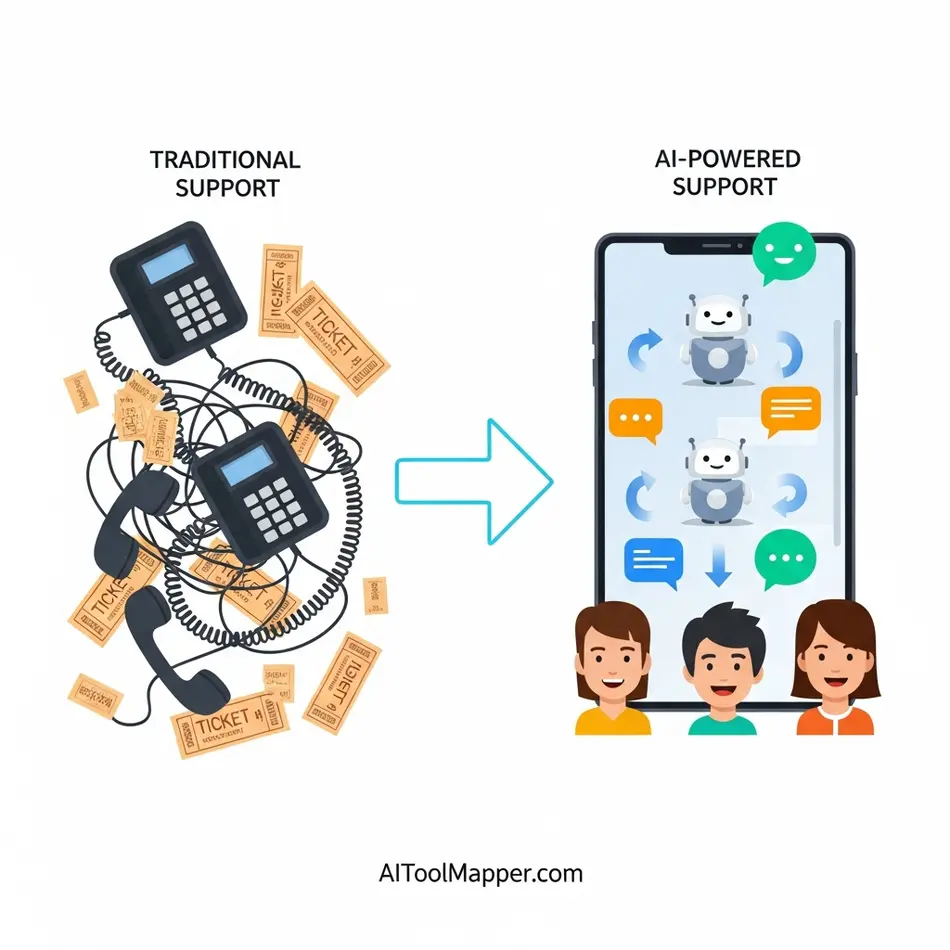
AI customer support refers to the use of artificial intelligence technologies, such as machine learning, natural language processing, and chatbots, to provide automated assistance to customers. Unlike traditional support systems, which rely heavily on human agents, AI customer service software can handle thousands of queries simultaneously, offering faster and more accurate responses.
Traditional support often involves long wait times, inconsistent answers, and limited hours of operation. In contrast, AI-powered customer support ensures that customers receive immediate help, personalized solutions, and consistent responses across multiple channels, including live chat, email, and social media.
For instance, AI algorithms can analyze past interactions to predict common issues, proactively offering solutions before the customer even asks. This creates a seamless experience that boosts both efficiency and satisfaction.
Benefits of AI Tools for Online Business Support
Integrating AI tools into customer service offers a multitude of advantages:
- Speed up Response Time: AI chatbots can respond instantly to customer queries, eliminating long wait times. This leads to higher satisfaction and reduces bounce rates.
- 24/7 Support Availability: Unlike human agents, AI never sleeps. Customers can get assistance anytime, boosting trust and reliability.
- Personalization Using AI: AI can tailor responses based on customer behavior, preferences, and previous interactions, offering a truly personalized experience.
- Reduce Operational Costs: Automating repetitive tasks frees human agents to handle complex issues, optimizing labor costs without compromising service quality.
The benefits of AI in customer support extend beyond efficiency. Automated systems improve consistency, minimize human error, and allow online businesses to scale their operations rapidly. Tools like AI customer service software not only respond faster but also provide data-driven insights to improve service strategies.
Top AI Tools to Improve Customer Support

There are numerous AI support chatbots and platforms available today that can transform customer service:
- ChatGPT: Offers conversational AI capabilities for instant query resolution. Ideal for both small and large businesses.
- Zendesk AI: Enhances support with AI-driven ticketing, predictive answers, and workflow automation.
- Freshdesk AI: Provides contextual recommendations, automates repetitive tasks, and improves agent efficiency.
- Drift AI: Focused on conversational marketing and support, helping businesses engage customers proactively.
- Intercom AI: Combines live chat and AI to provide real-time support and personalized recommendations.
These AI customer service bots not only improve response times but also gather actionable insights for businesses, making it easier to refine customer engagement strategies.
How AI Chatbots Enhance Customer Experience
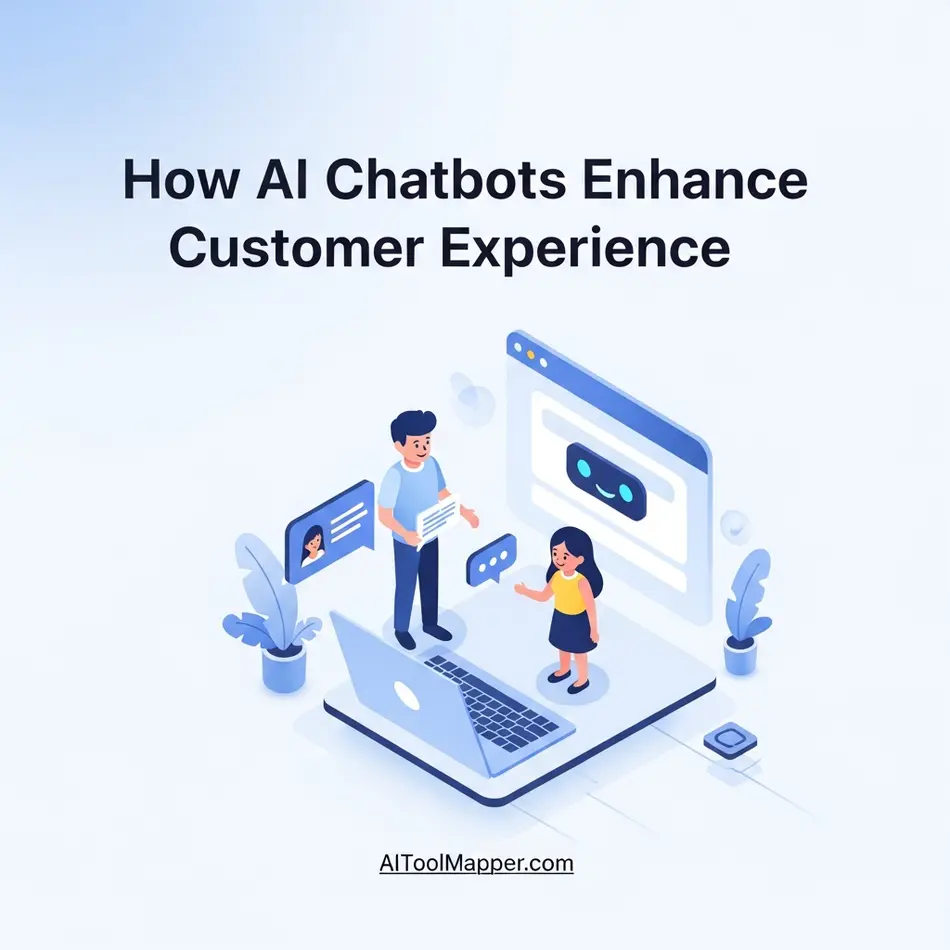
Conversational AI for customer service enables chatbots to understand human language, interpret queries, and respond intelligently. These bots can detect intent, manage context, and even learn from interactions to improve over time.
For example, an AI bot can guide a customer through troubleshooting steps, offer product recommendations, or escalate complex issues to human agents when needed. The benefits of chatbots in support include faster problem resolution, fewer abandoned carts, and higher customer loyalty. By integrating AI, businesses can dramatically improve customer satisfaction, ensuring every interaction is efficient, friendly, and accurate.
Case Study: Online Business Success with AI Support
Consider the example of ShopEase, a mid-sized e-commerce startup that integrated AI customer support using ChatGPT and Zendesk AI. Before AI, average response times were 24 hours, and customer satisfaction hovered around 70%.
After implementing AI-powered customer support:
- Response time dropped to under 2 minutes.
- Customer satisfaction increased to 92%.
- Human agents could focus on complex queries, improving overall efficiency.
This case illustrates how AI customer support can directly impact business growth, customer retention, and operational efficiency. For more AI tools, businesses can explore AI Tool Mapper’s AI directory.
Challenges & Limitations of AI in Customer Support
While AI has numerous advantages, it’s not without limitations:
- Context Understanding: AI may misinterpret complex or ambiguous queries, requiring human oversight.
- Human Touch: AI cannot fully replicate empathy, which is crucial for sensitive customer interactions.
- Ethical Concerns: Data privacy and ethical use of AI are ongoing concerns for businesses.
- Complex Queries: Some issues still need human expertise for resolution.
Recognizing these limitations of AI customer service software ensures businesses implement solutions responsibly and supplement AI with human agents when necessary.
Best Practices for Implementing AI Tools
- Training AI with Existing Data: Ensure AI systems are trained on your historical support data for accurate responses.
- Combining AI with Human Agents: Use AI to handle routine queries while humans tackle complex issues.
- Monitoring Performance & Feedback: Continuously track AI performance and customer feedback to optimize support.
Following these practices ensures your AI customer support solution is effective, trusted, and aligned with customer expectations. Businesses that strategically integrate AI see measurable improvements in efficiency and satisfaction.
Conclusion: Future of AI in Customer Support
AI tools are reshaping the landscape of online customer support, offering speed, personalization, and efficiency. Businesses that embrace AI customer service can expect improved customer satisfaction, reduced operational costs, and scalable support operations.
The future points to a hybrid model where AI and humans collaborate, creating a seamless, intelligent customer support ecosystem. Companies ready to adopt AI will have a competitive edge, ensuring their online business thrives in a digital-first world.
FAQs
Q1: What is AI customer support?
AI customer support leverages technologies like chatbots, natural language processing, and machine learning to provide automated assistance. It helps answer common queries, guide users through processes, and improve response time, making customer service more efficient while reducing the workload on human agents.
Q2: How does AI improve customer satisfaction?
AI enhances satisfaction by offering instant responses, personalized solutions, and 24/7 availability. It reduces wait times, resolves simple issues automatically, and frees human agents to focus on complex problems, ensuring faster, more accurate, and consistent support experiences for customers.
Q3: Which AI tools are best for online business support?
Some top AI tools for online businesses include ChatGPT, Zendesk AI, Freshdesk AI, Drift AI, and Intercom AI. These platforms provide automated chat, predictive responses, ticket management, and analytics, helping businesses streamline support and engage customers efficiently.
Q4: Can AI replace human customer service agents?
AI cannot fully replace humans because complex queries, empathy, and judgment are required in many cases. Instead, AI works alongside agents to handle repetitive tasks, provide instant answers, and assist humans in delivering faster, more informed, and consistent customer service.
Q5: How to implement AI customer support effectively?
Effective implementation requires training AI with historical data, integrating it with human support, and continuously monitoring performance. Regular updates, feedback loops, and combining AI with human expertise ensure accurate responses, improved satisfaction, and smoother workflows.
Q6: Is AI customer support cost-effective?
Yes, AI reduces operational costs by handling repetitive queries automatically, lowering the need for large support teams, and minimizing errors. Over time, it increases efficiency, allowing businesses to allocate resources strategically while maintaining high-quality customer service.
Q7: Can AI handle multiple languages?
Many AI customer support tools support multilingual capabilities. They can automatically detect language preferences, provide translations, and offer consistent responses, enabling businesses to serve a global customer base effectively without requiring human agents for every language.
Q8: How secure is AI in handling customer data?
AI platforms follow strict security protocols, including data encryption, GDPR compliance, and access control. While AI can safely manage customer data, businesses should ensure their chosen solution adheres to privacy standards to protect sensitive information.
Q9: What types of queries can AI handle?
AI excels at handling repetitive, straightforward queries like FAQs, order status, password resets, and product details. Complex issues requiring judgment, negotiation, or empathy are best escalated to human agents for resolution.
Q10: How does AI improve agent productivity?
By automating routine queries and suggesting solutions, AI frees human agents to focus on critical tasks. It provides real-time insights, recommended responses, and workflow support, enhancing efficiency, reducing burnout, and improving overall productivity.
Q11: Can AI provide personalized recommendations?
Yes, AI can analyze customer behavior, purchase history, and preferences to deliver tailored suggestions, upsells, or relevant solutions. This personalization improves user experience, engagement, and ultimately, conversion rates for businesses.
Q12: How often should AI systems be updated?
AI systems should be updated regularly with new data, customer feedback, and evolving business knowledge. Continuous learning ensures accuracy, relevance, and adaptability, keeping support aligned with customer expectations and emerging trends.
Found this helpful? Save it to your Pinterest board!